
Most store visits are decided in a handful of moments. Design determines whether those moments can be read.
Every operator can name the moments that decide a store visit and makes them want to return. The first ten feet. The fixture that stops a guest. The fitting room experience. The checkout. What almost nobody can do is read them. So when remodel capital comes up for review, the case for experience arrives as conviction, and conviction loses to any spreadsheet in the room.
The industry case for measuring experience investment ran in The Robin Report. What follows is the design half of the conversation: which moments deserve the attention, and what one looks like when a brand commits completely.
There is a design answer here, and it starts before any sensor gets specified. Choose a few moments. Design each one to do a single job so completely that the job can be checked.
Why start with the fitting room?
In apparel, the fitting room is where the decision actually happens. It is also, in most fleets, the least designed square footage in the store: a corridor of stalls, a chair nobody wants, lighting that argues with the merchandise. The moment that decides the conversion gets treated like back of house.
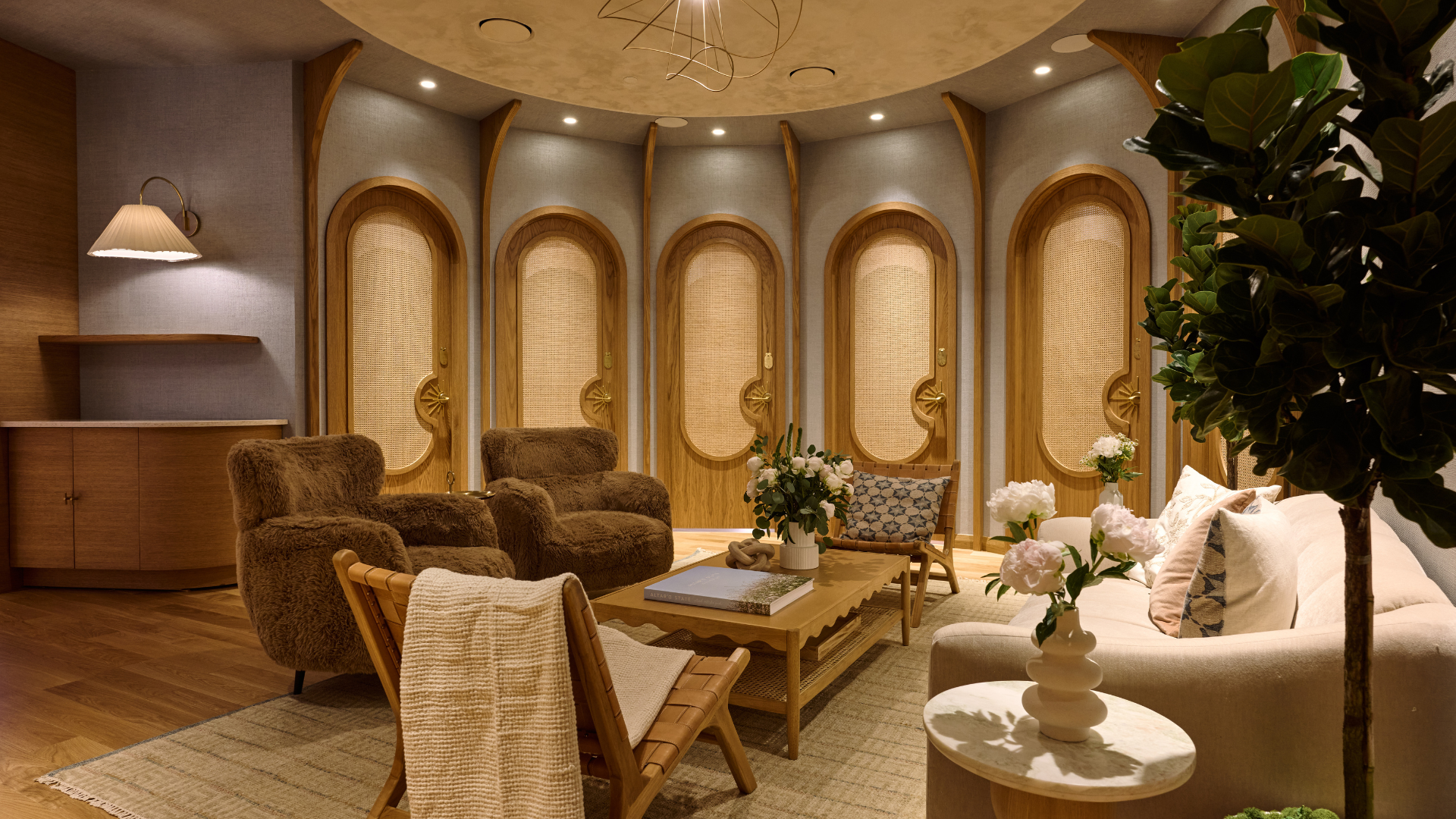
Altar’d State runs the other direction. The brand is built on community and giving, their stores are meant to feel like a sanctuary, and their guest expects more than she used to without wanting the warmth to go anywhere. When we designed the new stores, the fitting room became the emotional center of the store. The storefront ripples like the fabric of a favorite dress, and the fitting rooms are where that promise gets kept. The rooms are placed around a shared salon instead of lining a hallway. The doors are arched with oak and cane details and sunburst hardware, and a tag on each one welcomes the guest by name. The salon seats the people she brought. Fresh flowers and framed mirrors, with light that is on her side. A digital mission focal nearby plays the brand’s Stand Out. For Good. story while she decides.
That is a maximalist answer, and it is also a measurable one. A room built to be the center of the store makes specific promises. Guests who reach the rooms should convert. Sessions should run long enough to say yes to the second piece. The salon should pull the companion into the sale instead of parking them outside it. And the guest who was welcomed by name should come back. None of that needs a platform on day one. A door count and matched receipts start the readout, and an associate log covers the rest.
What does a readable cash wrap look like?
The cash wrap is the one moment with perfect attendance. Every buyer stands there. At Altar’d State, the brand’s mission statement hangs behind the employees at the checkout, and the entry and exit messaging welcomes the guest in and humbly lets her go. The design position is simple: the last thirty seconds of the visit belong to the brand.
Readable, at the cash wrap, means the moment produces a relationship signal along with the receipt. Did she identify herself. Did she take the digital receipt. Did she book the visit back. Did she join the community described on the wall behind the register. A cash wrap designed for hospitality earns those signals. A cash wrap designed only for throughput clears the line and learns nothing.
What makes dwell productive?
Time in store gets treated like a scoreboard, and it behaves more like a symptom. A guest lingering in the fitting salon because her friends are there and the room is on her side is one kind of long visit. A guest stuck at the checkout is another. A stopwatch reads them identically. Design is what separates them, because design decides what the guest is doing with the minutes.
So the reading only means something when it is tied to the outcome the moment was built to produce.
Who has to own the reading?
Here is the discipline that makes any of this worth doing. Every reading needs an owner and a decision it can change. If the number disappoints and nothing was ever going to happen, the store team learns their measuring was decoration, and the next initiative pays for it.
A sensor without an owner is decoration, or a task. A moment designed to be read, with someone reading it, is how the next store stops being a box and starts working like a system.