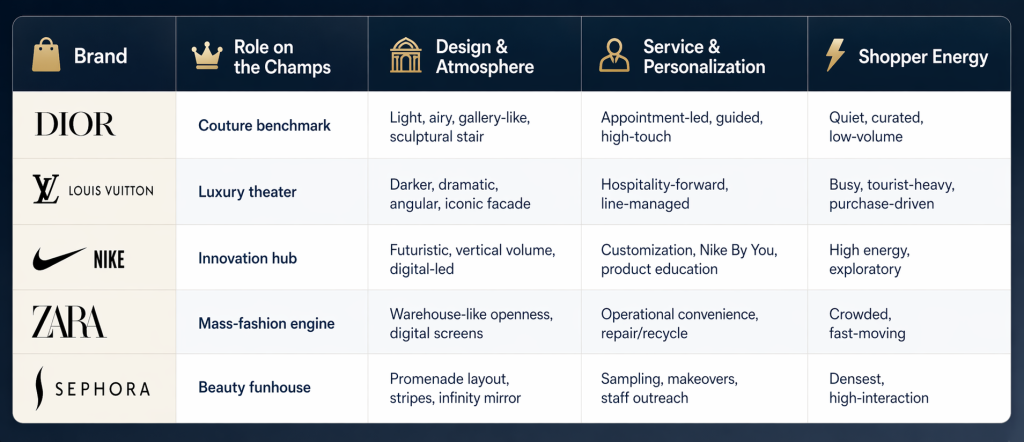

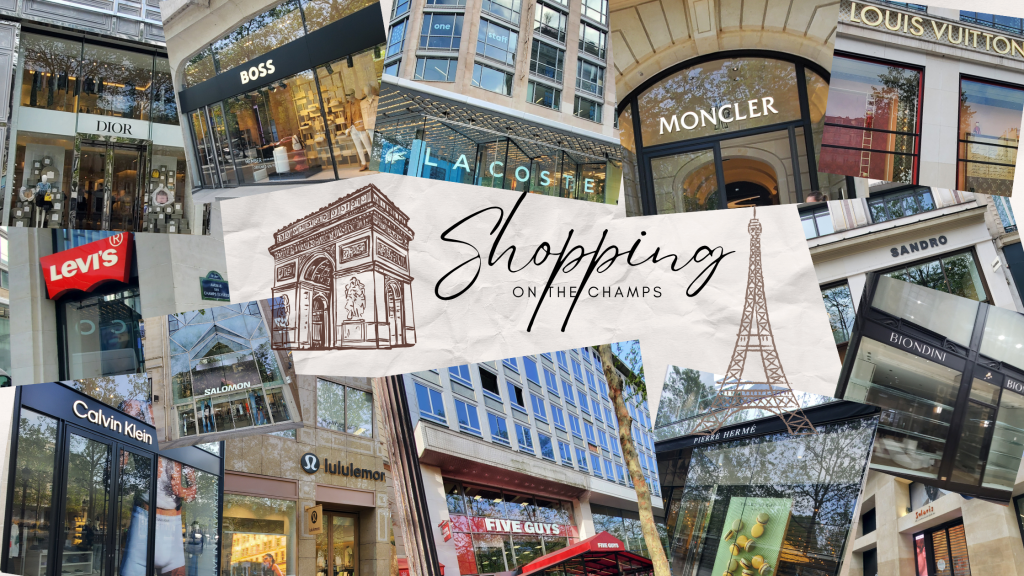
We walked Paris’s Champs-Élysées to see how five flagship brands—Dior, Louis Vuitton, Nike, Zara, and Sephora—are interpreting retail right now on one of the world’s most visible shopping stages. What emerges is a study in hushed couture, performance-led sportswear, mass fashion on a scale, and immersive beauty all sharing the same avenue.
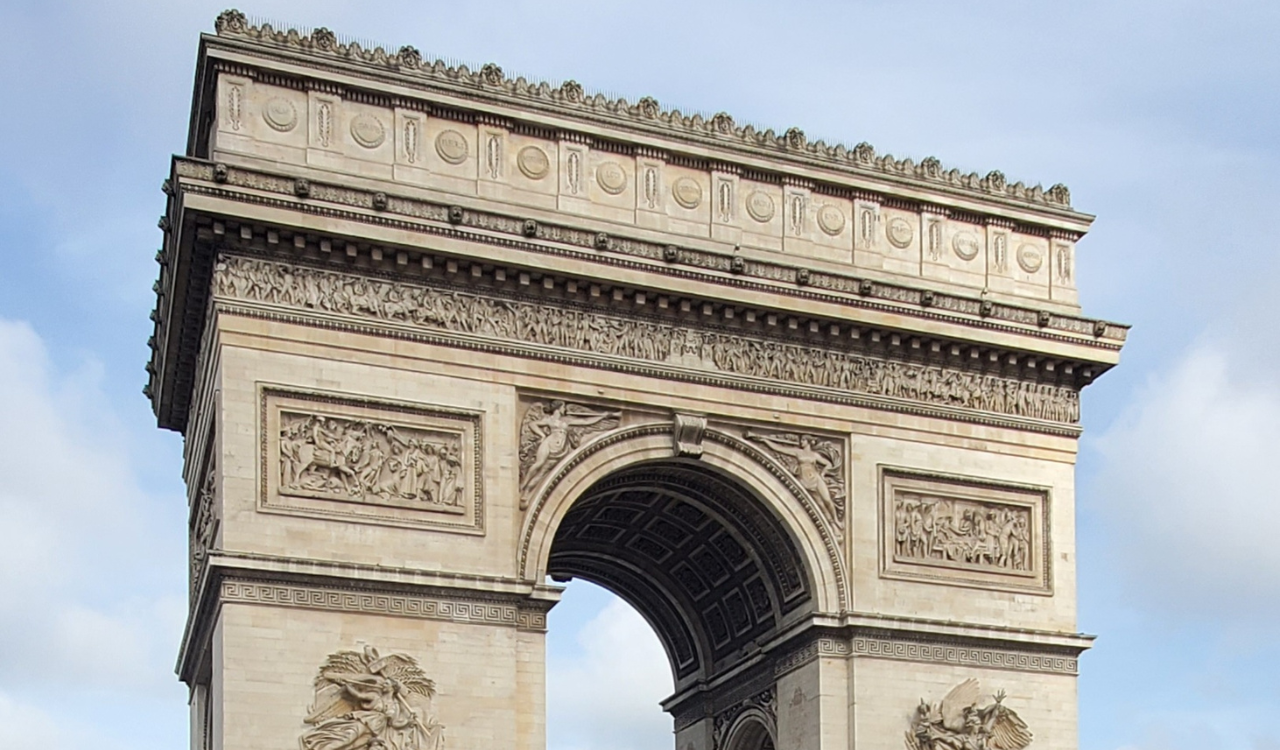
The Avenue des Champs-Élysées is one of Paris’s most famous streets, running from Place de la Concorde to the Arc de Triomphe. It matters to the city because it links major historic landmarks while also serving as a symbol of Parisian elegance, commerce, and public life. The Champs-Élysées doesn’t need more of an introduction. What it needs is a closer look — at what’s actually happening inside the stores, and what that says about where retail is heading.
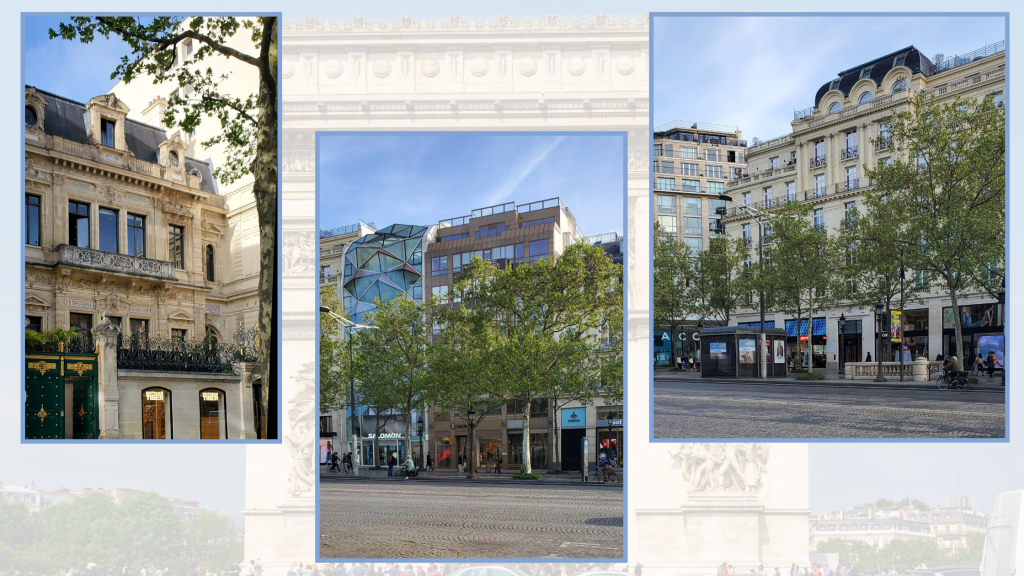
As one of Paris’s most recognizable shopping addresses, we’ve discovered that it’s not just the brand list that matters; it’s the way retail, tourism, architecture, and spectacle overlap on a single street. On this walk, the avenue felt less like a conventional shopping lane and more like a curated procession of brand statements, from iconic flagships to accessible chains and lifestyle stops.
What stands out most is the variety of shopper experiences in such close proximity. Luxury flagships, heritage brands, beauty specialists, and mainstream players all sit within the same visual corridor, so the street itself becomes part of the shopping experience. It’s not just about where people shop, but how the street itself becomes part of the Paris experience.

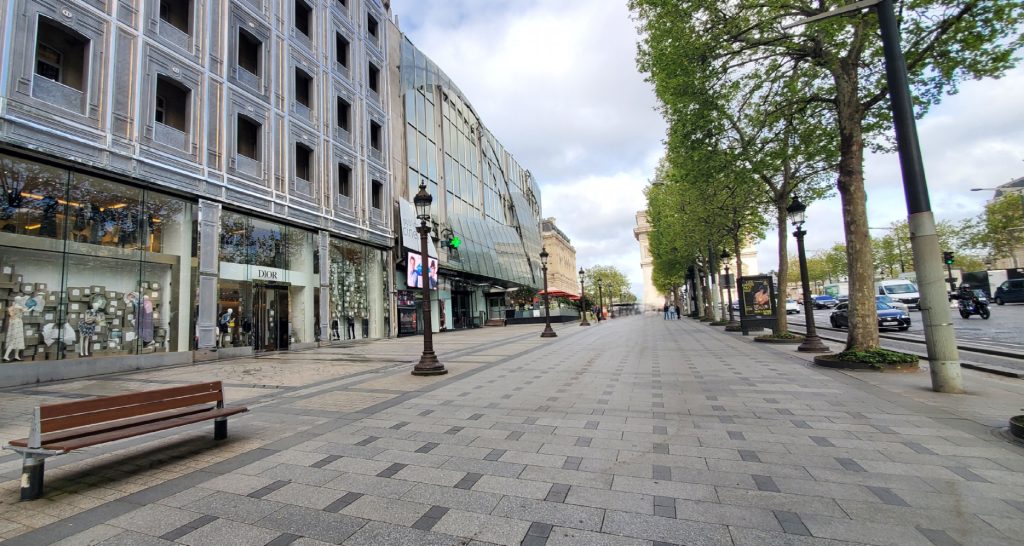
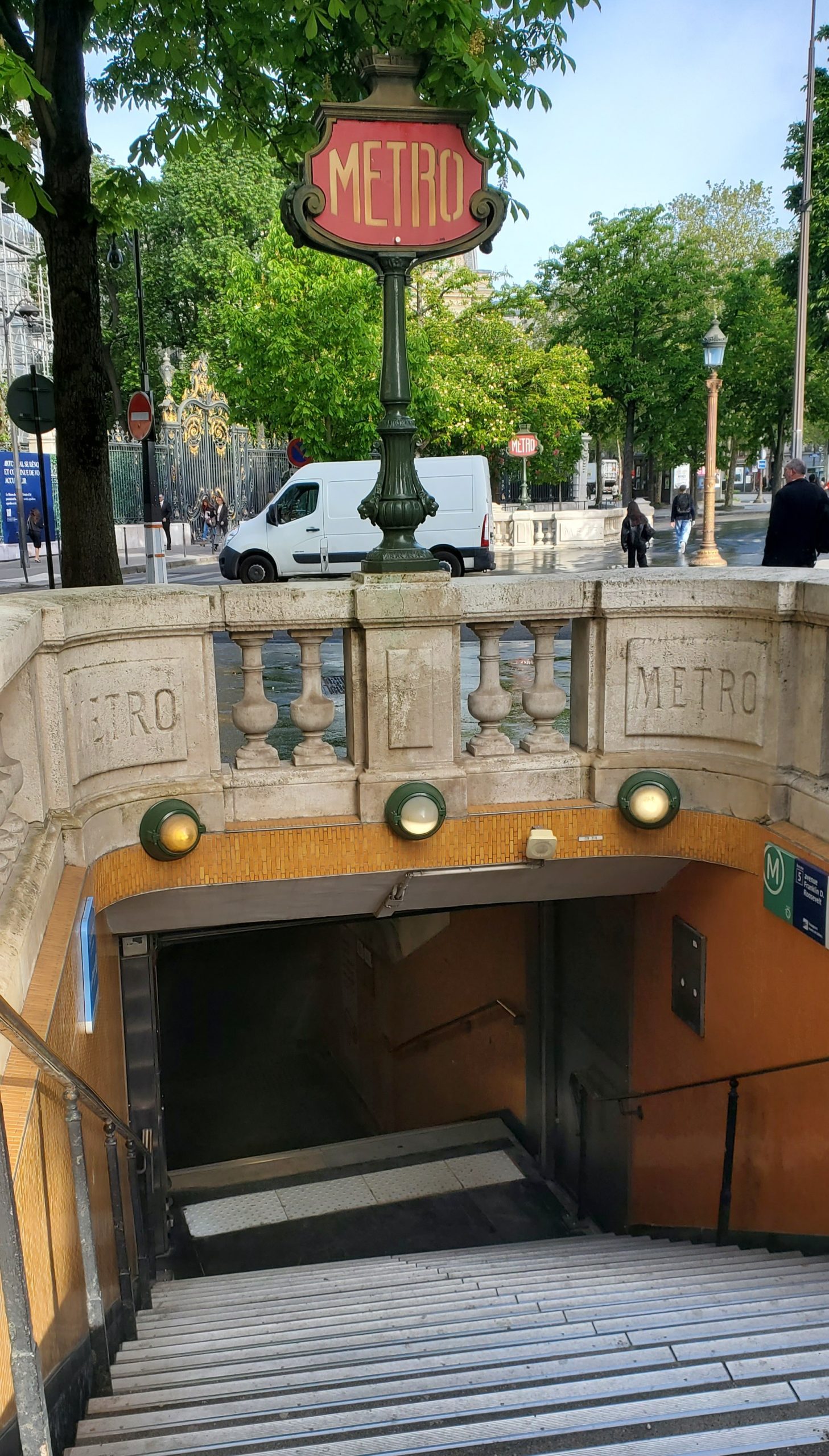
Arriving via the metro at the Franklin D. Roosevelt metro stop, coming up the steps brings us out into the middle of the Champs-Élysées.
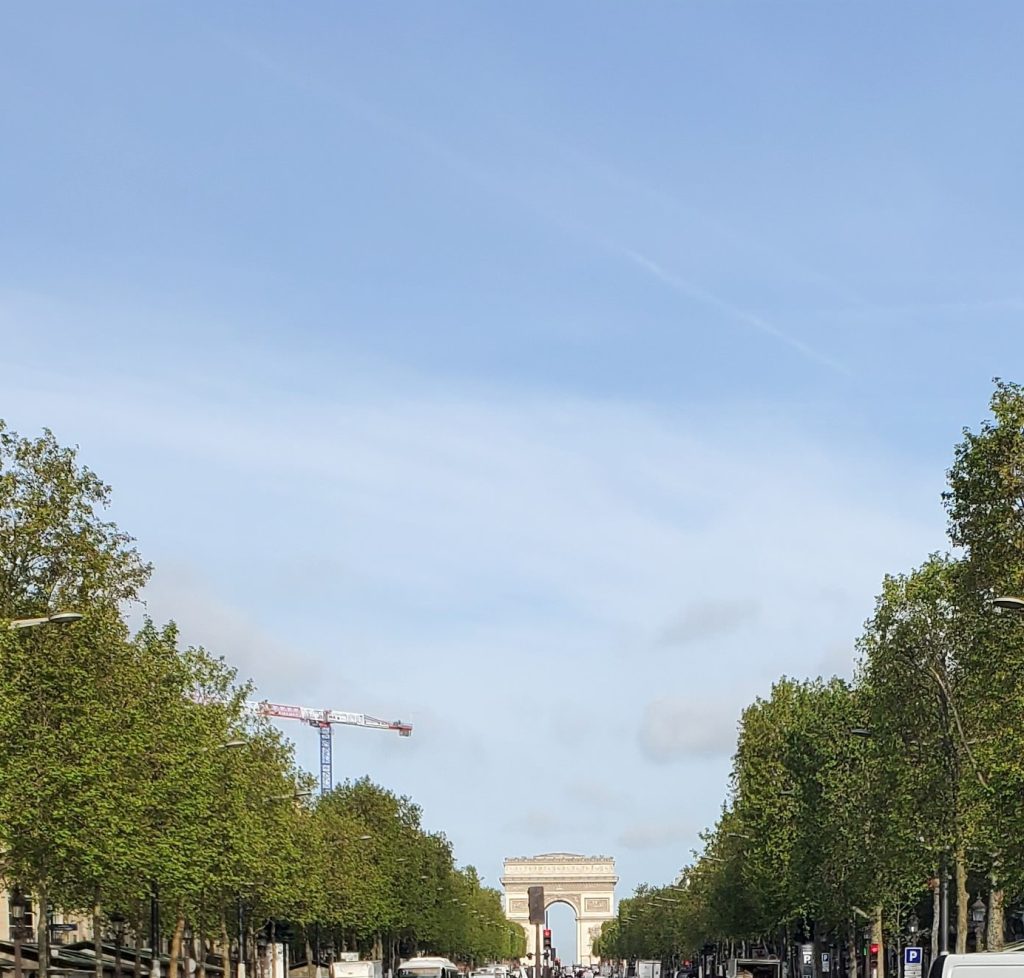
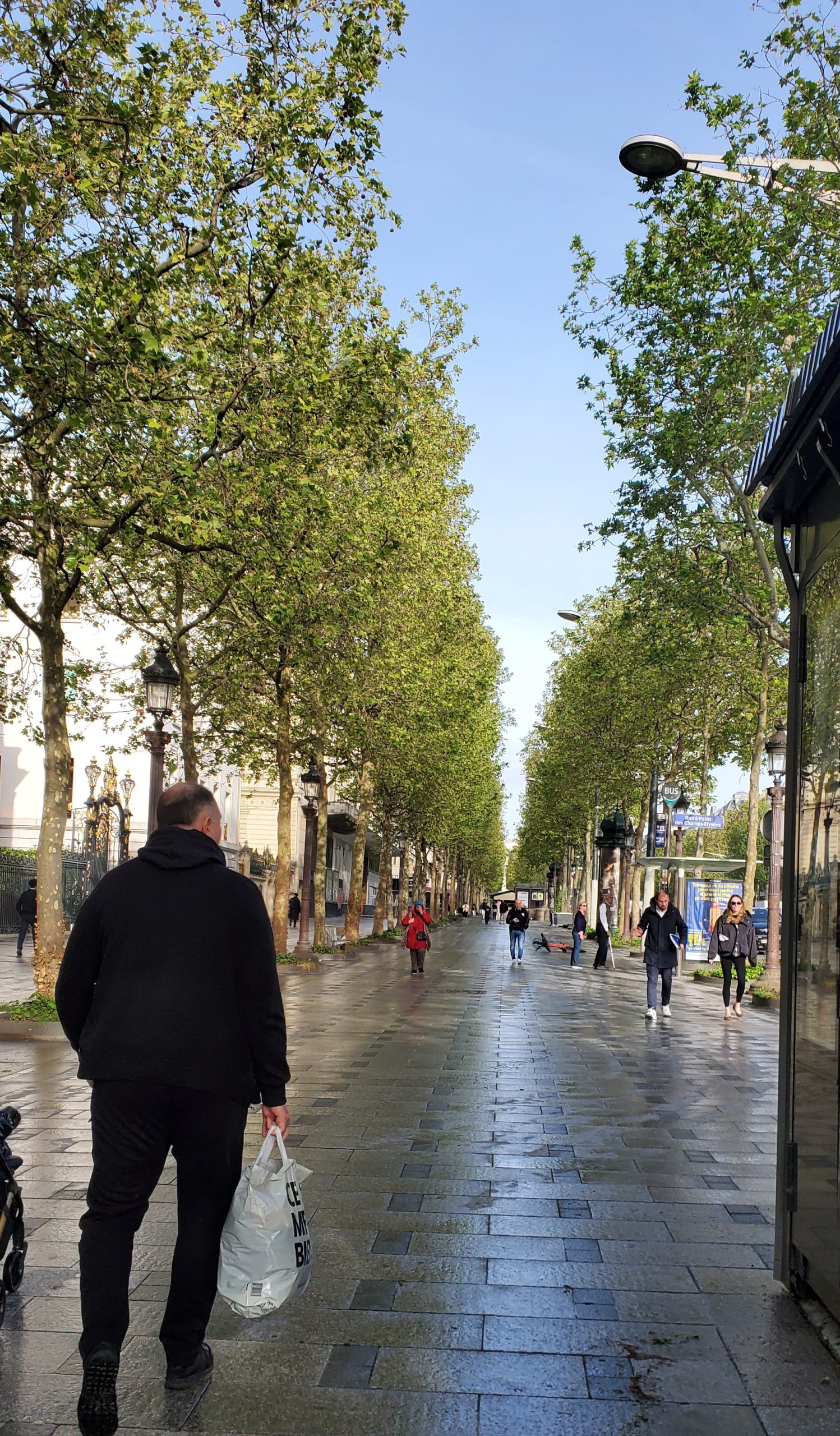
Arriving early, before the crowds, the street belonged mostly to commuters, window washers, and street sweepers. A morning on the Champs-Élysées reveals distinct contrasts between prestige and accessibility, heritage and reinvention, shopping, and spectacle.
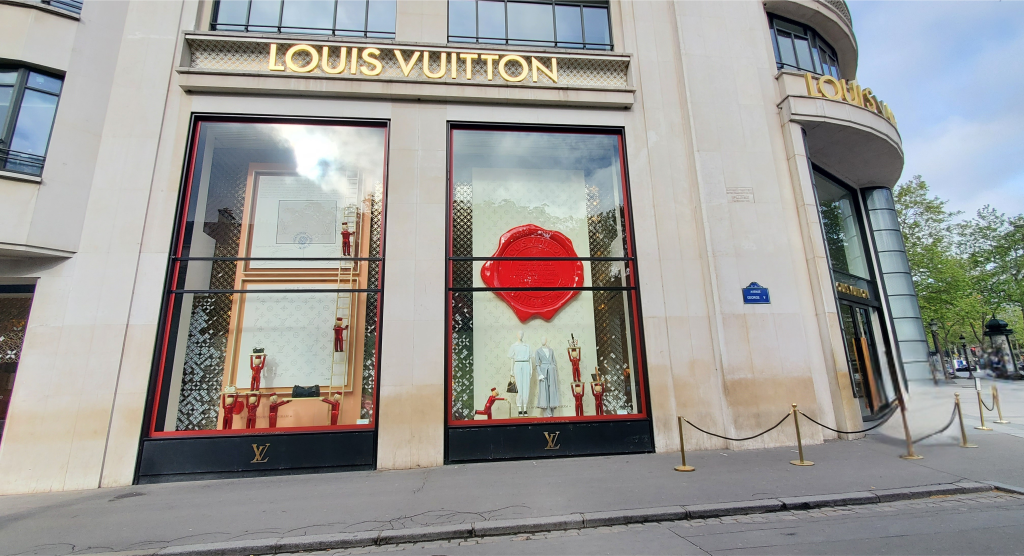
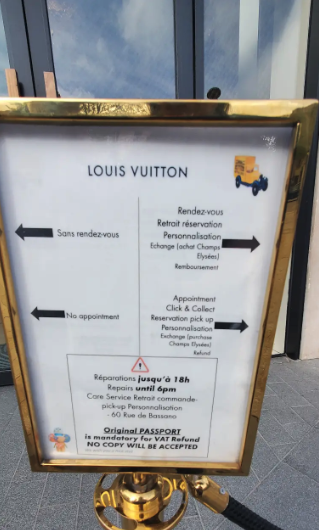
Aiming for the Arc de Triomphe and the high end of the avenue’s shopping, it was easy to imagine how crowded the area would be during the height of tourist season. Roped-off areas were already in place at the doors of Louis Vuitton, where queues were clearly anticipated.

There were two lines: one for people with reservations and one for everyone else, making line management part of the luxury experience.

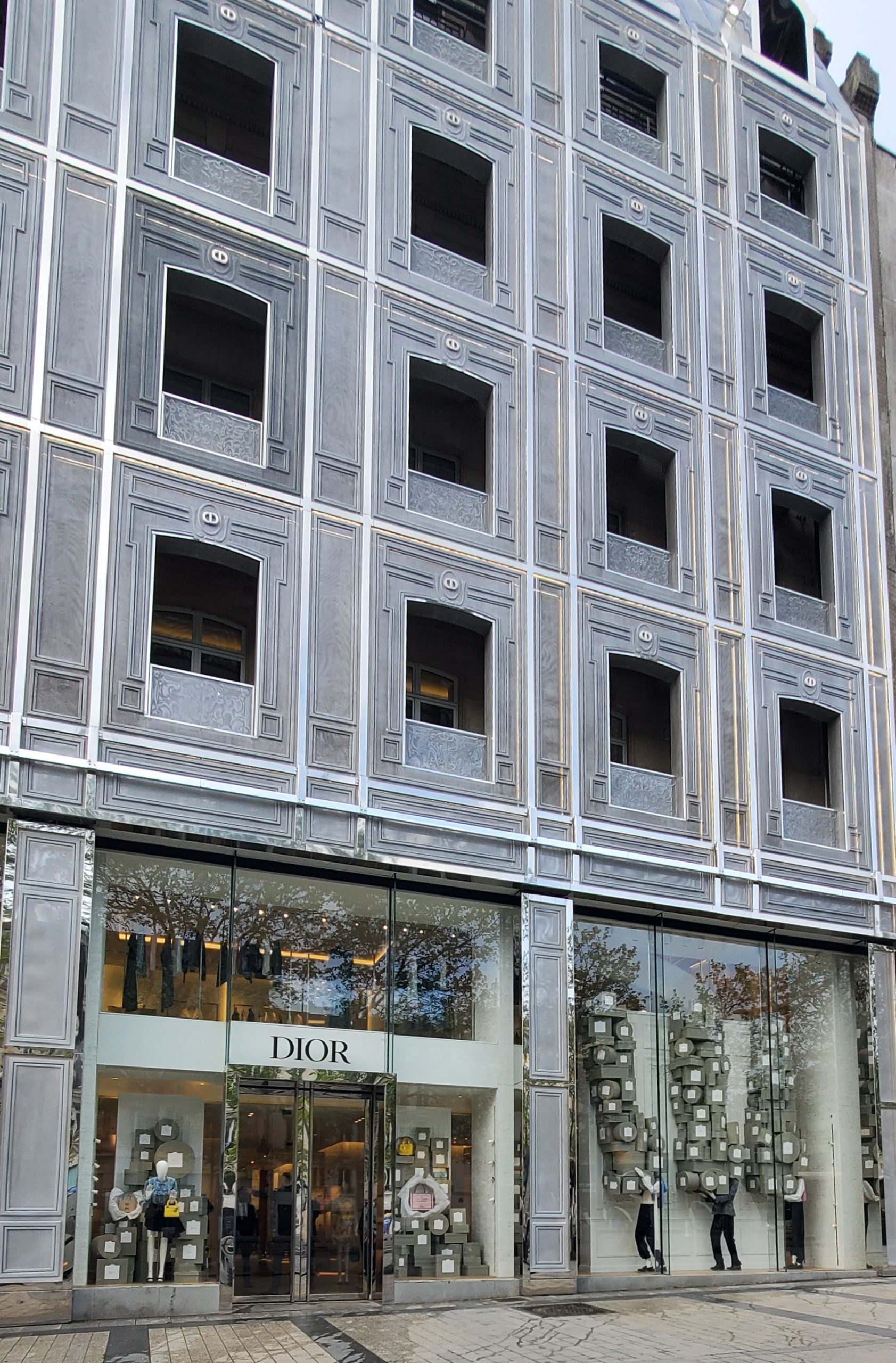
Most of the shops along the Champs had security at the door, with Dior in particular feeling more “guarded threshold” than open entry, further reinforcing the idea that access itself is a designed part of the experience.
The Champs is a destination that is as much about the experience of Paris shopping as it is about the shopping itself. In many ways, the Champs-Élysées is a story about contrast: prestige and accessibility, heritage and reinvention, shopping, and spectacle.
Shopping the Champs: The Quiet Luxury of Dior
Dior demonstrates how spatial restraint, controlled access, and appointment-led service can make even a multi-floor boutique feel like private couture.

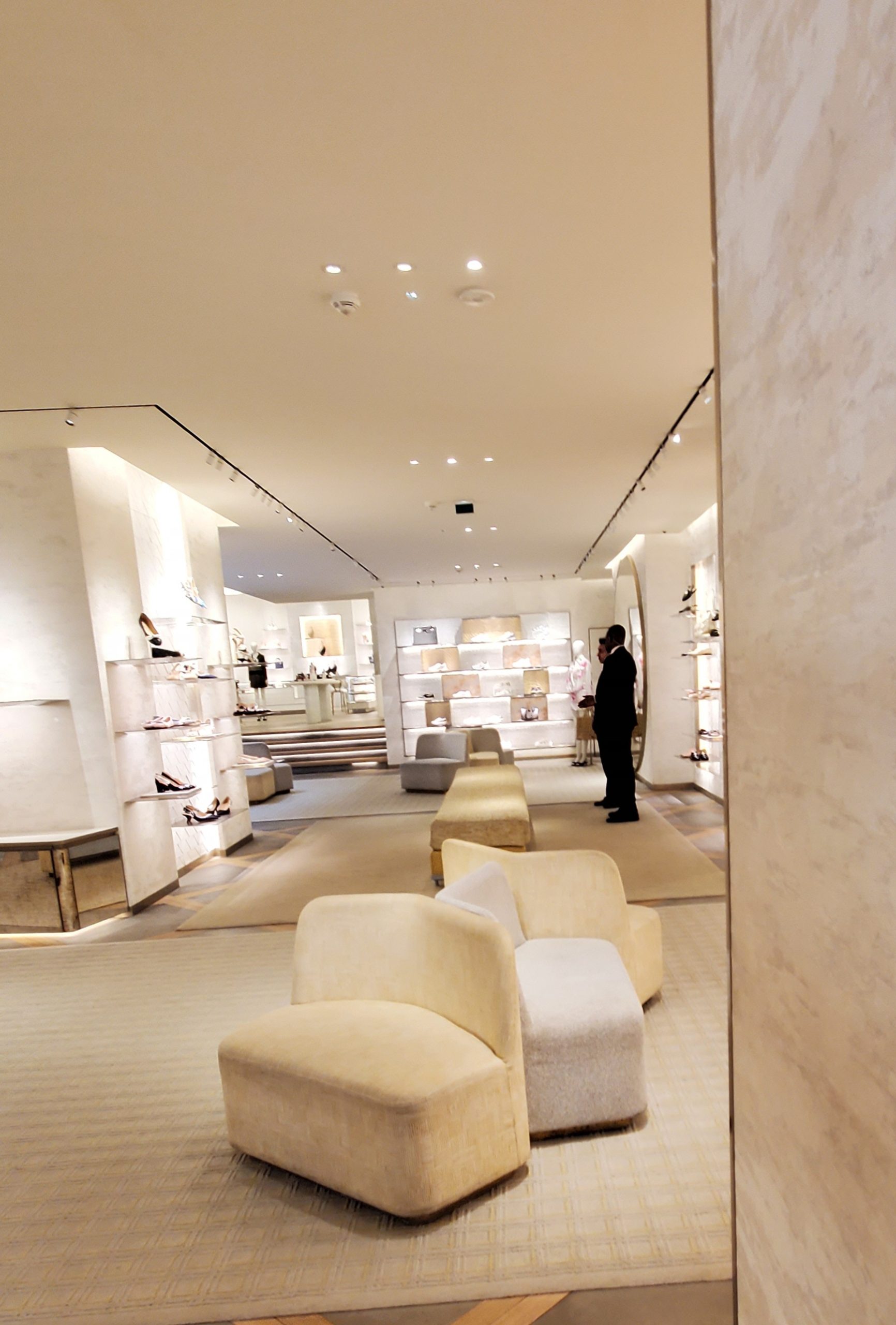
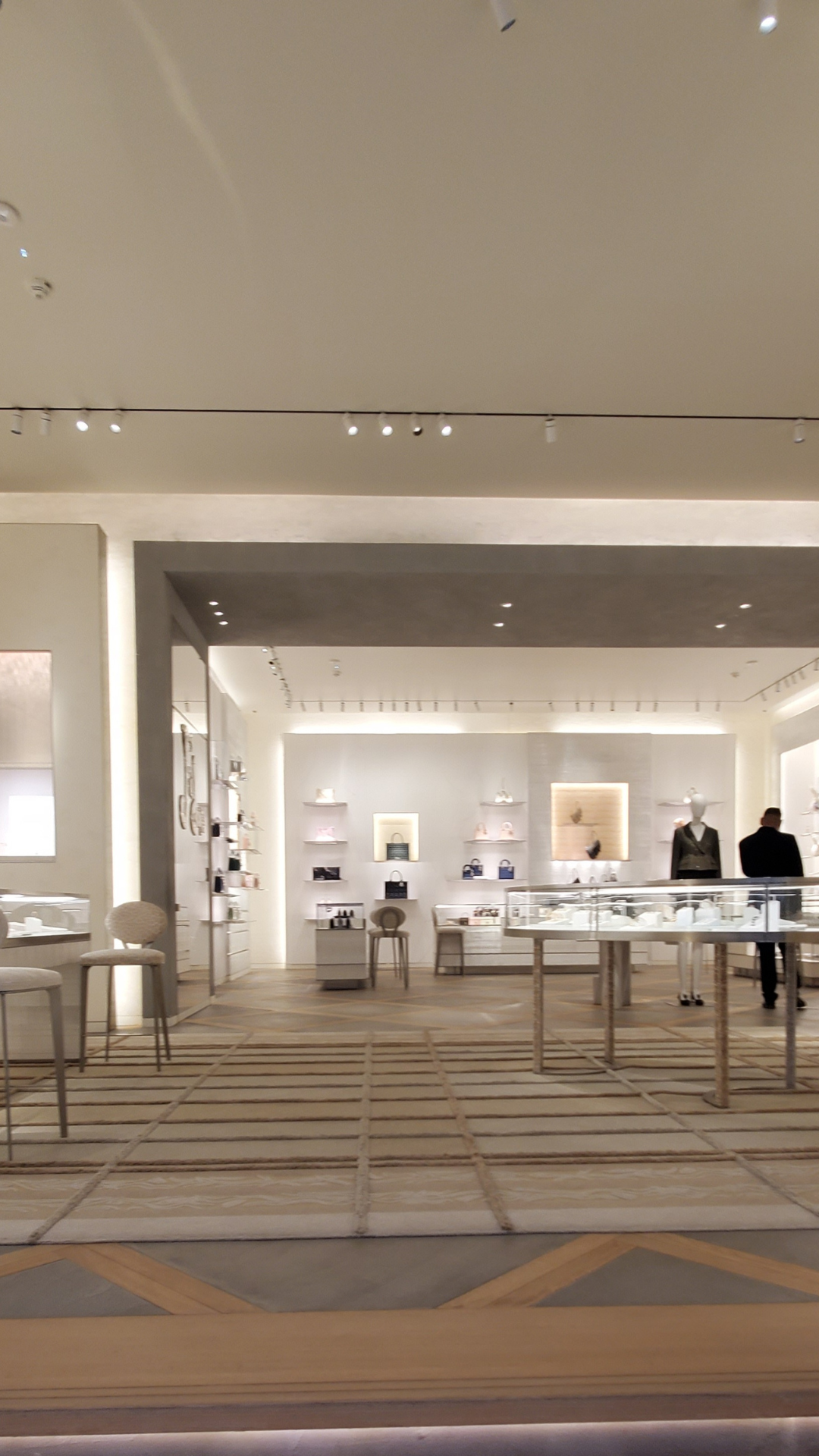
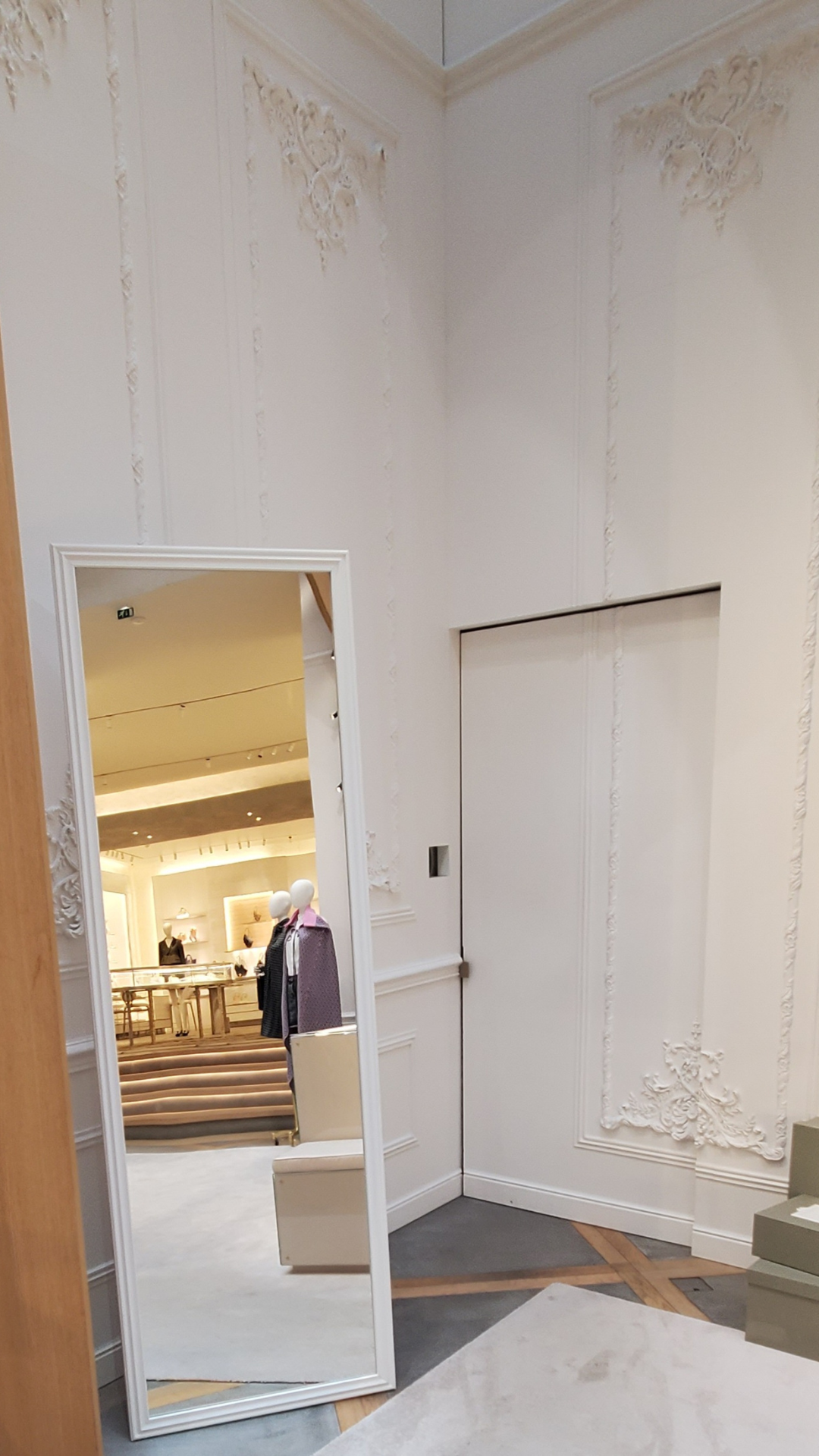
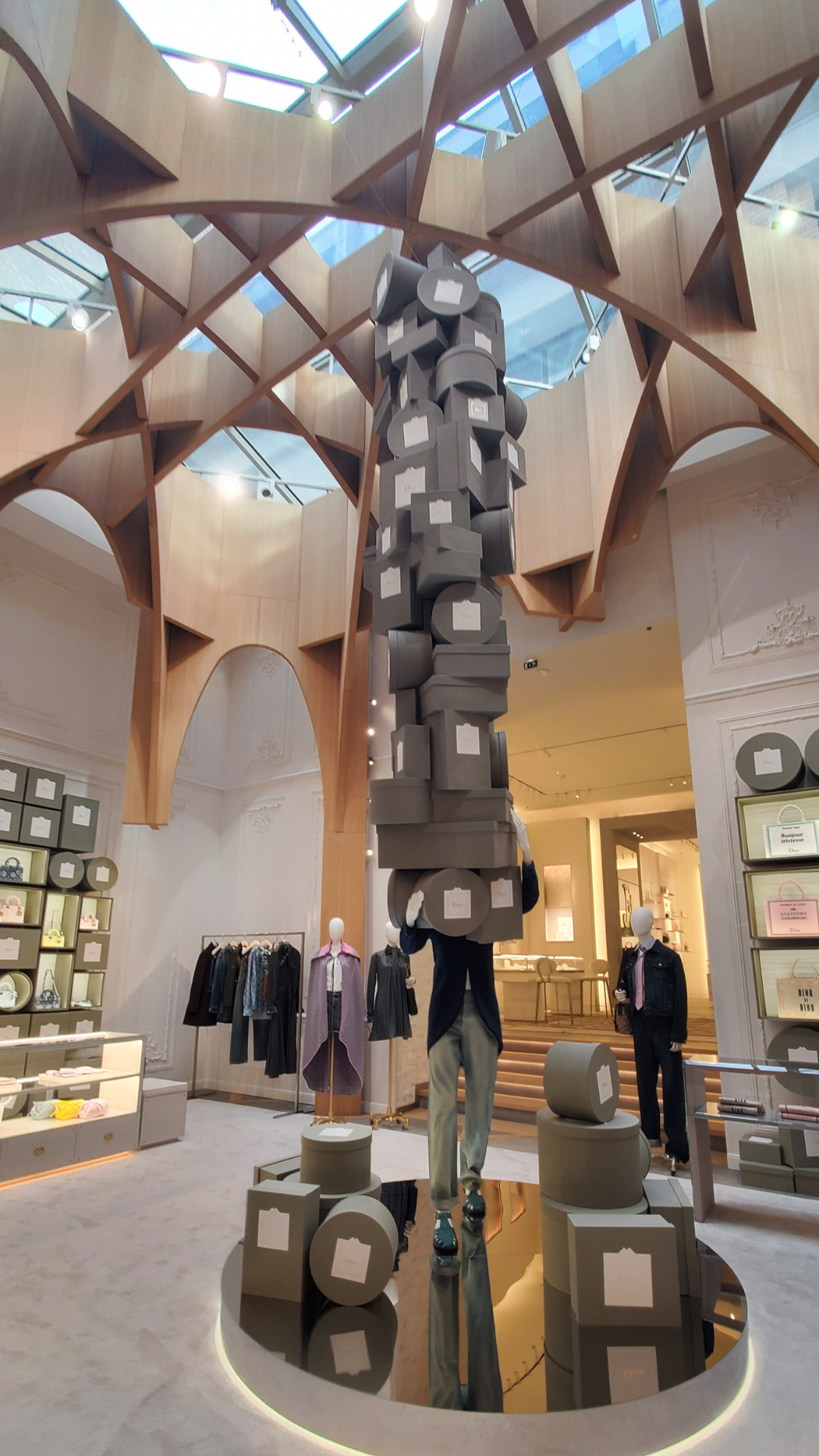
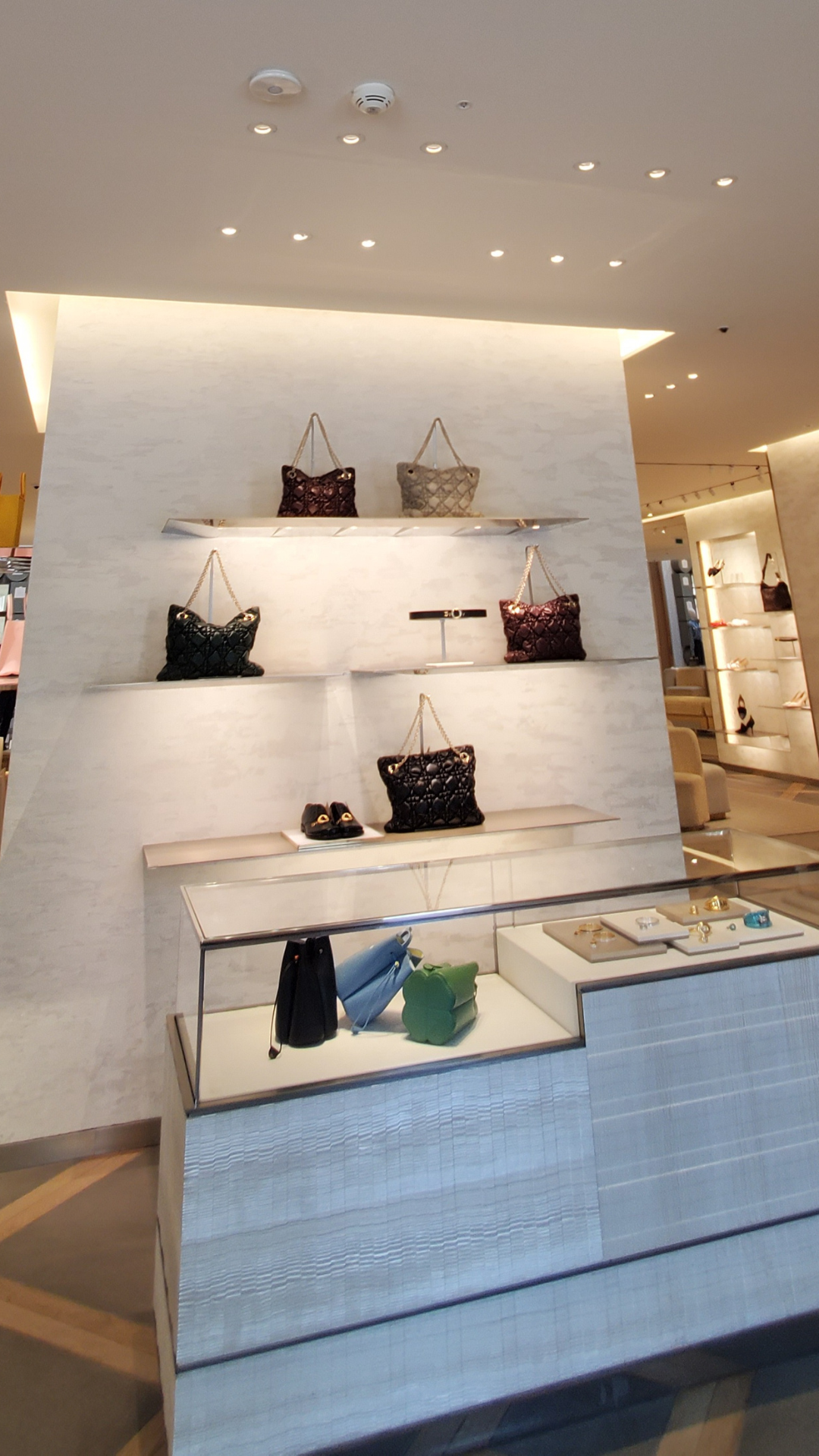
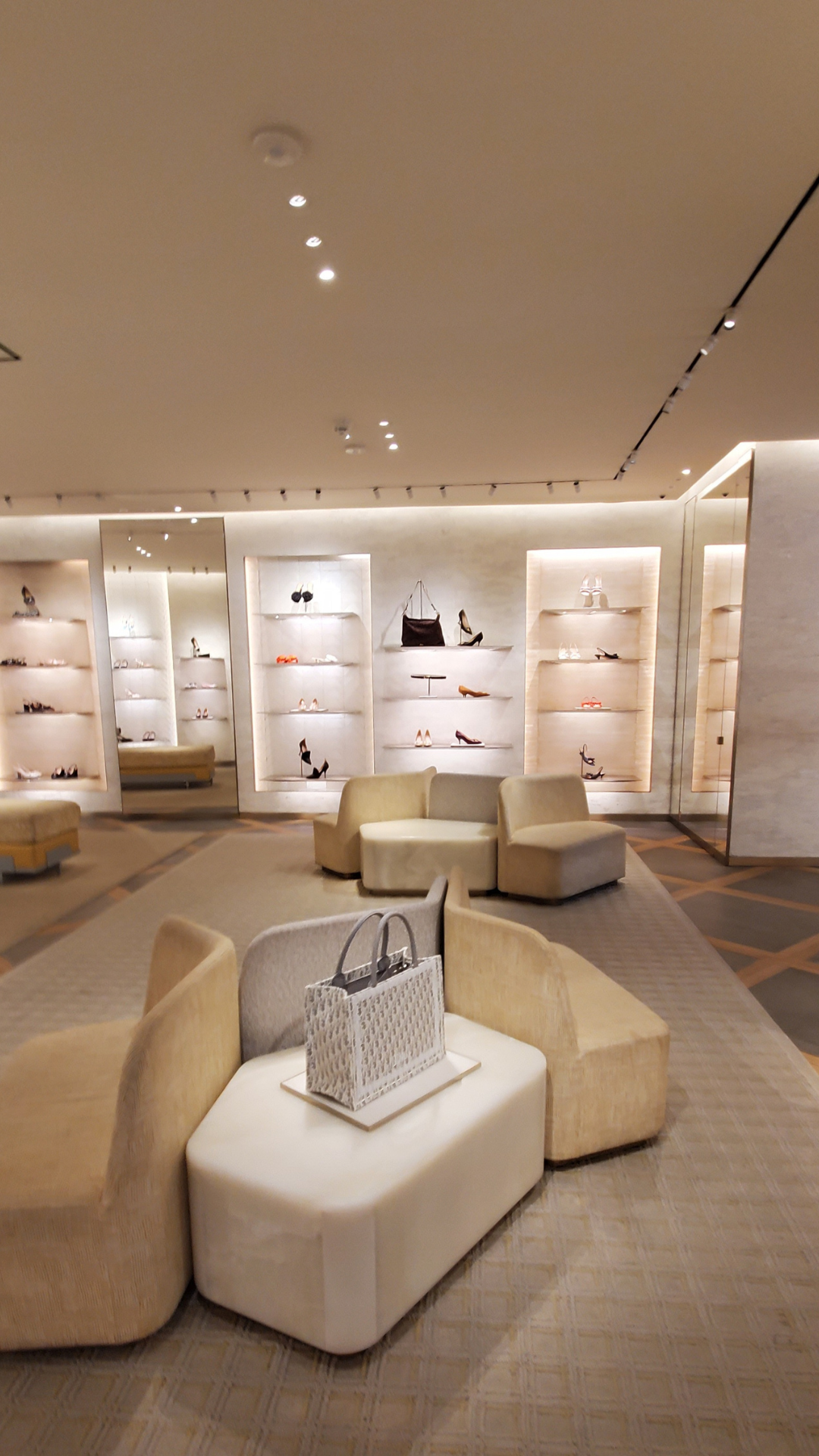
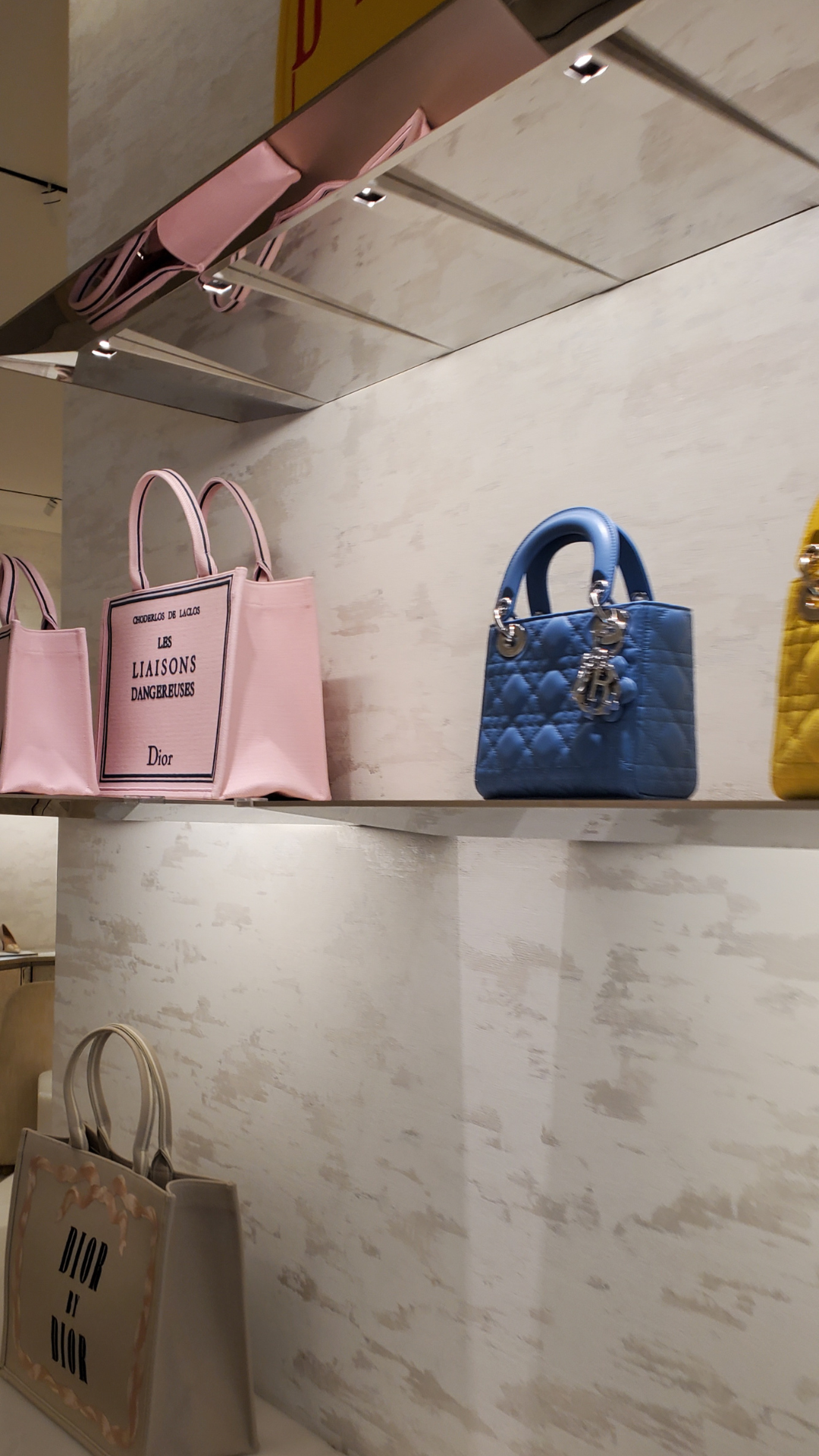
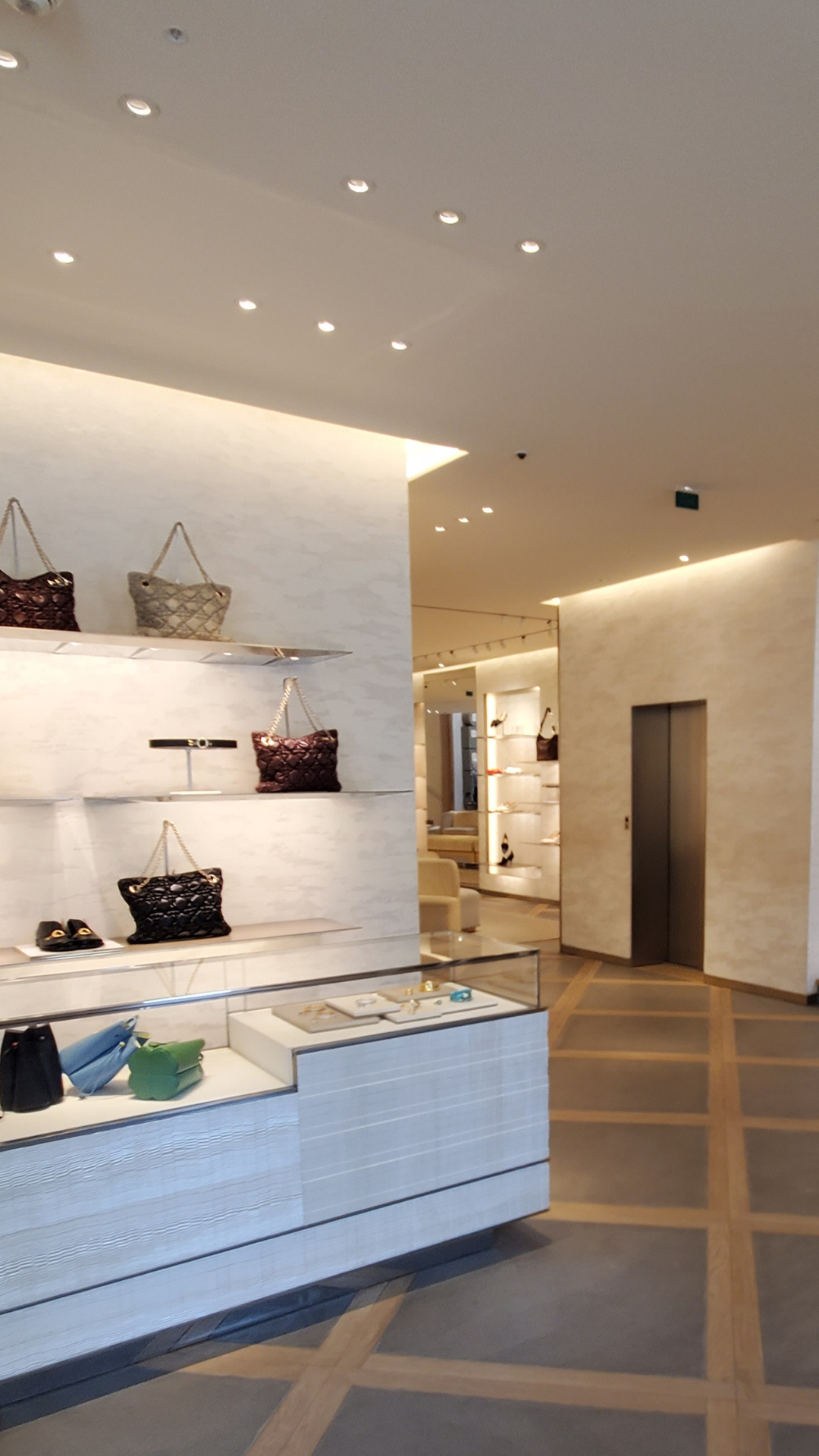
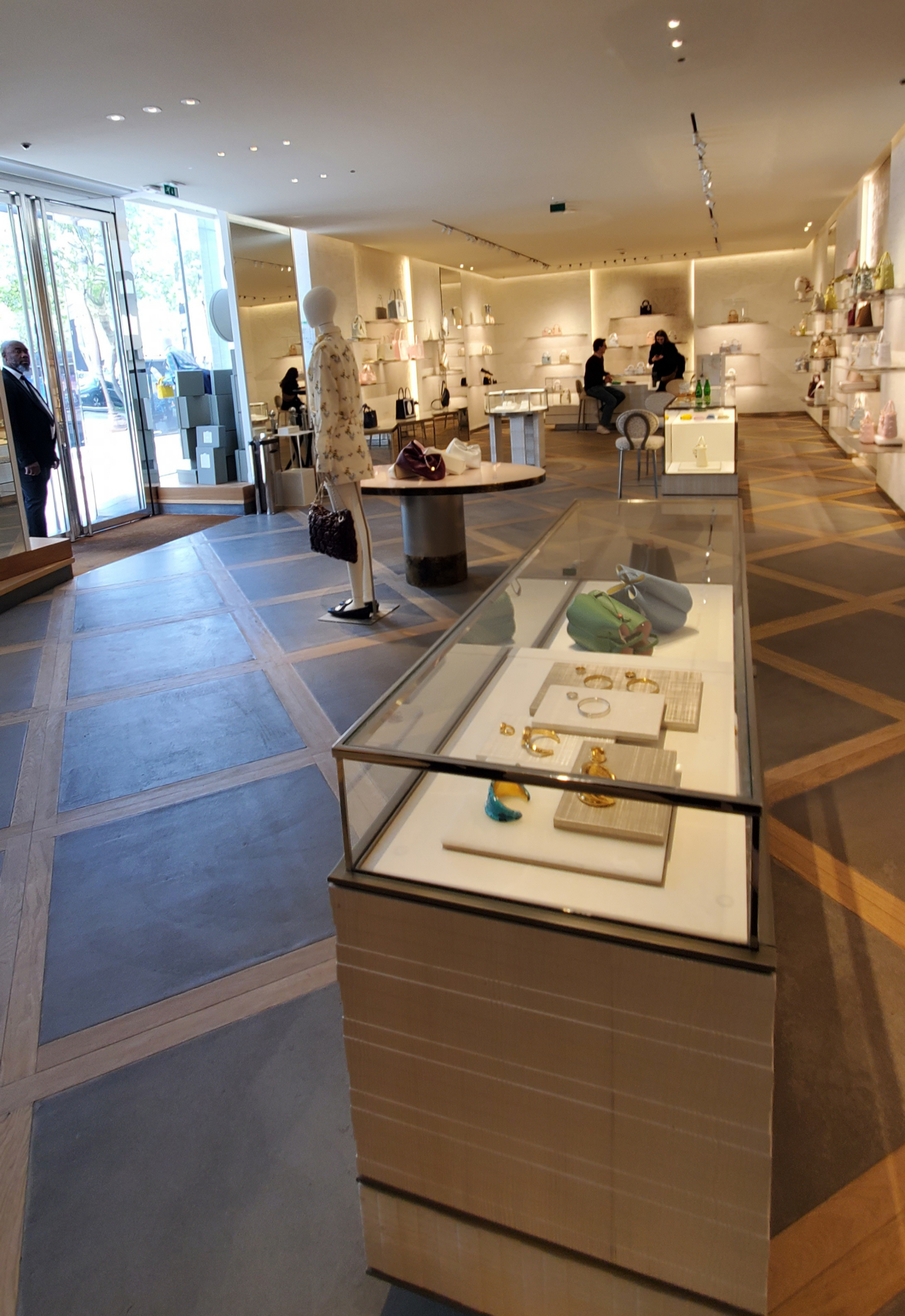
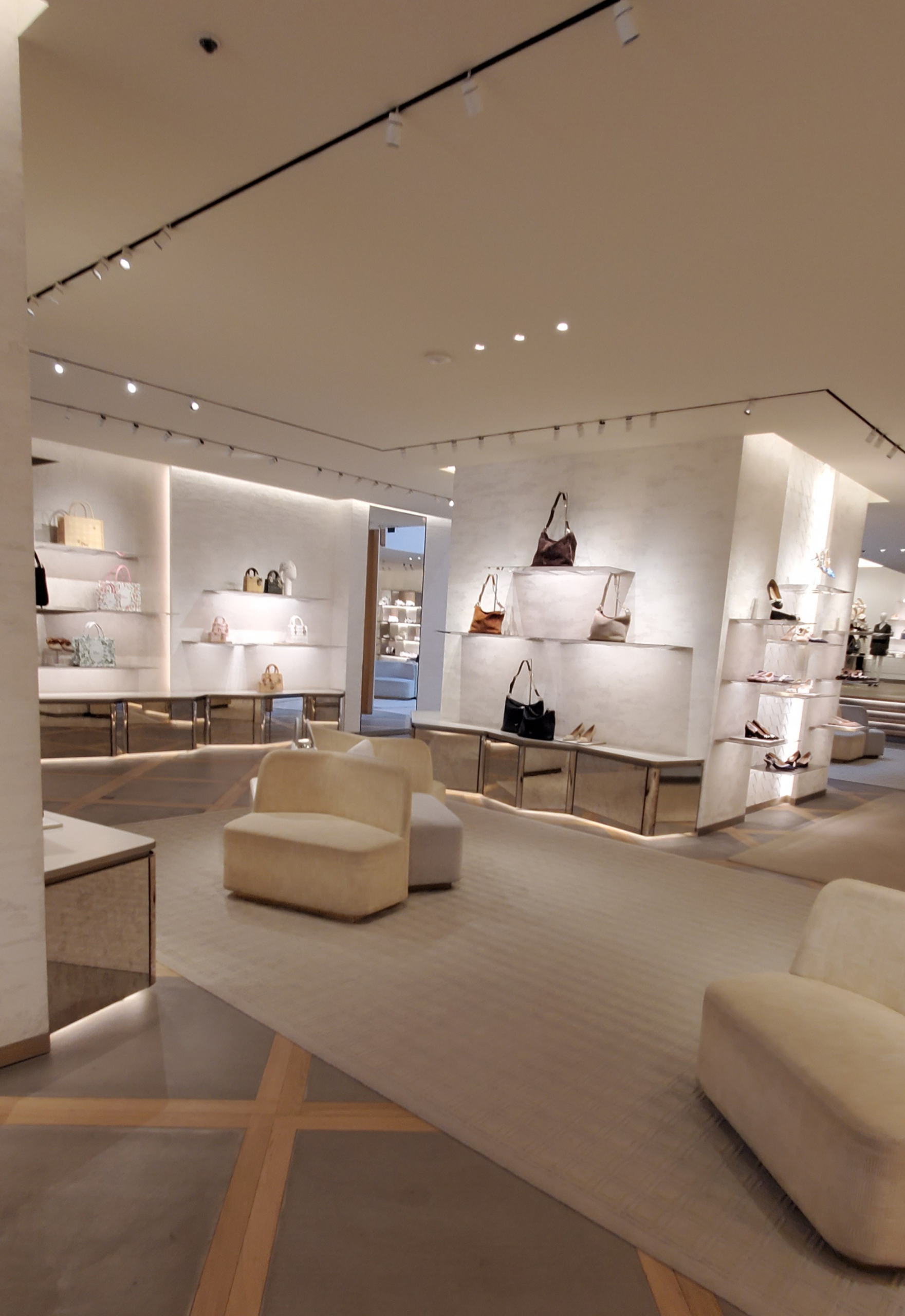
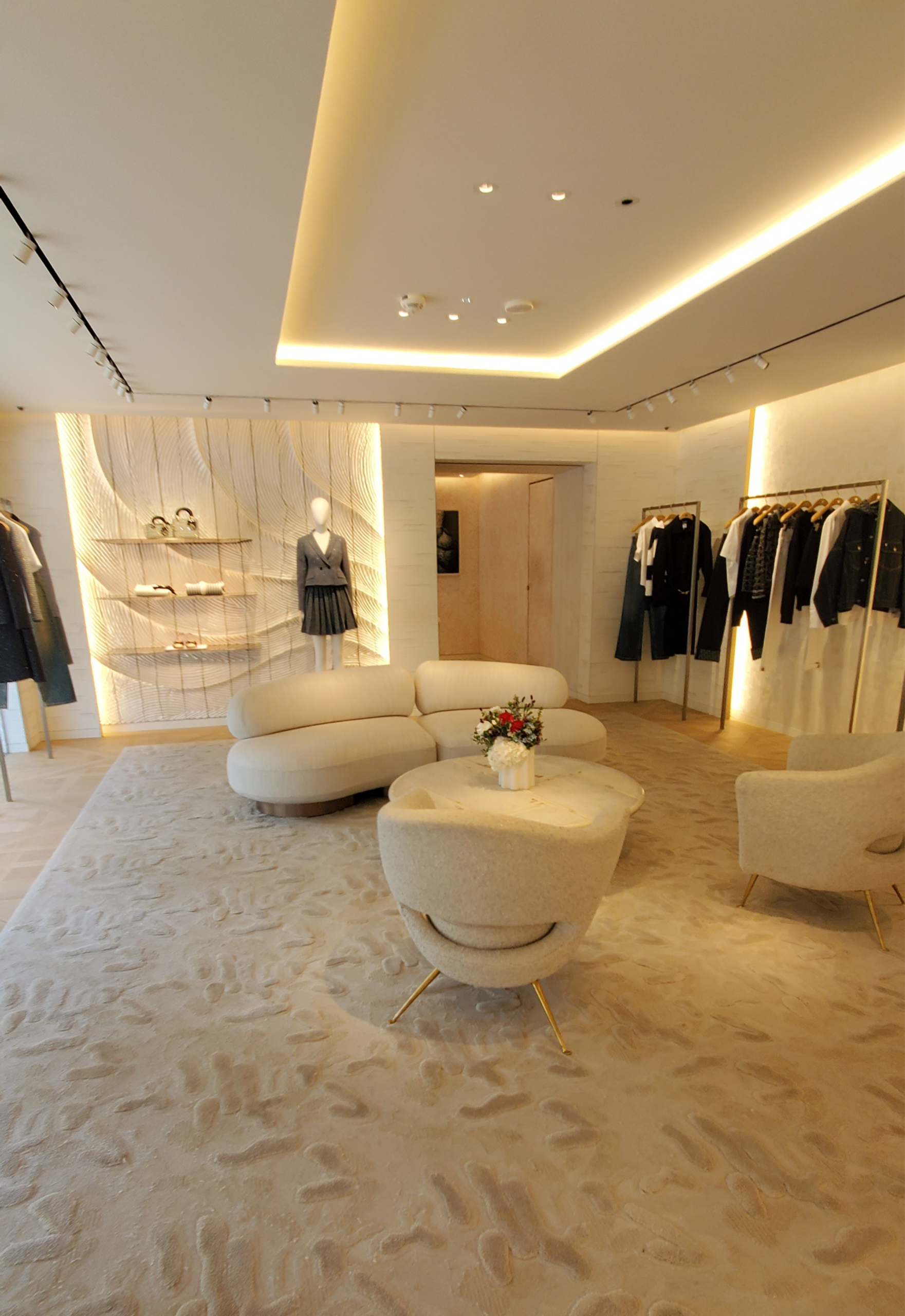
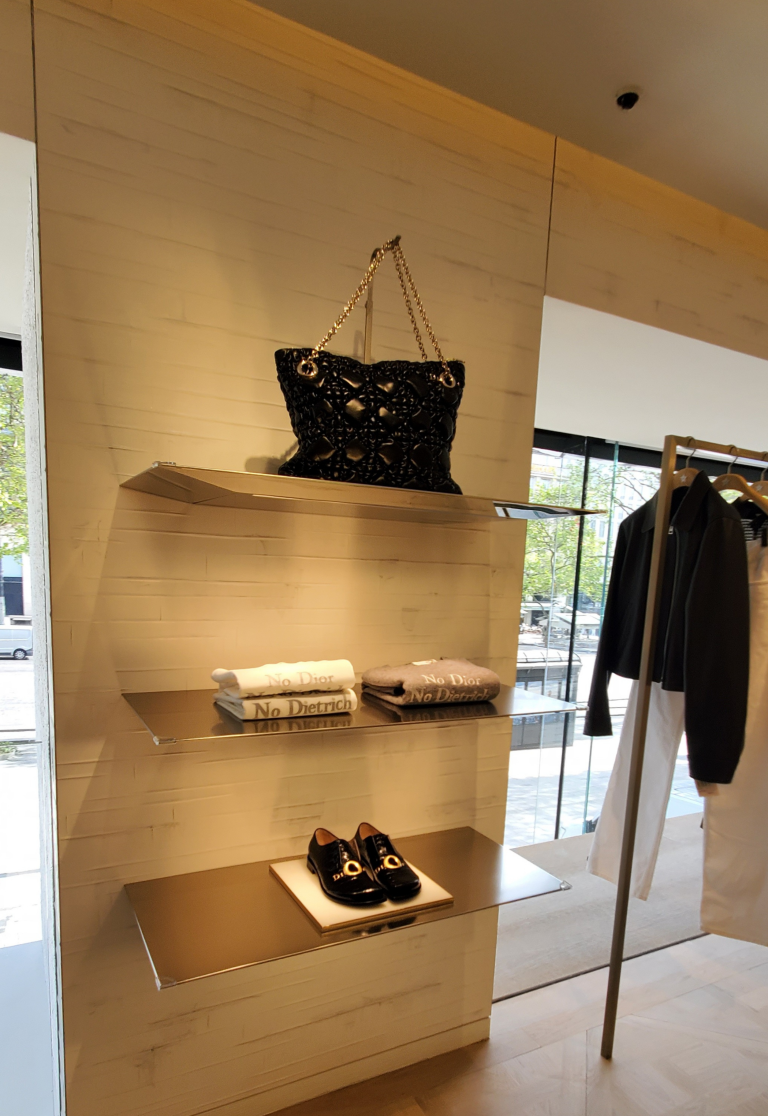
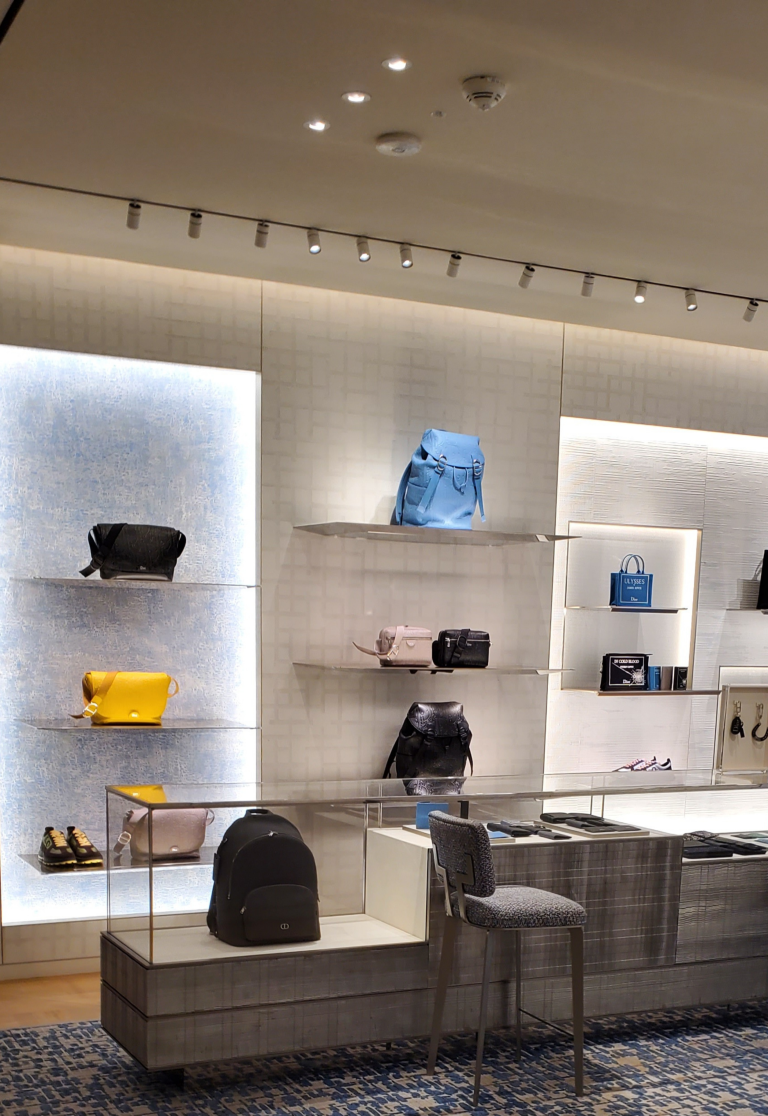
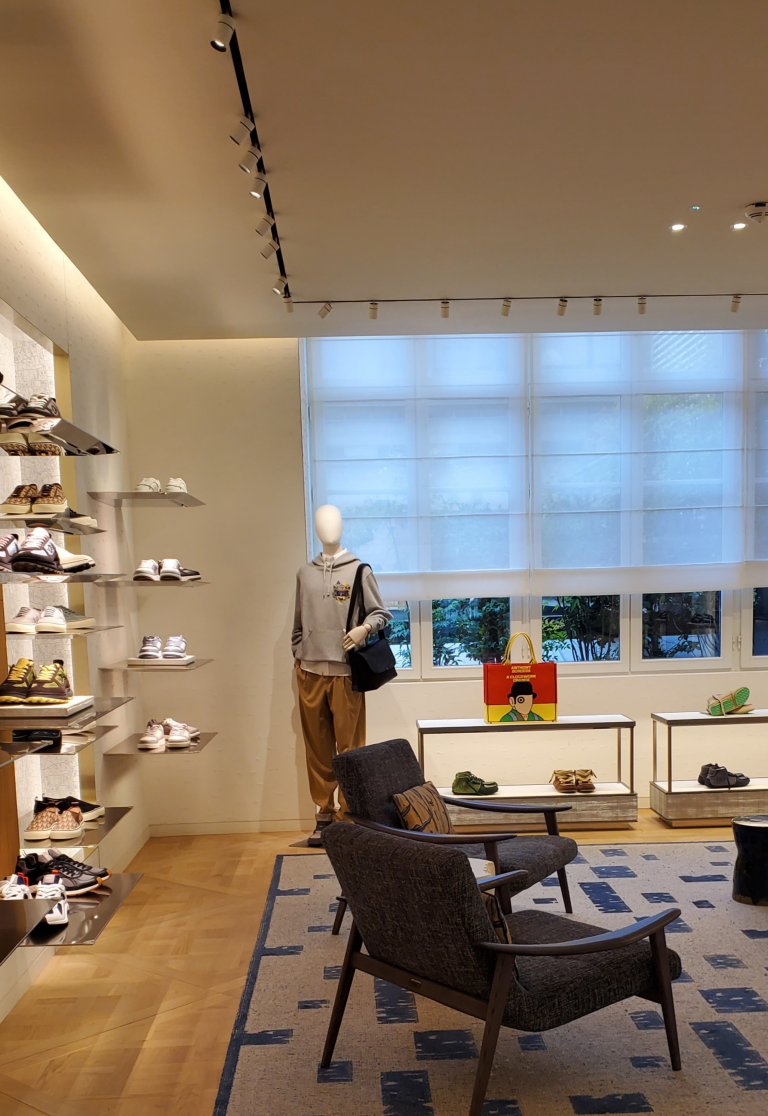
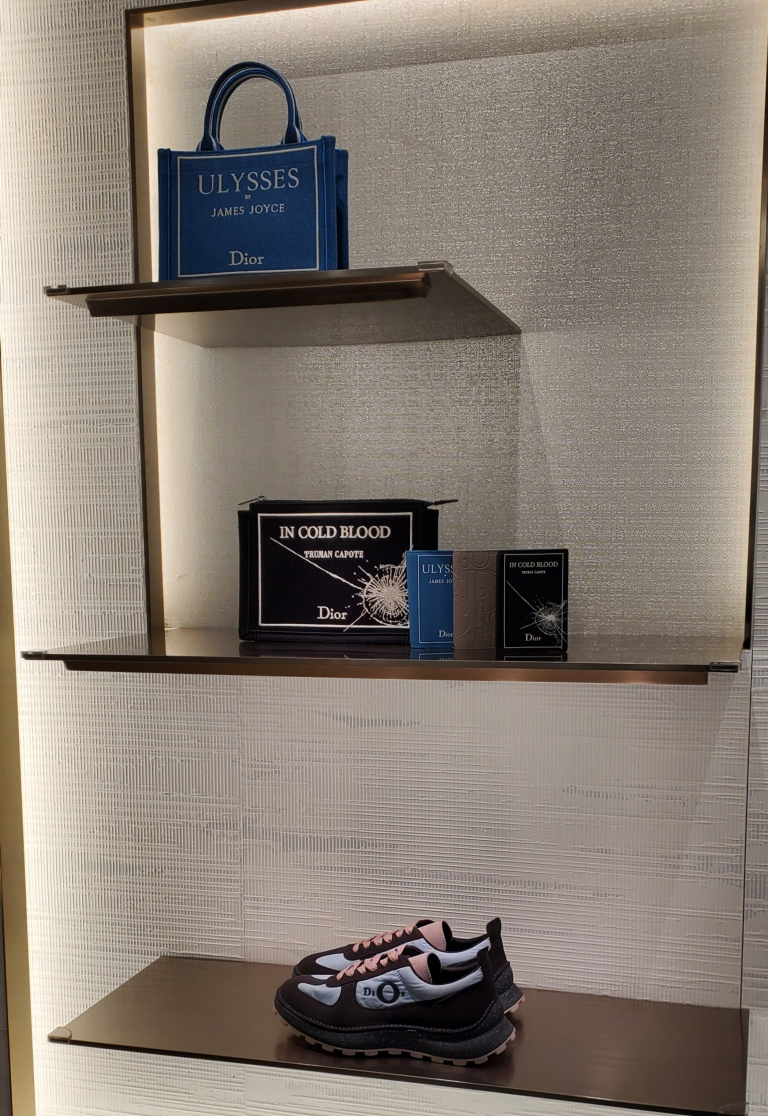
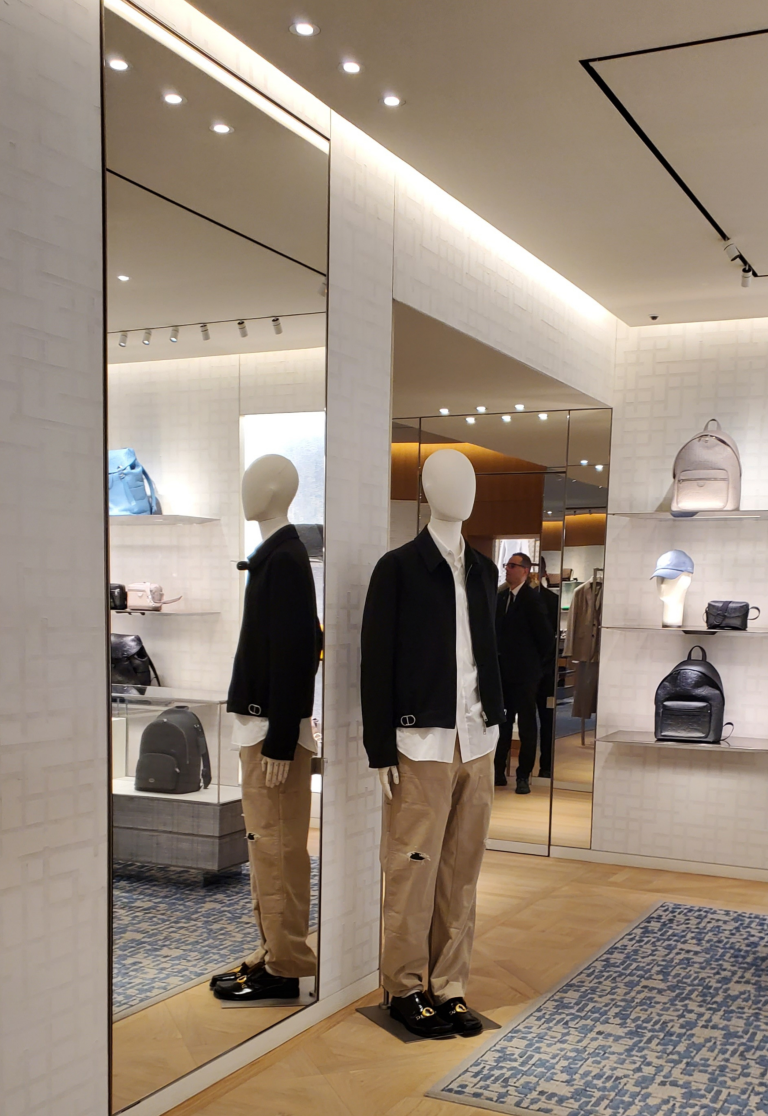
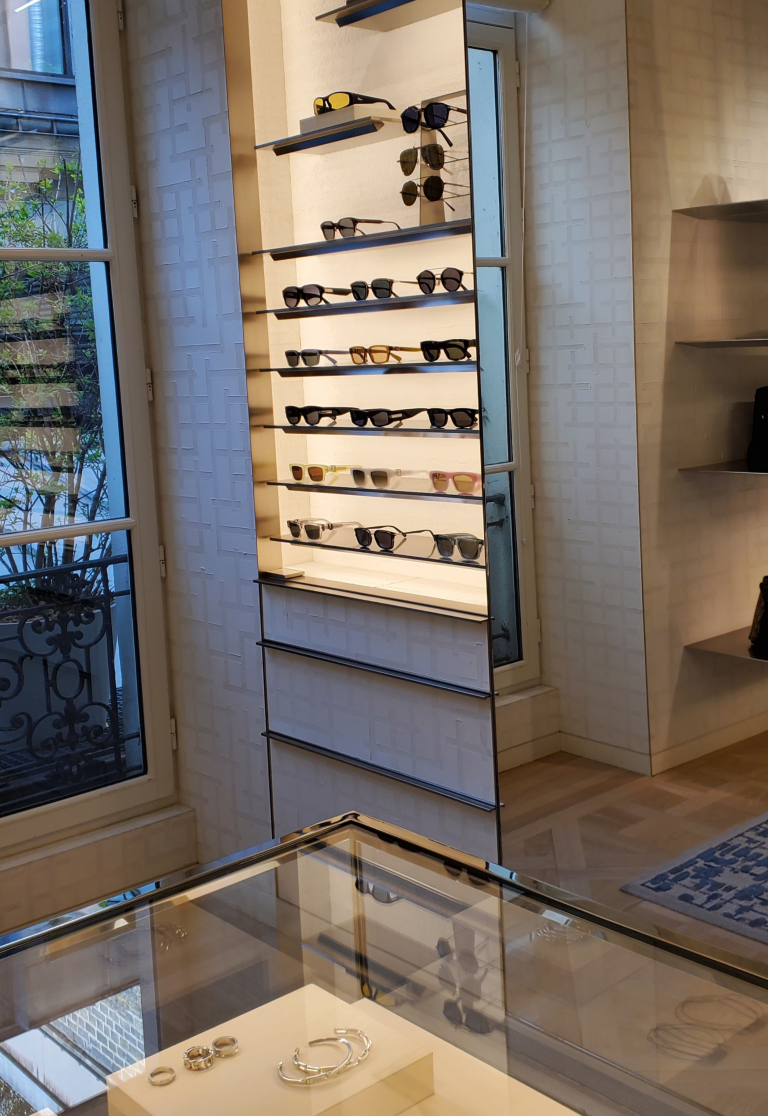
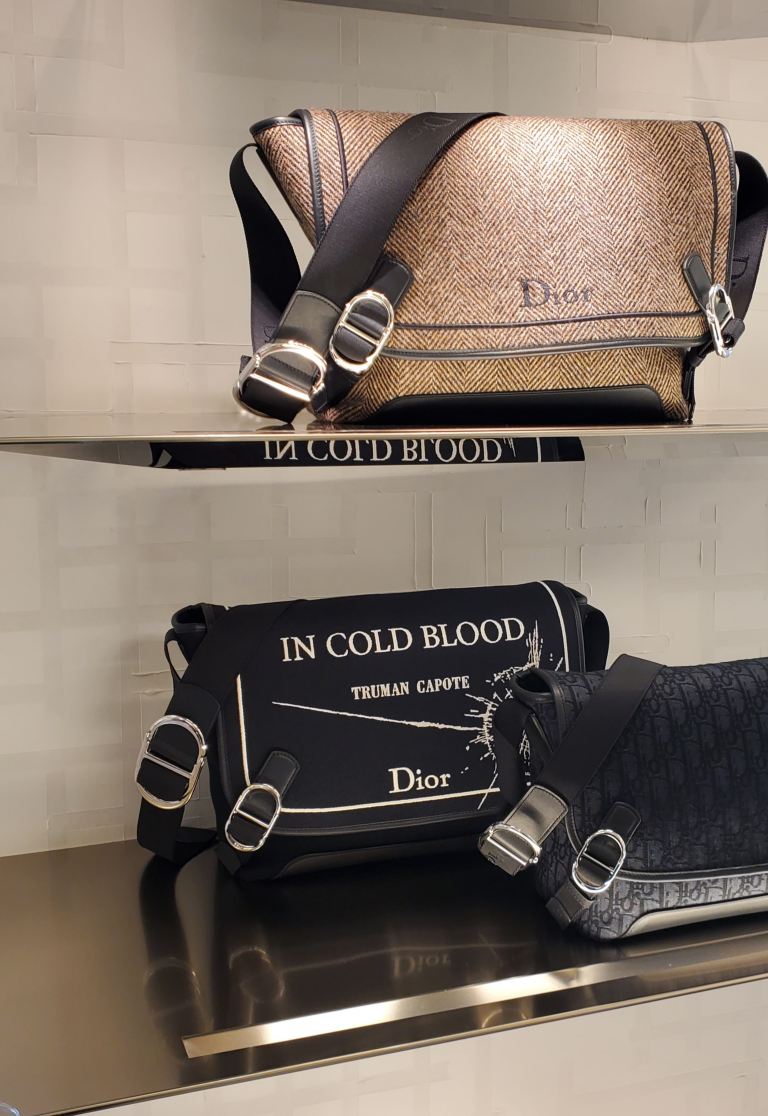
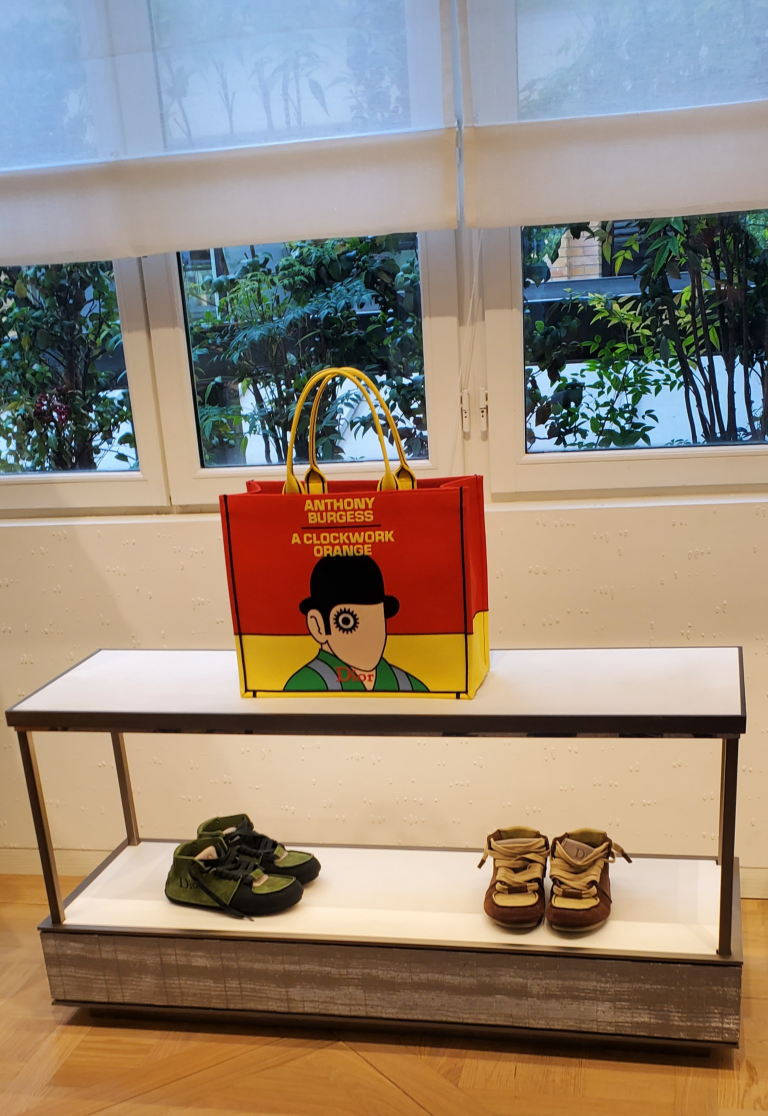
Dior’s Champs-Élysées flagship store is the premier destination on the avenue. It’s a space where the experience begins on the sidewalk and continues with every step inside. The store is bright and airy, with a subtle scent and soft music complementing the atmosphere. Clearly not designed for casual rack-browsing, the limited product is displayed as if in an art gallery, with no visible price tags and plenty of negative space around each piece.
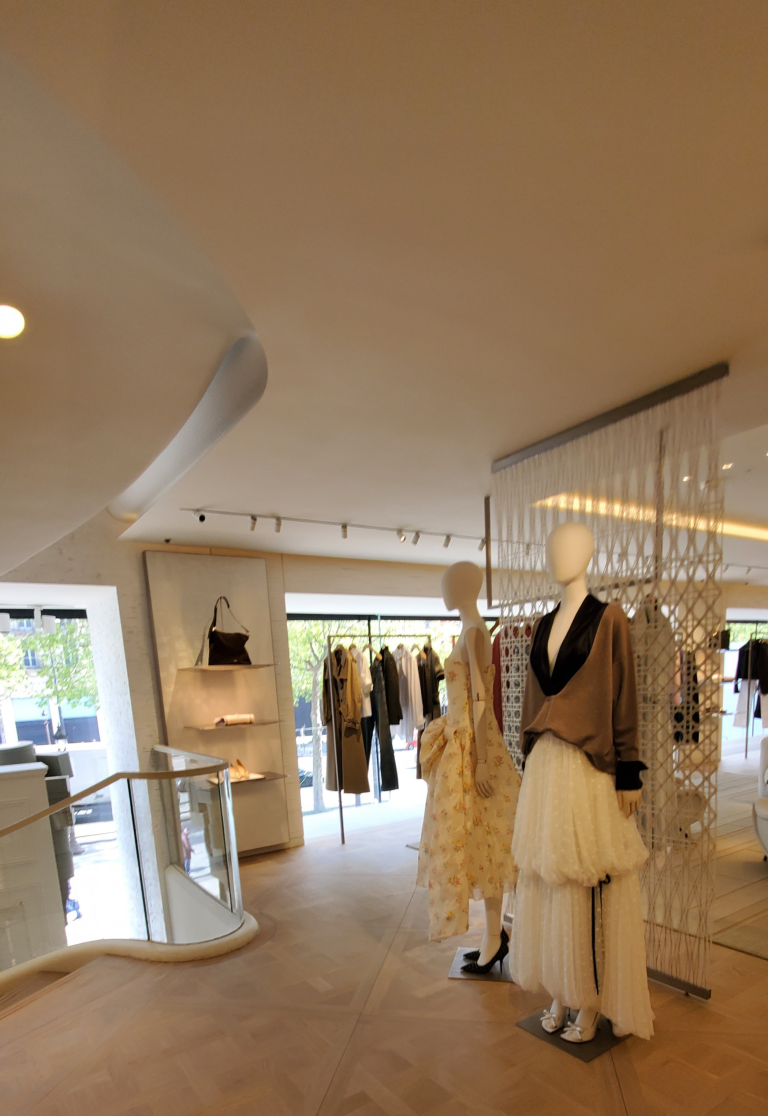
For design teams, the store is a textbook example of how to stage quiet luxury. Lighting is purposeful, with softly diffused overhead lights making it feel like the sun is shining inside the building and directional lighting focused on displays. The sweeping staircase was as much art as it was function. Carefully staged displays in all white draw the eye upward and frame the journey to higher floors. An elevator ensures accessibility, underscoring that inclusivity and exclusivity can coexist when they are intentionally considered.


Walking through Dior felt less like shopping and more like moving through a curated exhibition where we happened to be the only visitors who mattered at that moment. The absence of crowds wasn’t accidental; it was orchestrated through the appointment system that ensures each client receives undivided attention from their sales associate. This controlled access transforms what could be an overwhelming retail environment into something intimate and considered, where the act of browsing becomes a privileged experience rather than a transactional necessity. The space never felt rushed or crowded, allowing time to absorb the details: the way light played across textured surfaces, the precise placement of each handbag, the breathing room around every display.
The sensory experience extended beyond what we could see. A subtle scent permeated each floor, creating an olfactory memory that lingered long after leaving, while the carefully calibrated background music set a tempo that encouraged slow, deliberate movement through the space. Even the temperature felt perfectly balanced, not too warm, not too cool, contributing to an environment designed for extended stays rather than quick visits. These atmospheric choices weren’t decorative flourishes but strategic elements that together created what felt like a retreat from the bustling Champs-Élysées just outside the doors.
Most striking was how the store embodied the principle that in luxury retail, what you choose not to show matters as much as what you display. The minimal product presentation, with generous negative space and gallery-style placement, made each piece feel significant and considered rather than part of an overwhelming inventory. The absence of visible price tags reinforced that this wasn’t a space for casual comparison shopping but for clients who had already decided they wanted the Dior experience and were simply selecting which expression of it to take home. This restraint, this refusal to overwhelm or oversell, paradoxically made everything feel more desirable and exclusive.


Dior feels like the polished luxury benchmark on the Champs-Élysées, where service, presentation, and brand theater all work together.
Shopping Louis Vuitton’s Champs-Élysées Flagship Store
Louis Vuitton represents that side of Champs-Élysées luxury retail where size, visibility, and brand presence are part of the experience.

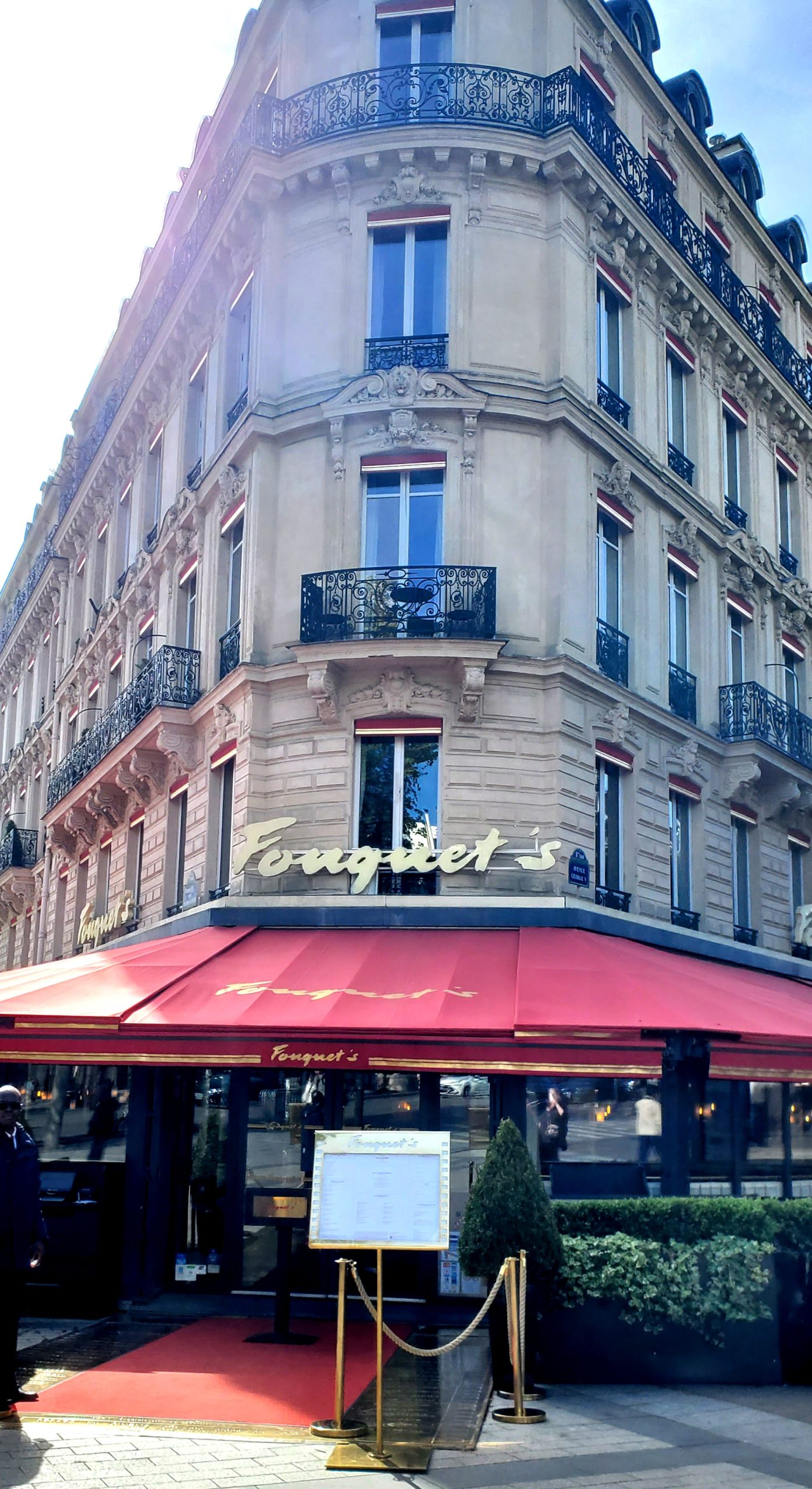
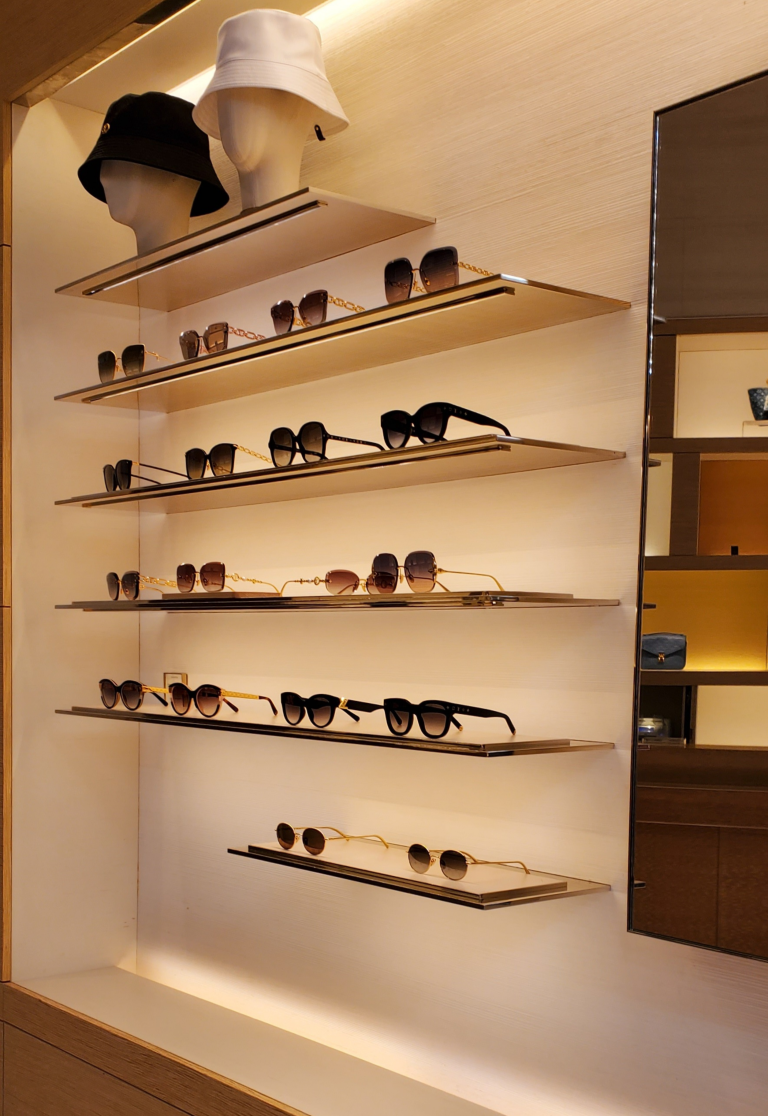
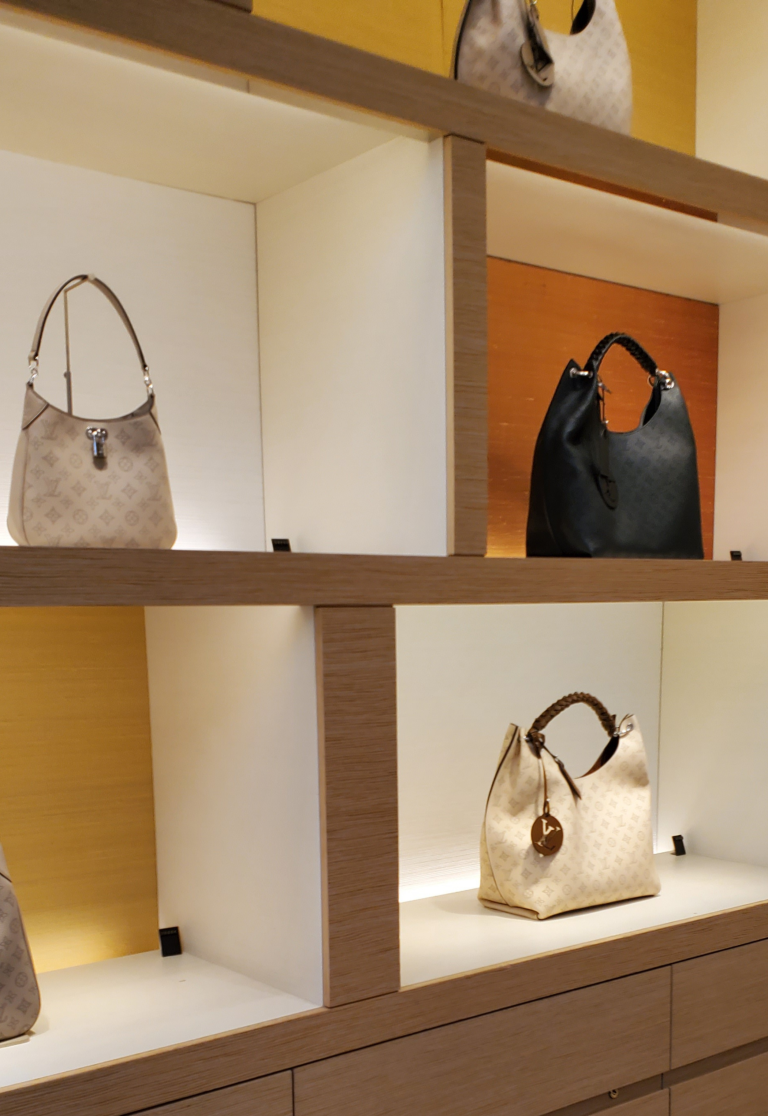
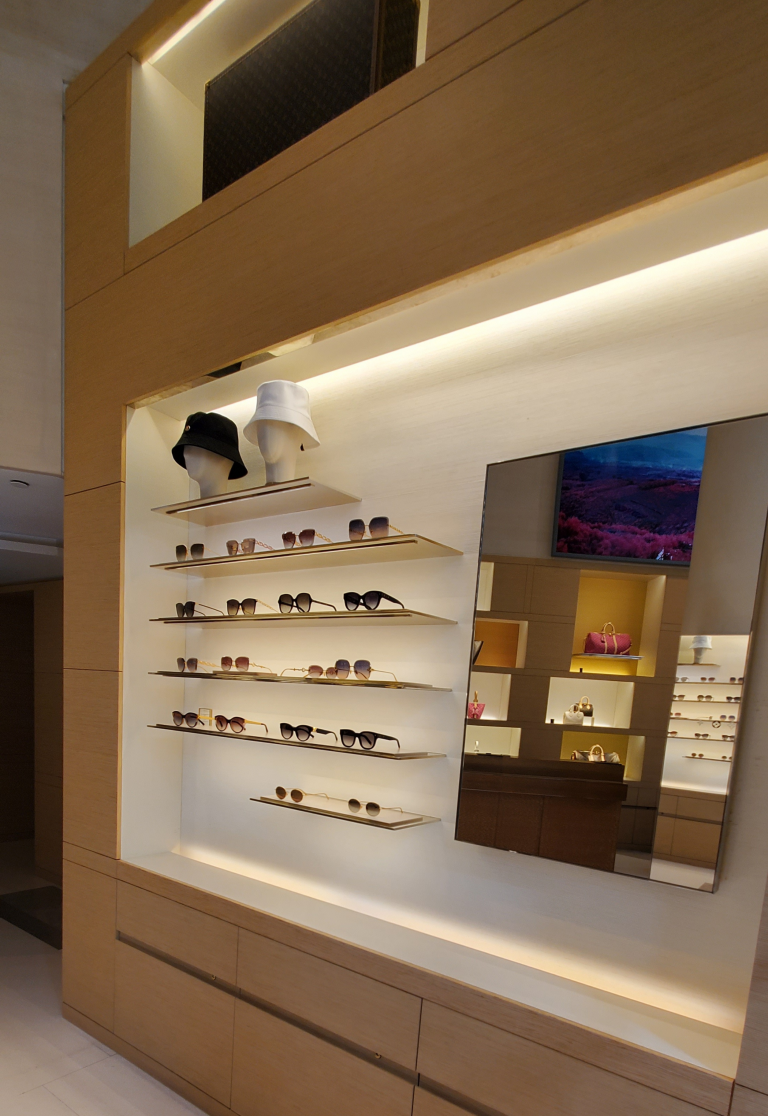
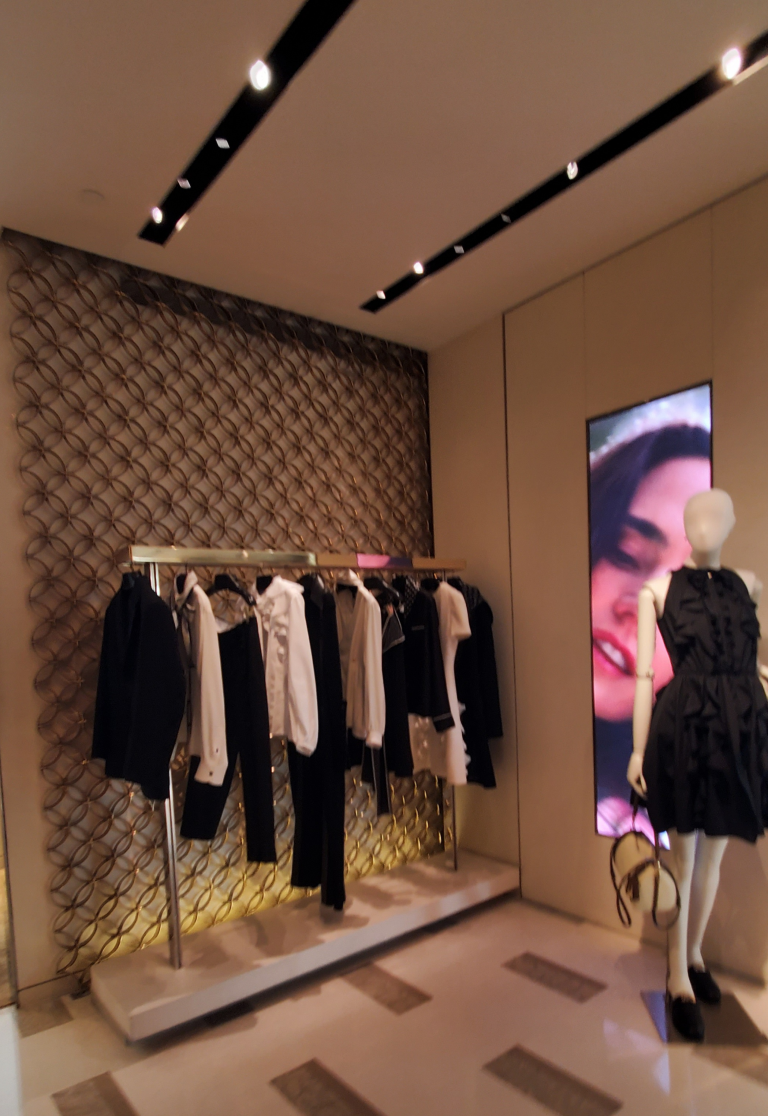
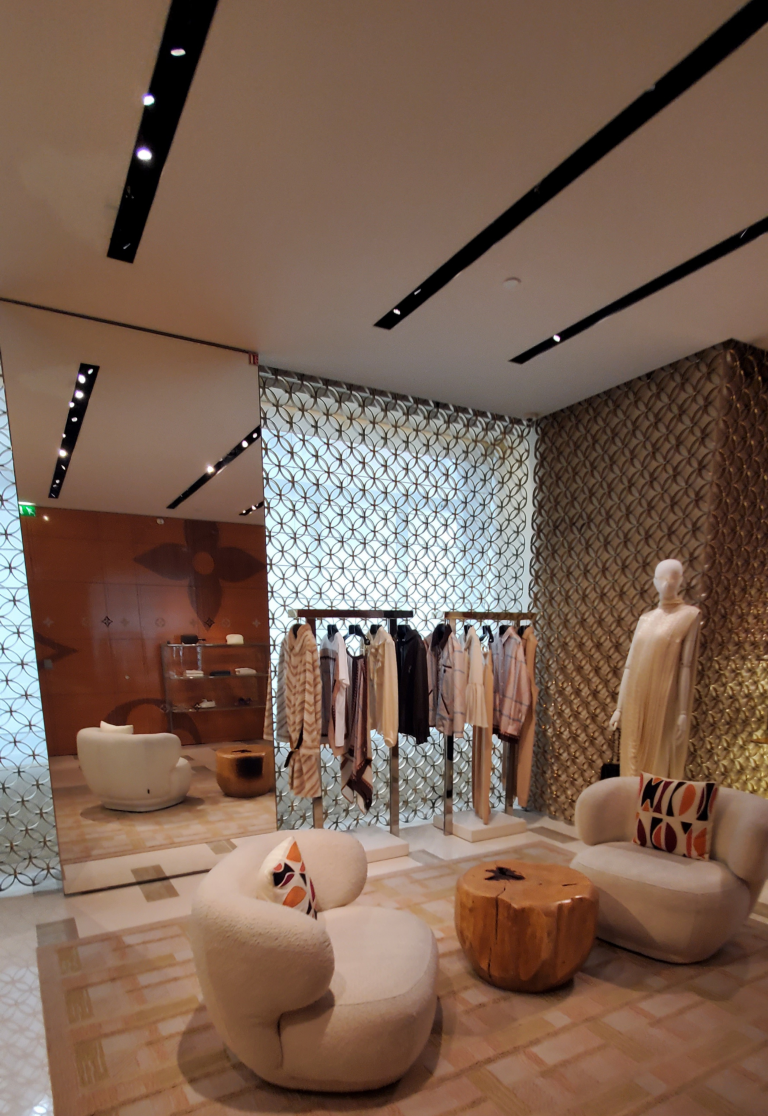
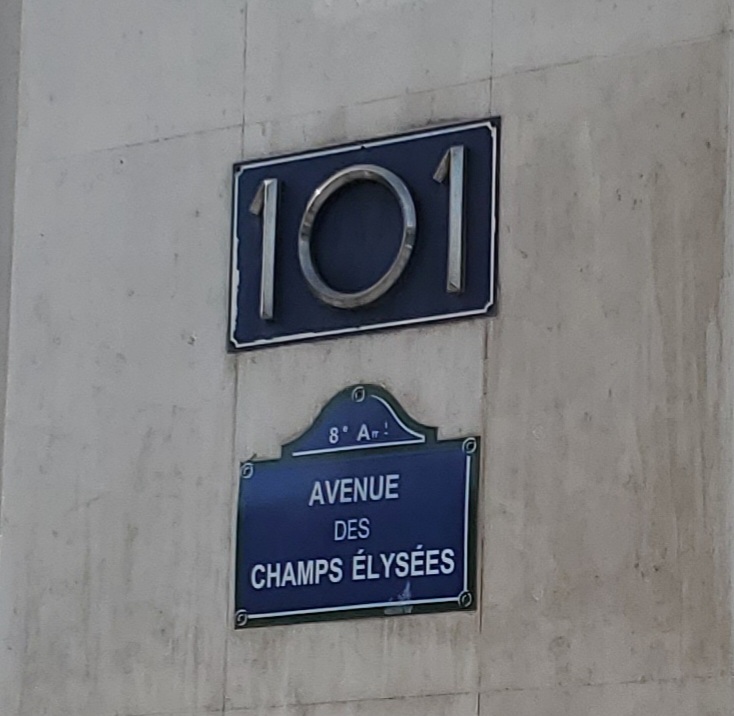
Just down the street from Dior, sits Louis Vuitton, at 101 Avenue des Champs‑Élysées, across from Brasserie Fouquet’s.
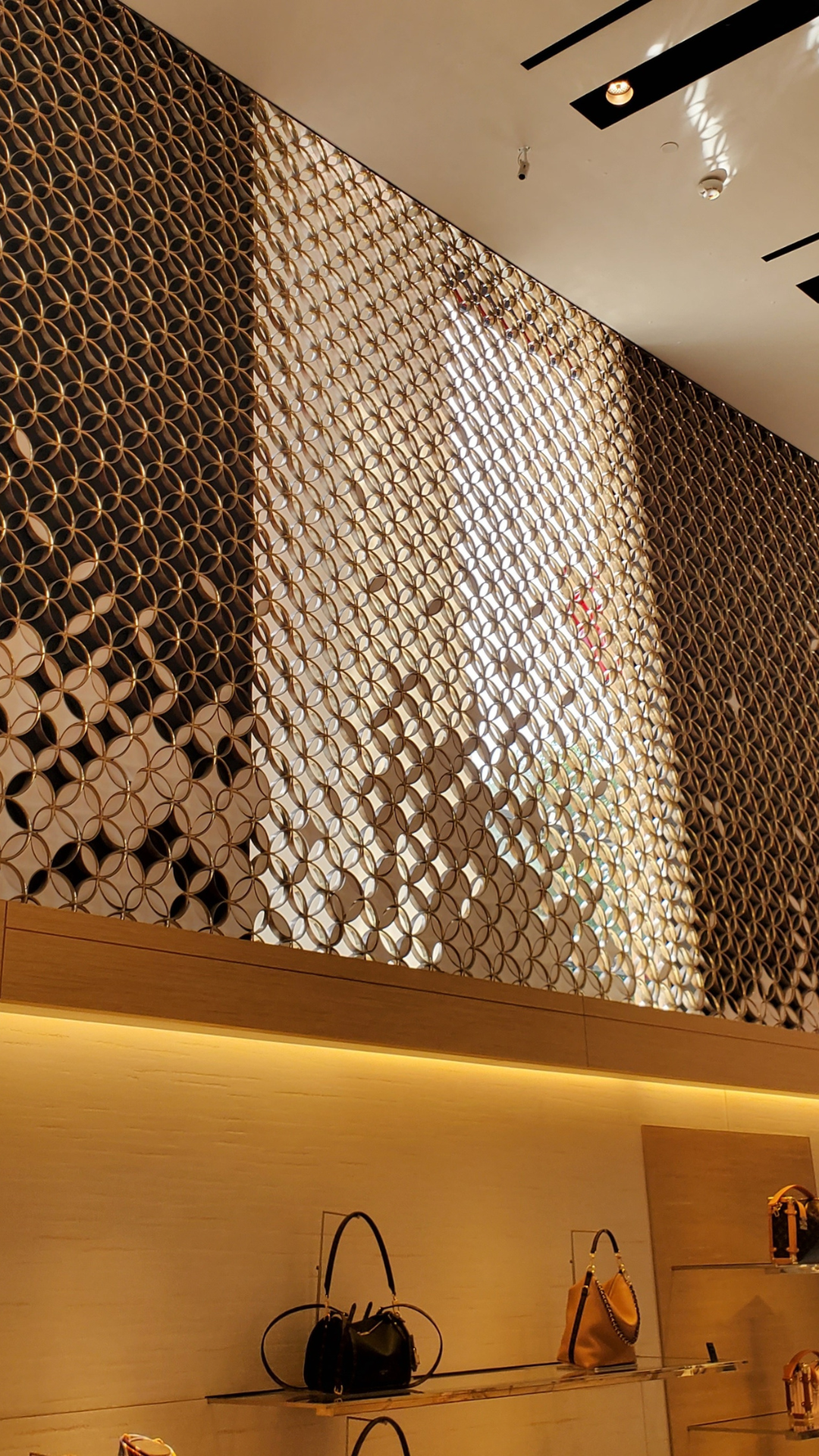
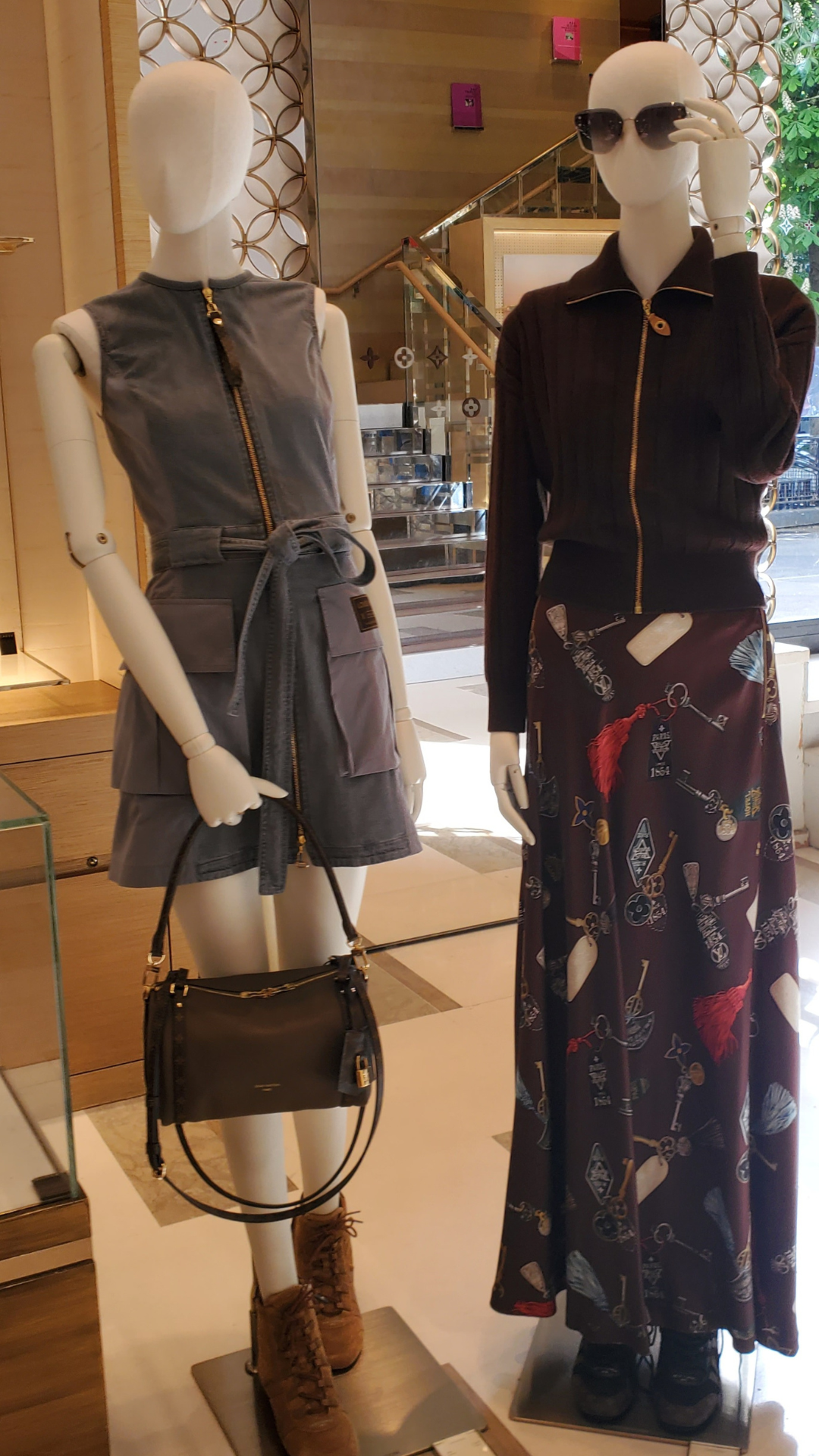
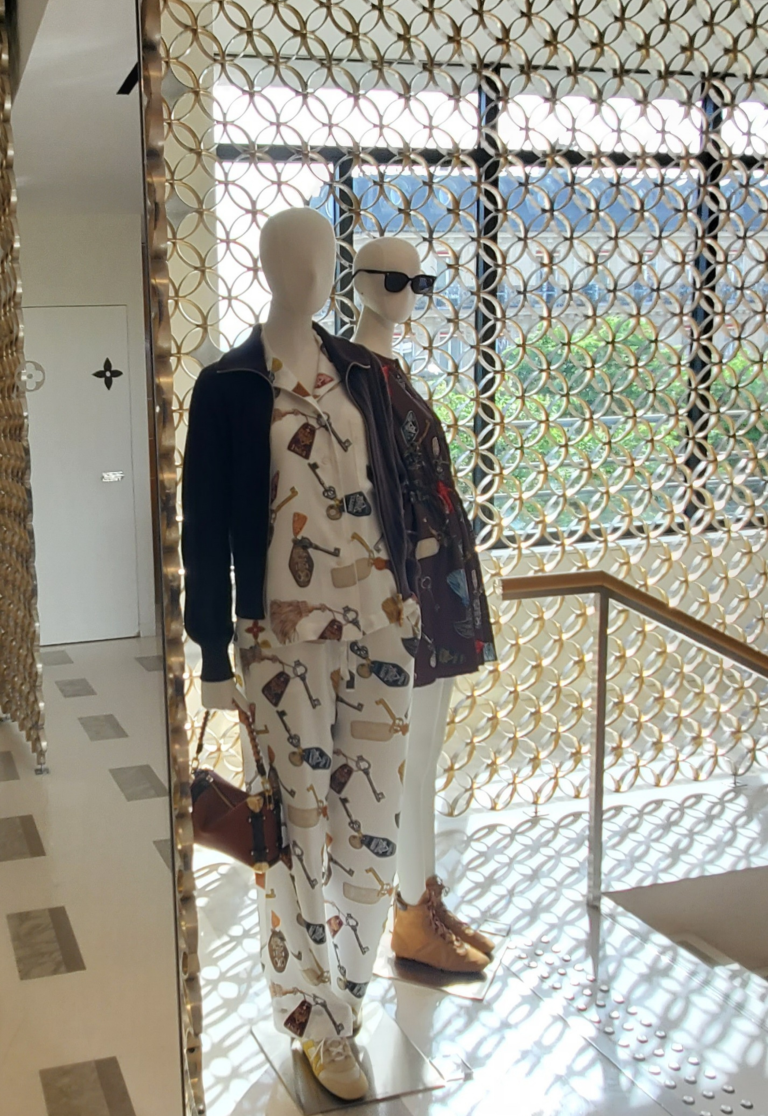
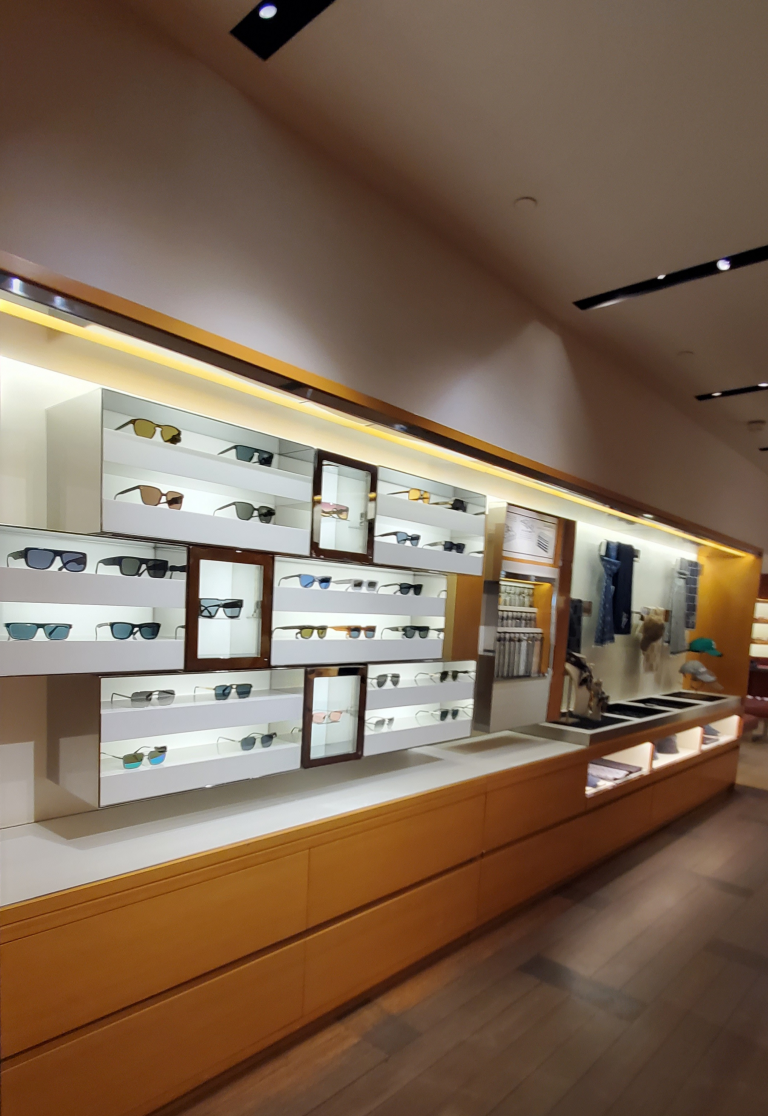
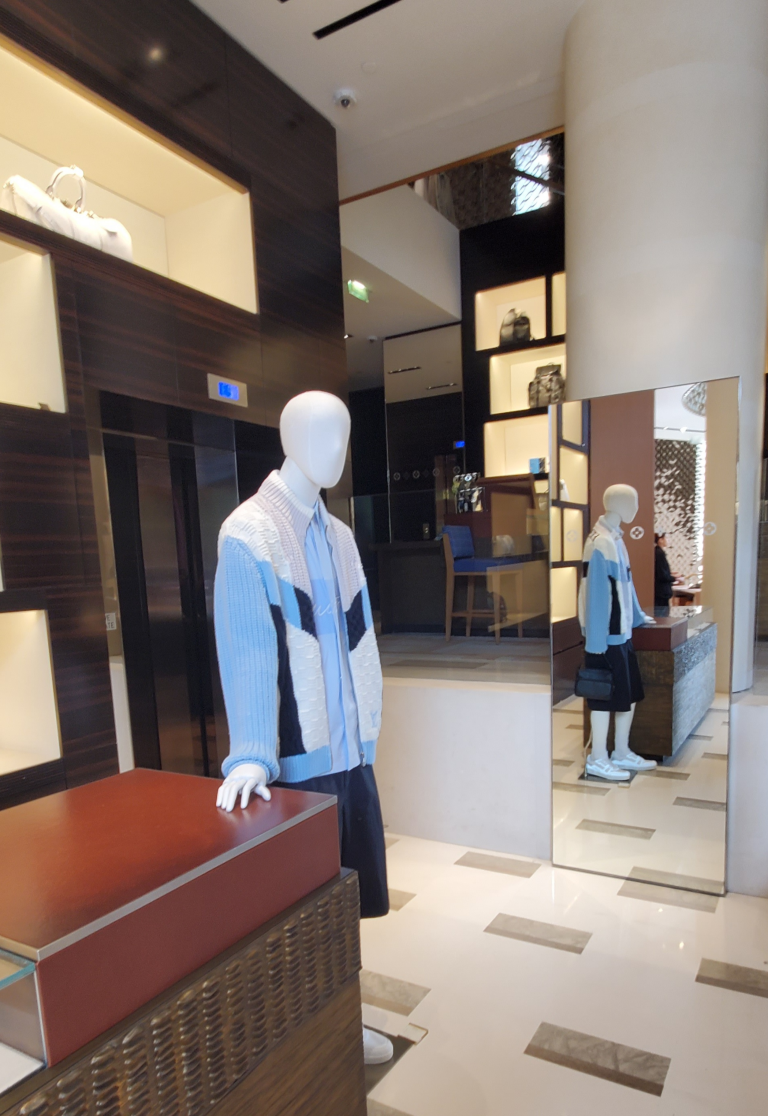
LV offers a deliberate counterpoint to Dior’s softness. The building is domineering, the windows are unmistakably LV, and the interior leans into drama: a darker palette, sharper lines, more intense lighting, and an upbeat soundtrack.
Soon, guests who want to shop on the Champs will also be able to stay there. Louis Vuitton is in the midst of a massive remodel of 103-105 Avenue des Champs‑Élysées, creating an iconic hotel in the heart of Paris’s shopping district.
In late 2023 an imposing Louis Vuitton “trunk” graced the avenue. Far from ordinary luggage, this elegant façade discreetly veils the construction of the Maison’s first hotel, poised to open its doors in 2027. In a short time, the monumental trunk has established itself as a sophisticated landmark along Paris’s most celebrated boulevard.

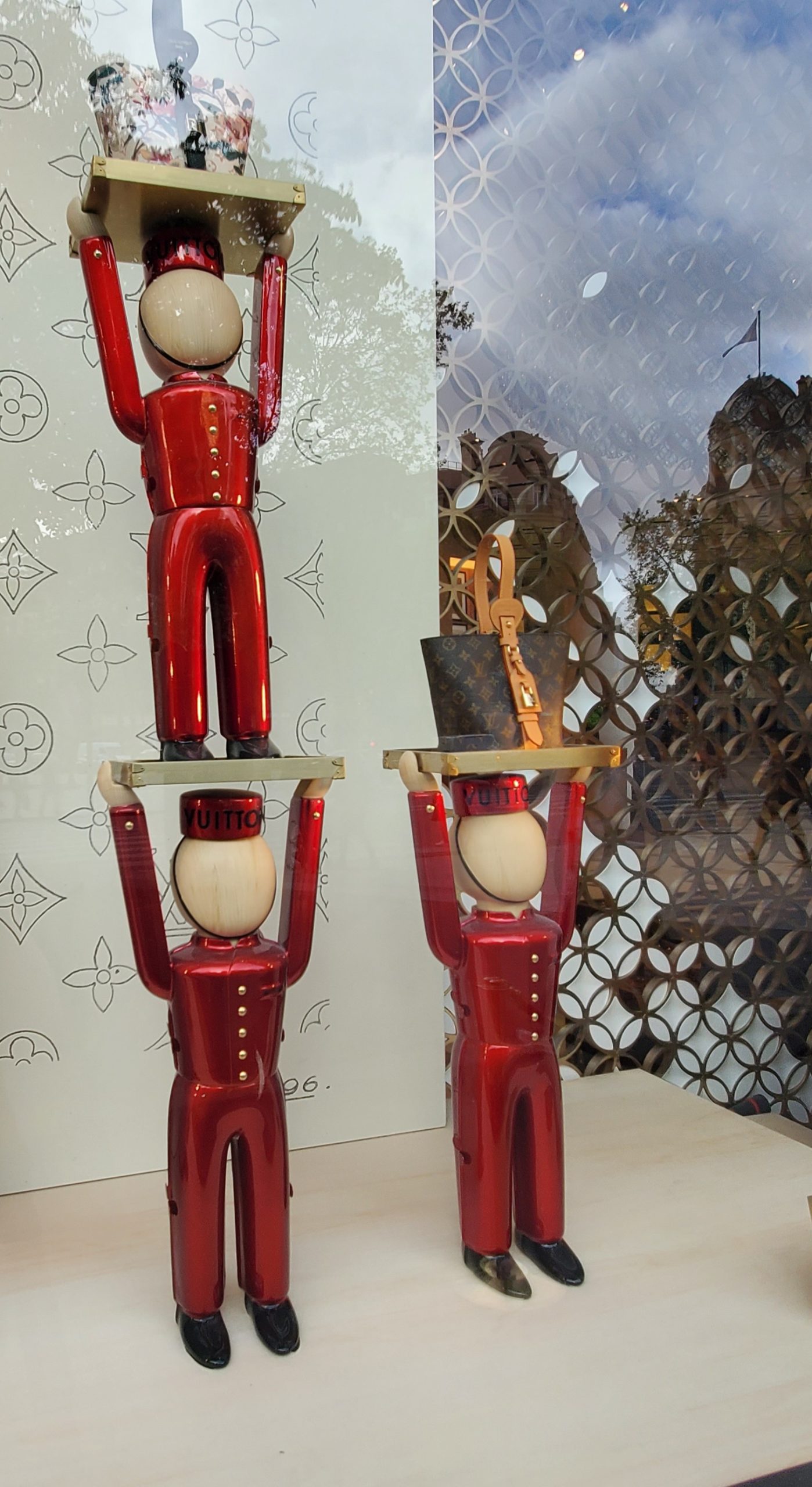
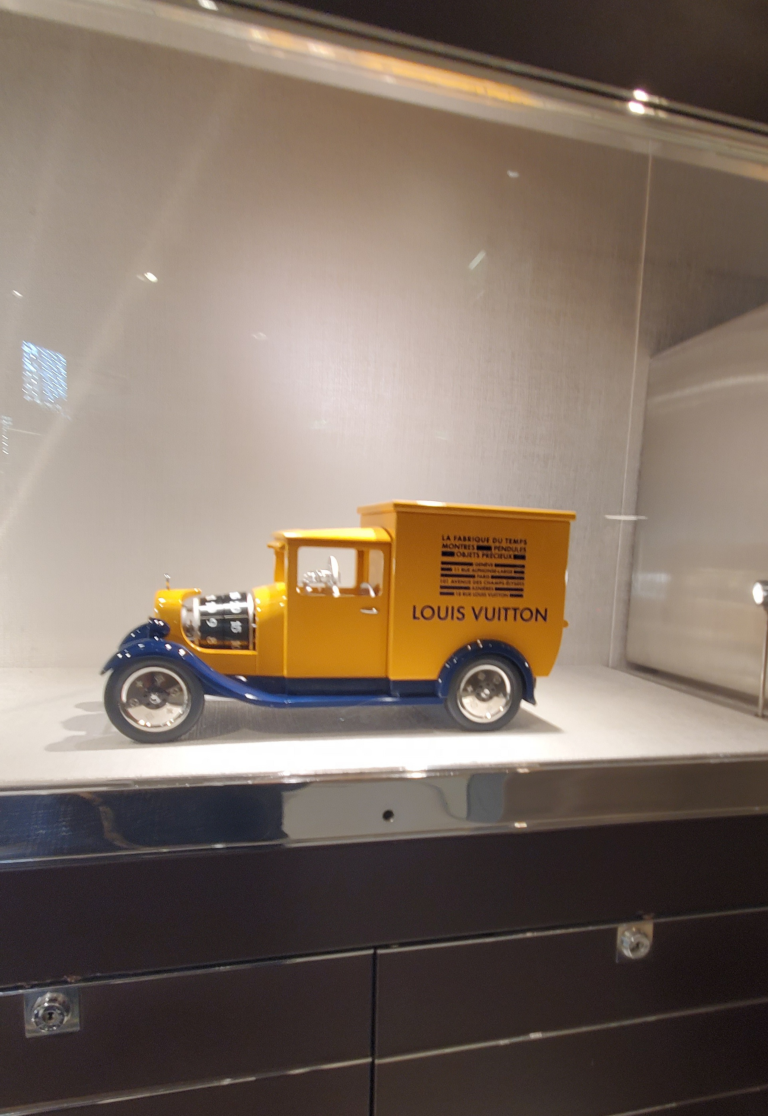
Louis Vuitton consistently uses bellhops, luggage trolleys, and stacked suitcases as a strategic visual shorthand for its origins as a trunk-maker and its long-standing “Art of Travel” positioning. These elements are so recognizably connected to the brand that anywhere they appear, from hotels to airports to window displays at their stores, consumers immediately recognize the brand.
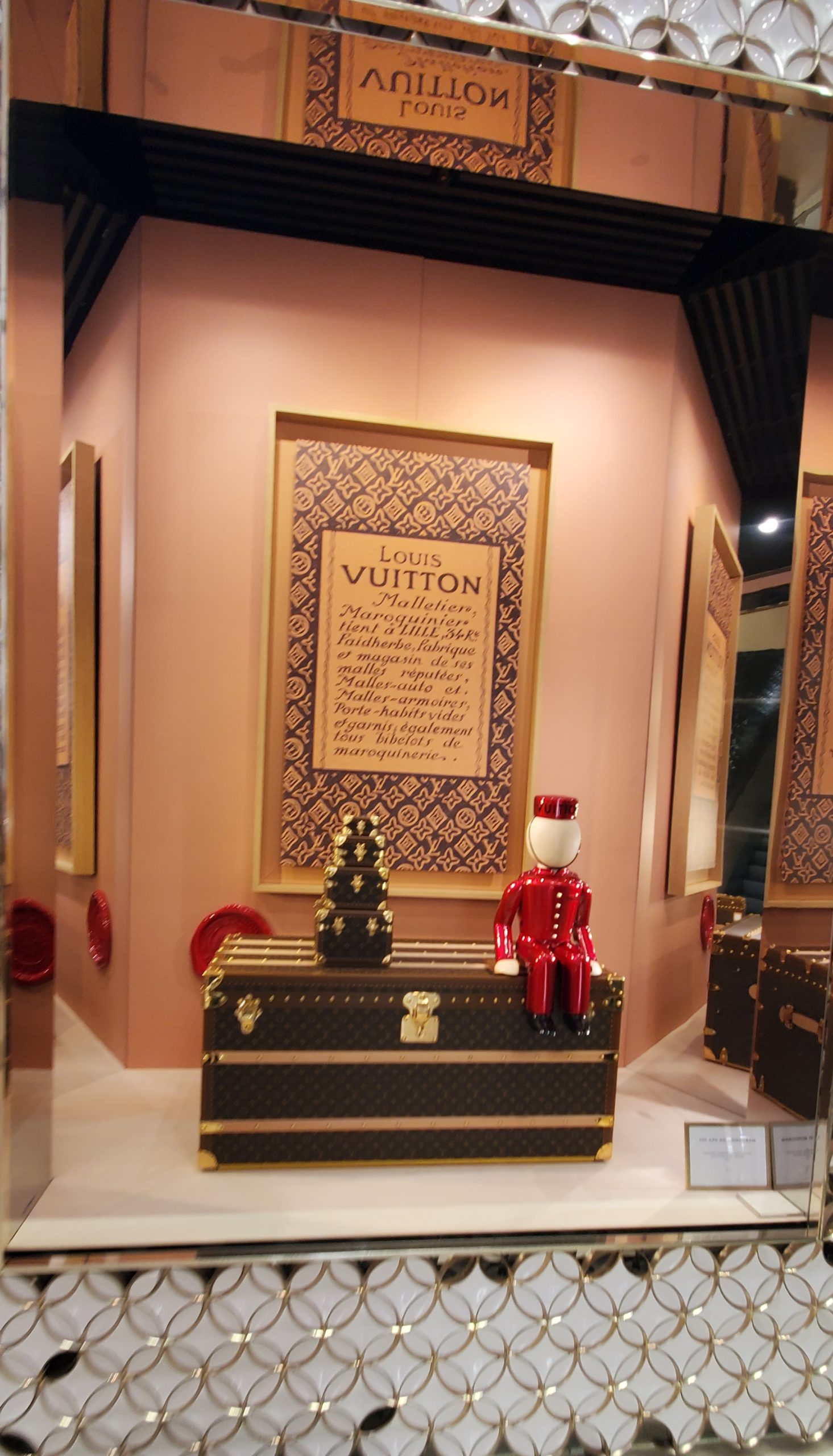
From a retail strategy perspective, LV’s luggage imagery works as a flexible brand asset that can scale from window displays to full-building experiences. The New York flagship “suitcase building,” with its façade resembling a monumental stack of Monogram trunks, turns the store itself into a three-dimensional brand statement and destination.
Beyond physical retail, Louis Vuitton extends this same visual language into cultural and experiential initiatives like the “200 Trunks, 200 Visionaries” exhibition, inviting creators to reinterpret the trunk as a modern symbol of imagination and mobility. By pairing archival trunk forms with contemporary colors, materials, and collaborations, the brand keeps its heritage codes active and relevant, using luggage as a bridge between its 19th-century roots and the expectations of today’s global luxury consumer.

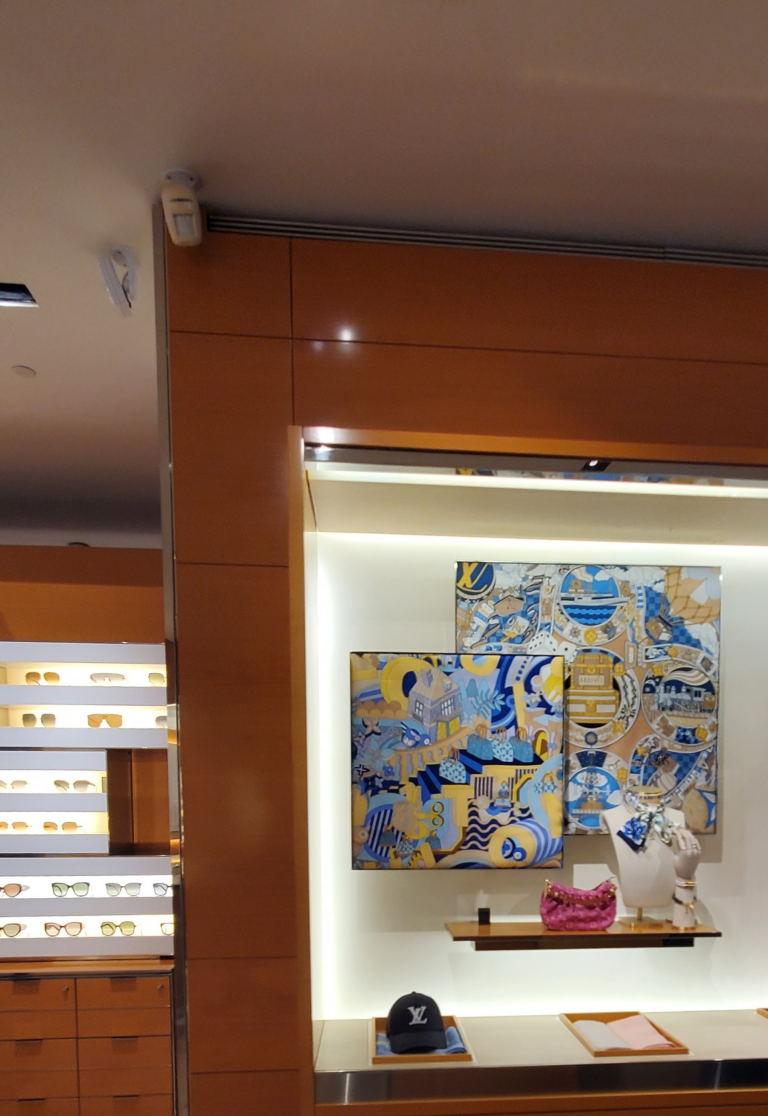
Inside Louis Vuitton’s Paris store on the Champs, recurring vignettes of stacked trunks, bellhops, and luggage carts function as visual storytelling devices, reinforcing heritage, craftsmanship, and travel.
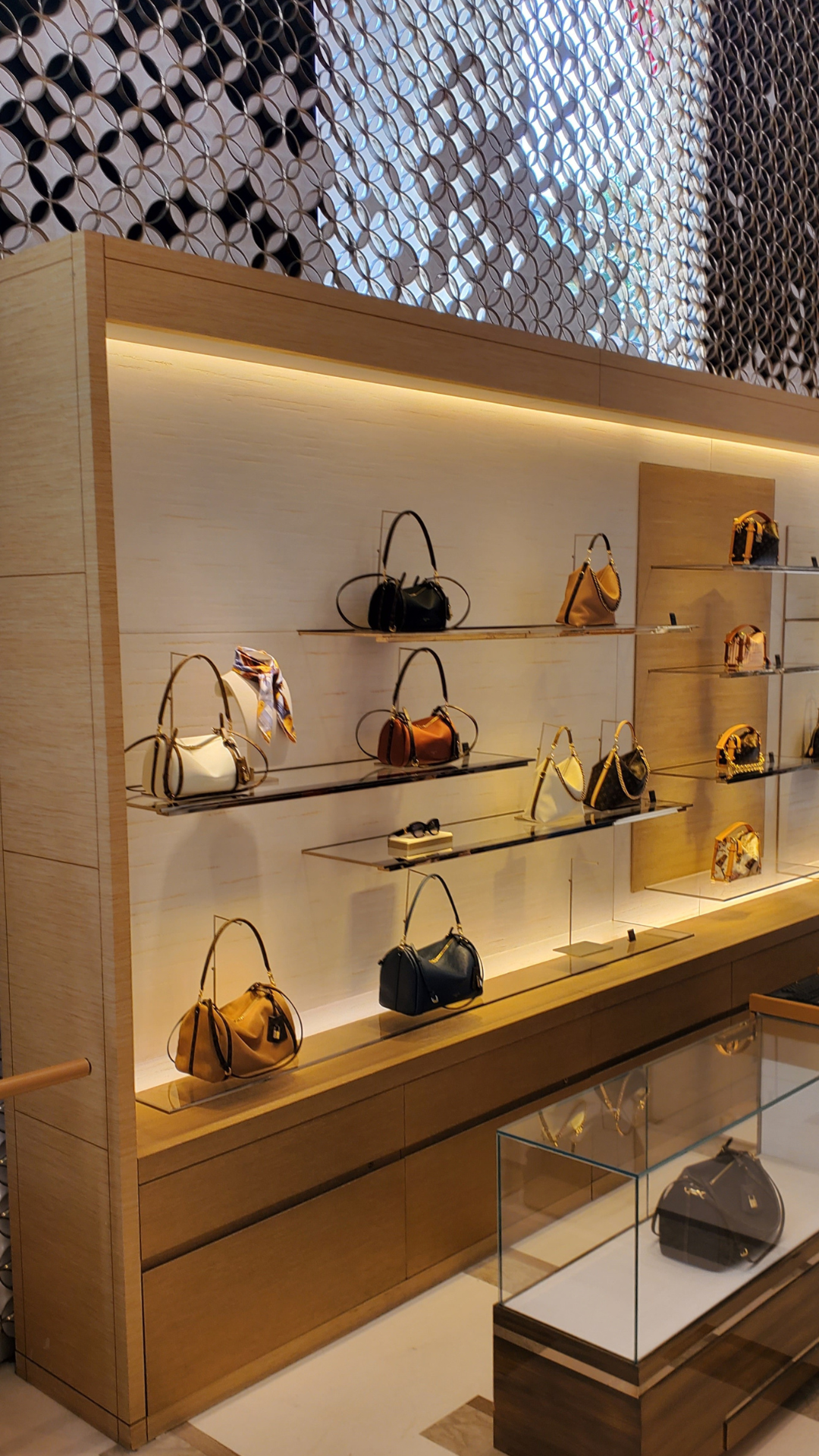
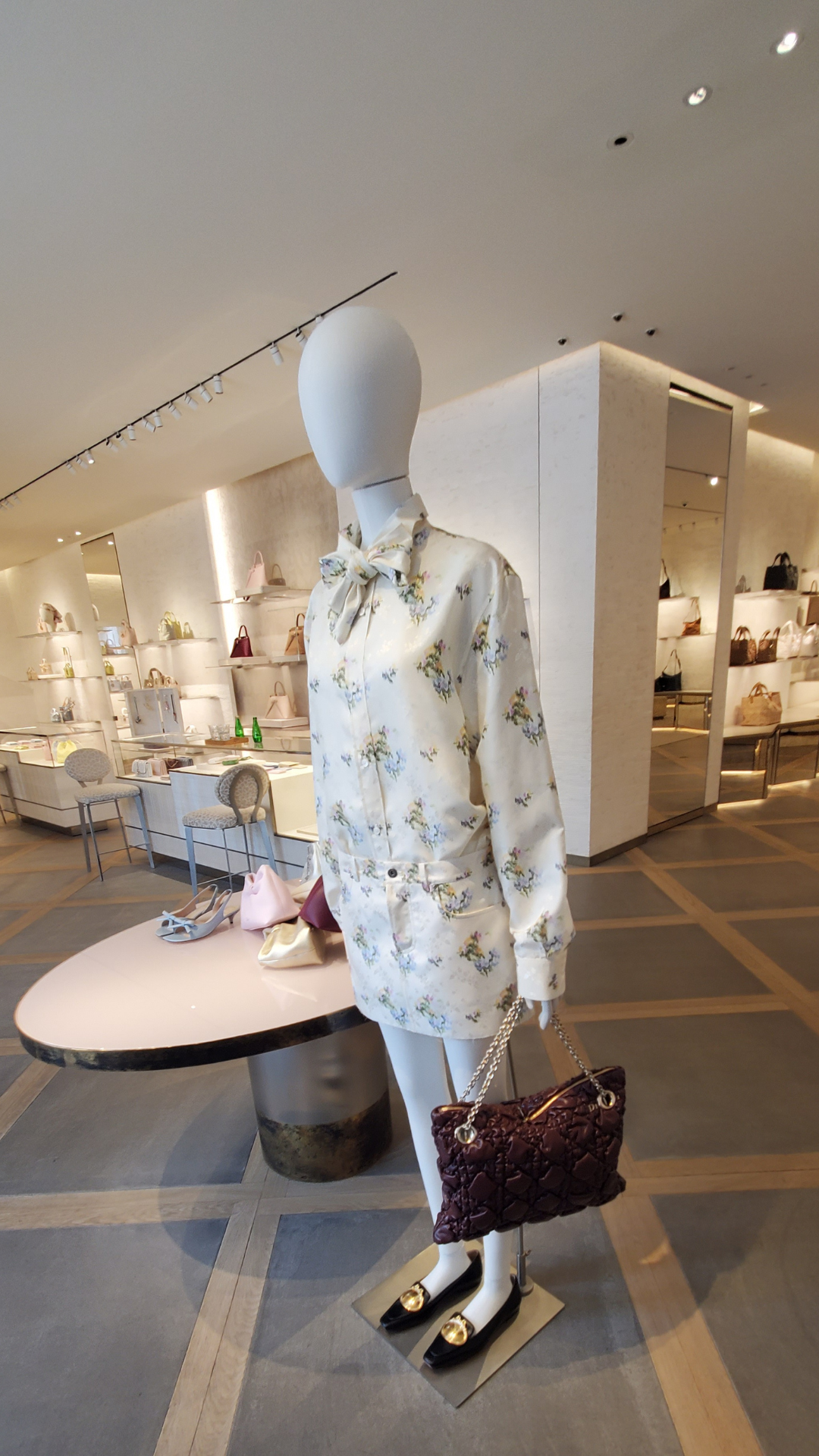
Walking into LV, the space feels more accessible than Dior, and the heavier traffic certainly reinforces that feeling. Tourists dominate the space, and most appear to be actively shopping with associates rather than simply browsing. Rather than the hushed tones of Dior that makes even a whisper feel loud, the audible conversations punctuated with laughter and joviality were the backdrop of the experience in Louis Vuitton.
Hospitality is a visible part of the service—champagne flutes, coffee cups, and glasses of water appear at the elbows of engaged shoppers as sales associates walk them through choices.
LV shows how to use theatrical contrast—light vs. dark, quiet vs. energetic—to differentiate a flagship even when it sits a few doors down from another heritage house.
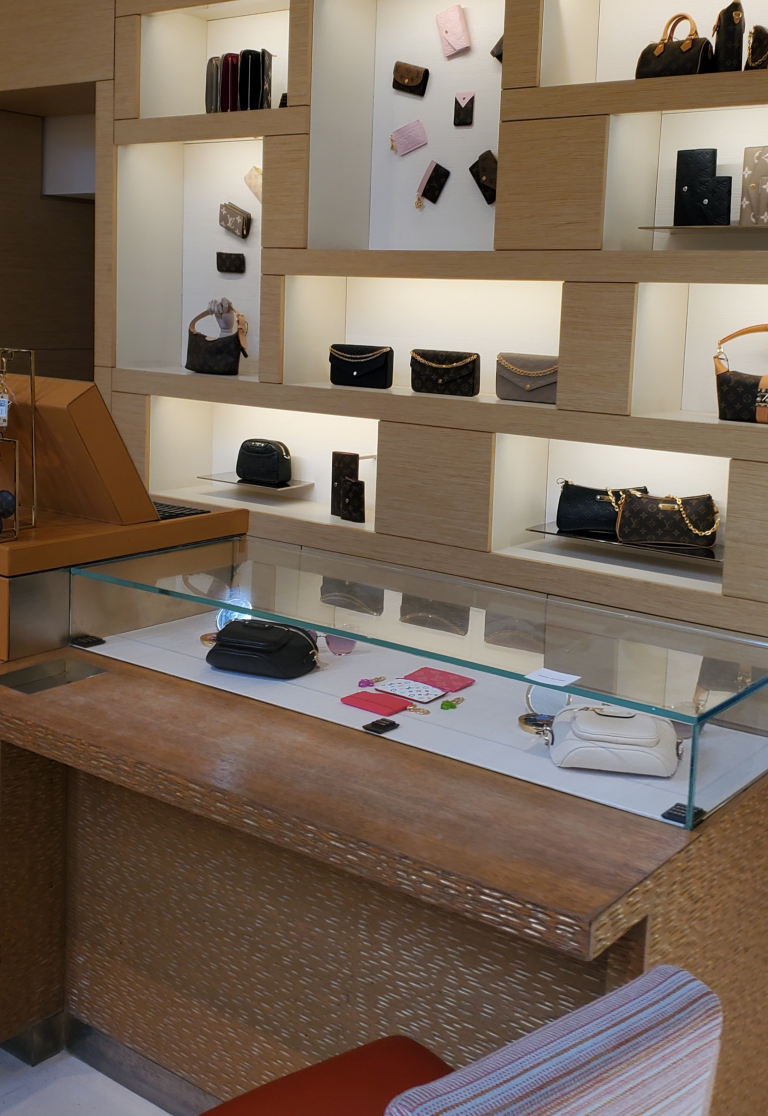
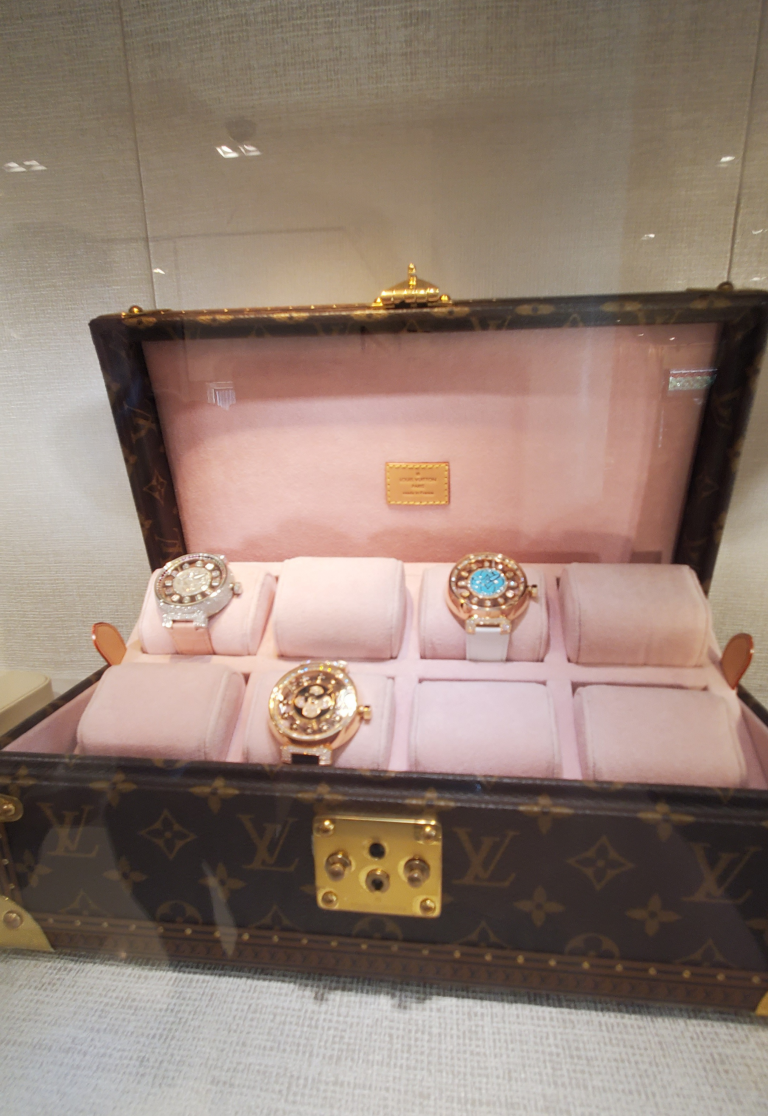
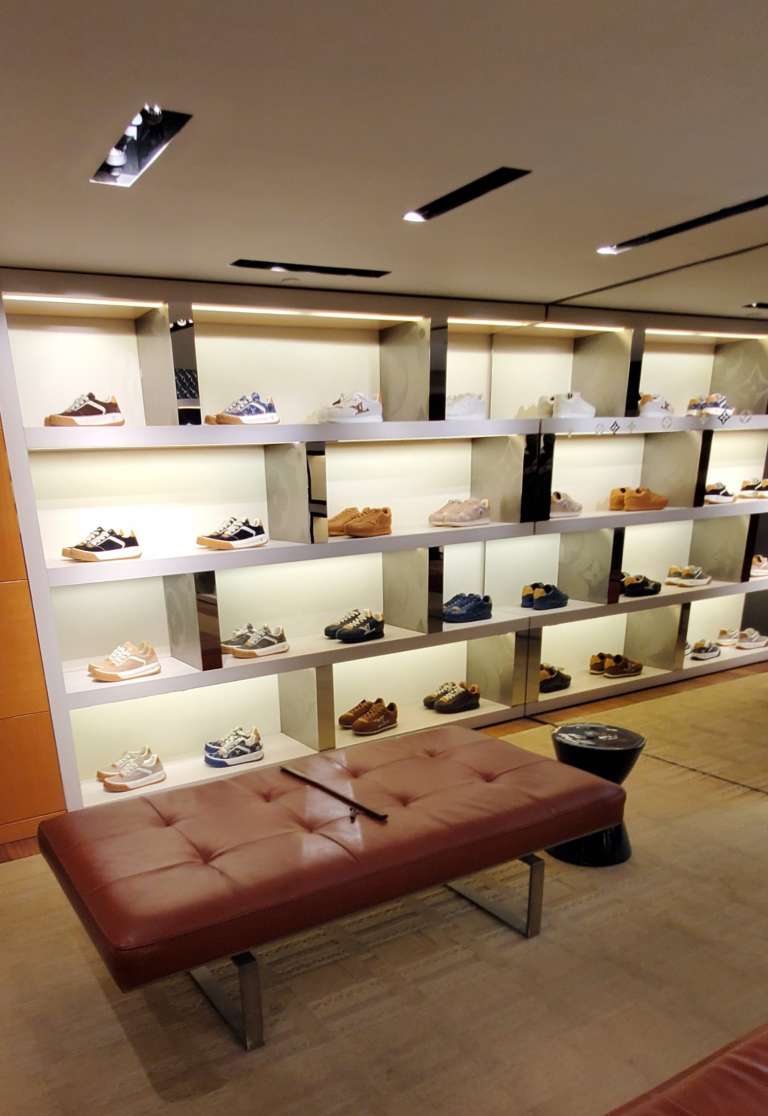
Like Dior, the product displays are not overwhelming but very intentional. Inset shelving with framed lighting is used to highlight signature items.


Louis Vuitton doesn’t just arrange products in a store; it orchestrates a journey. The architectural concept transforms the entire Champs-Élysées flagship into what the designers call “wrapping the shopping avenue inside the building,” creating a continuous four-level spiral of terraces that eliminates traditional staircases in favor of a flowing promenade. Like the grand hotels and ocean liners that once carried Vuitton trunks across continents, the store positions itself as a destination where the path itself matters as much as what you discover along the way.
This design philosophy mirrors the brand’s heritage as a trunk maker and travel companion. You’re not rushed through a transaction but invited to embark on a journey. The layout ensures visitors maintain constant contact with both the products and views of Paris, transforming what could be a simple shopping visit into what the architects describe as a “travel experience” for a brand historically rooted in movement and exploration. At the end of this carefully choreographed promenade, a dramatic escalator ascends through a 20-meter-high atrium, carrying guests upward to discover clothing, watches, an archival hallway chronicling LV’s history, shoes, makeup, and more.
Throughout this journey, the store balances grandeur with intimacy, with the spiral design breaking the massive space into what feels like a sequence of boutique-scaled terraces, each with its own product category and character. Everywhere, comfortable seating punctuates the path, not as an afterthought but as an invitation to pause, to be personally attended to, to feel cared for in the way a luxury hotel anticipates a guest’s needs. The message is clear: you’re not here to hurry through; you’re here to be welcomed, guided, and given permission to experience the entire world of Louis Vuitton at your own pace.


In the end, Louis Vuitton doesn’t just sell you a bag. It hands you a boarding pass to their world, complete with champagne, comfortable seating, and the promise that wherever you’re going, they’ve already thought of everything you’ll need along the way.
Shopping at Nike’s House of Innovation on the Champs-Élysées
Nike adds a technology-led, sportswear version of flagship retail to the Champs-Élysées story.
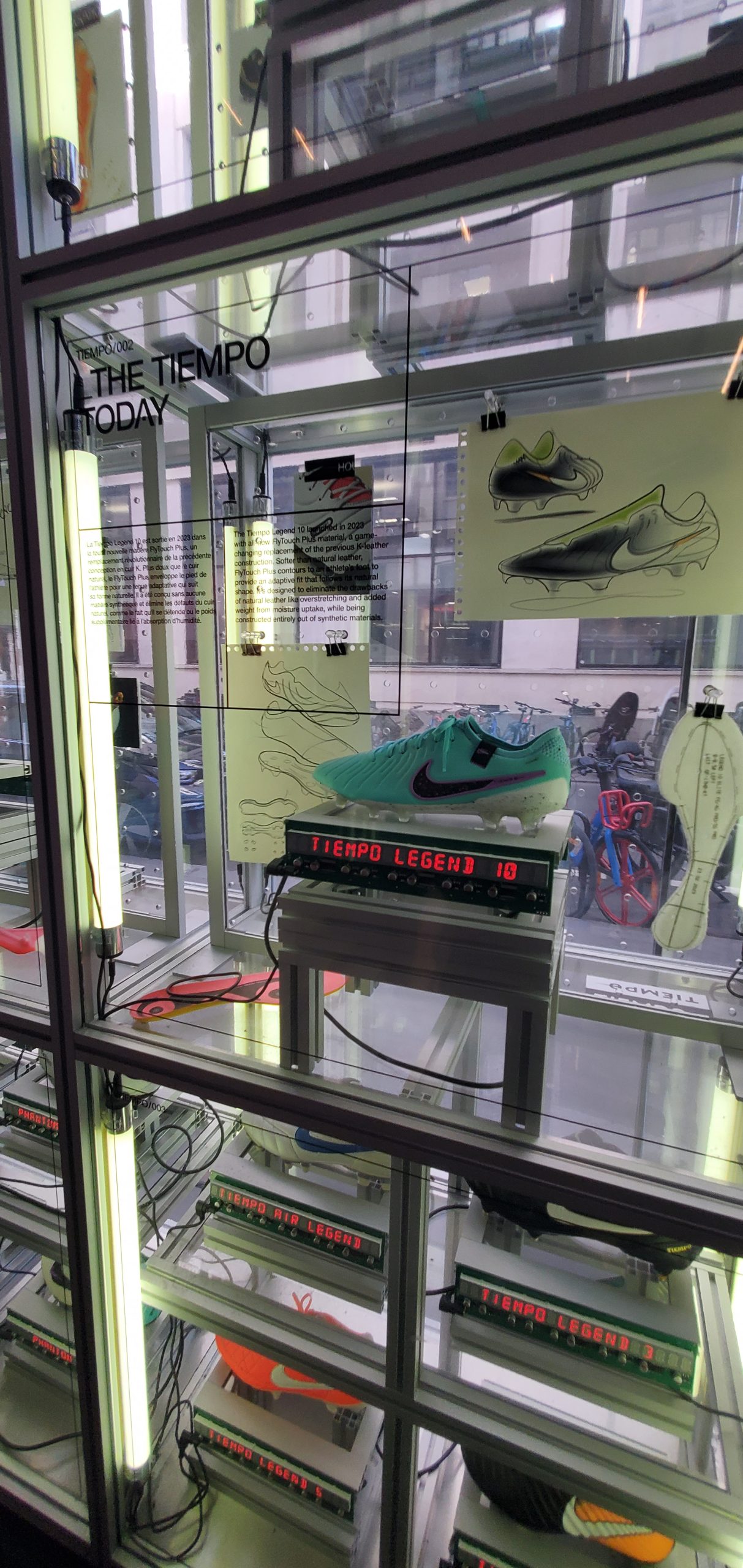
Nike’s House of Innovation at 79 Avenue des Champs‑Élysées is easily one of the most prominent buildings on the avenue. Their third House of Innovation (following Shanghai and New York), the store is a clear signal that performance brands now belong in the flagship conversation. It is the brand’s largest European store.
Before even setting foot inside, Nike sets itself apart with a futuristic design, video displays on the outside of the building.

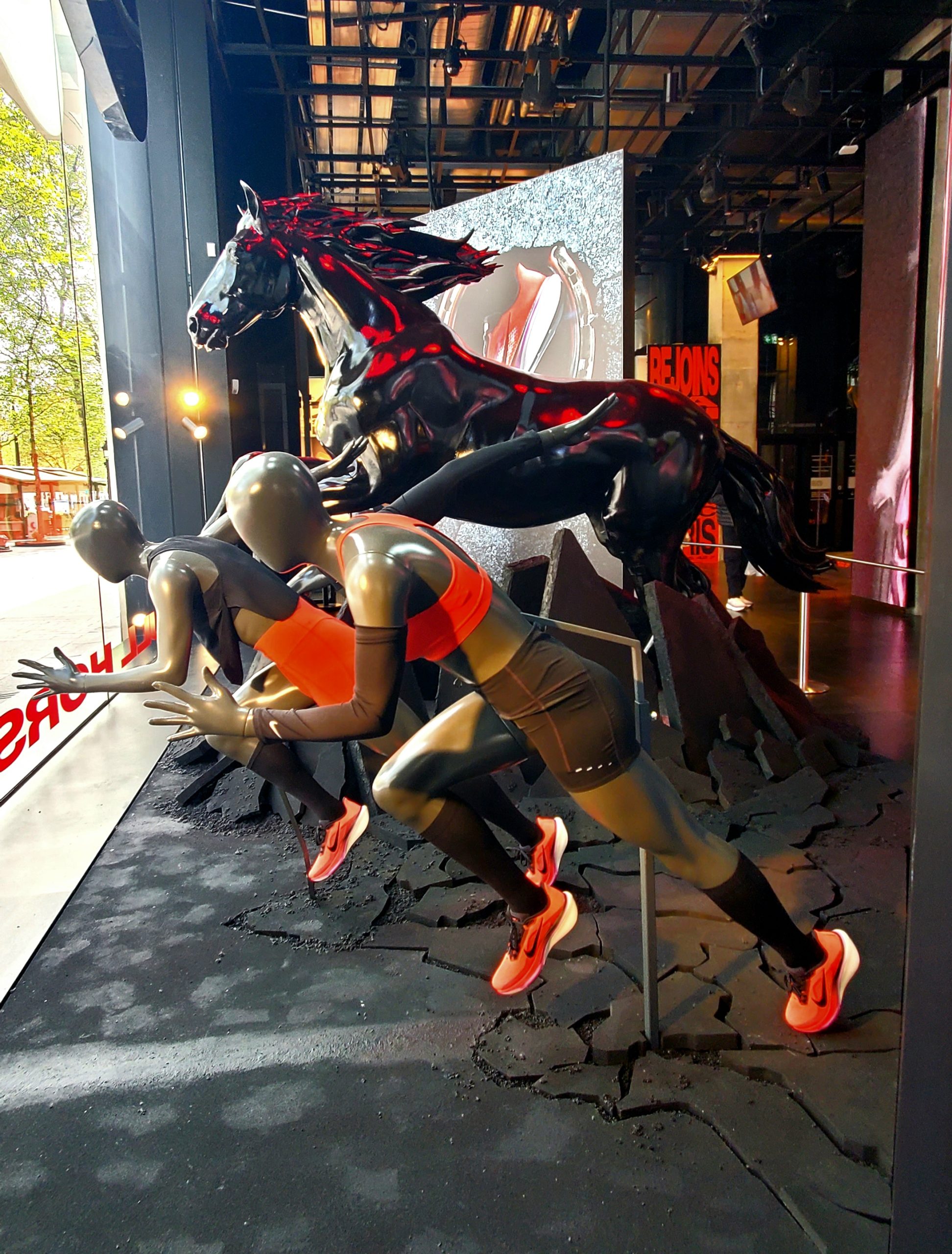
and an astounding window display featuring runners alongside a horse
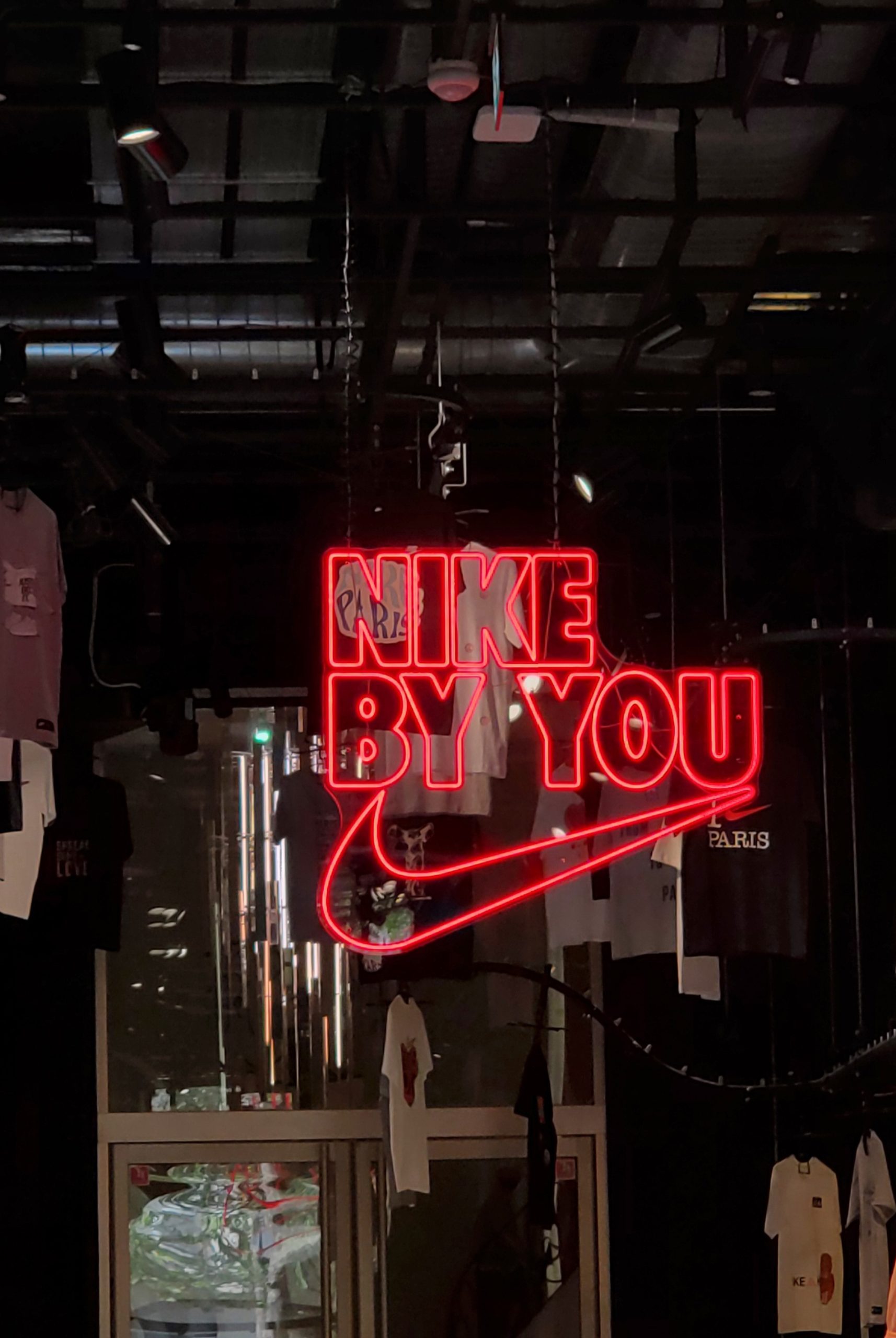
From the street, the message is clear: digital facades, video displays, and a dramatic window featuring runners alongside a horse make the building feel kinetic before you ever cross the threshold. Inside, the foyer opens into a multi-story design that pulls the gaze up and into the store.
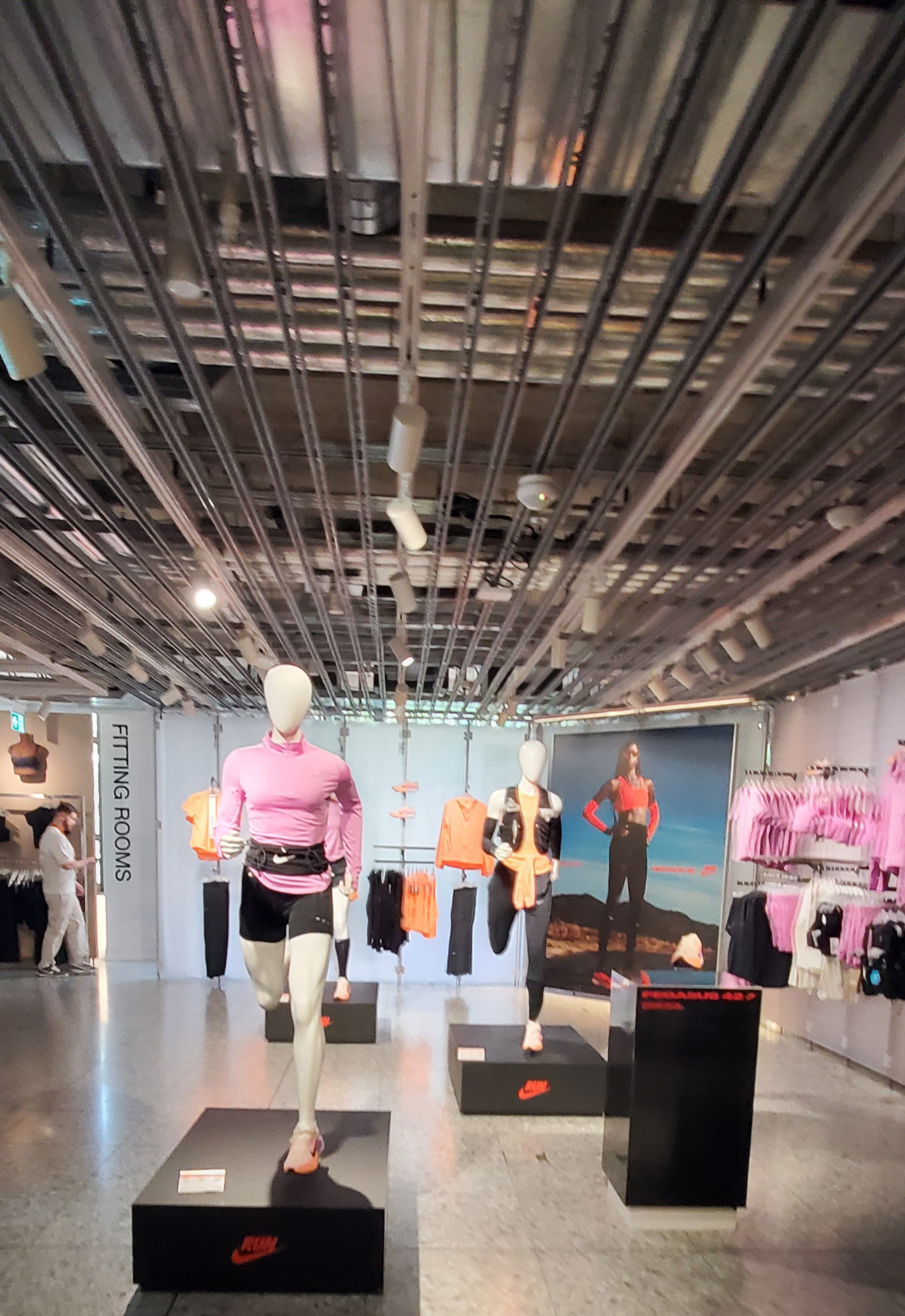
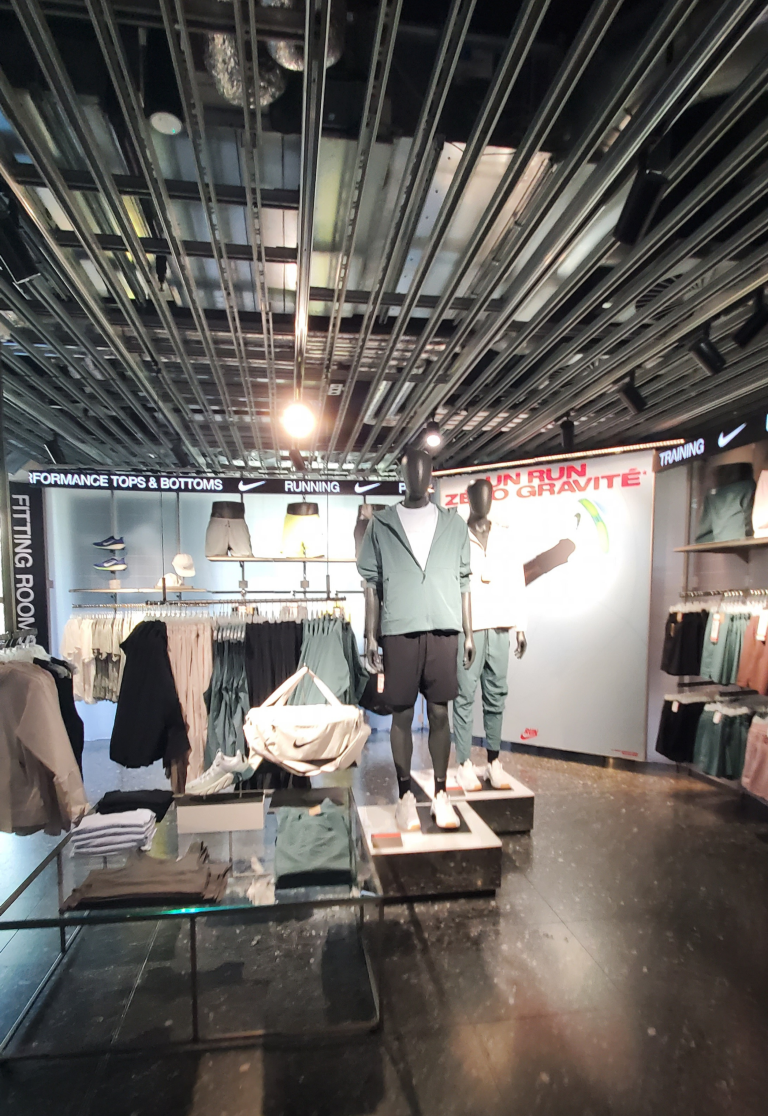
The Nike flagship on the Champs-Élysées spans four floors and over 2,400 square meters, yet the design prioritizes flow over footprint. Seating, circulation, and open space are generous, so even as traffic picks up, the store never feels cramped. The layout is deliberate, with each level changing mood, palette, and tone. Security is present but intentionally in the background, maintaining the accessible, energetic atmosphere that defines Nike’s brand positioning.
What sets the Paris House of Innovation apart is how it balances heritage architecture with high-tech innovation. The building preserves an Art Deco double-helix staircase from the 1930s, integrating this historical element within Nike’s digitally powered retail concept.
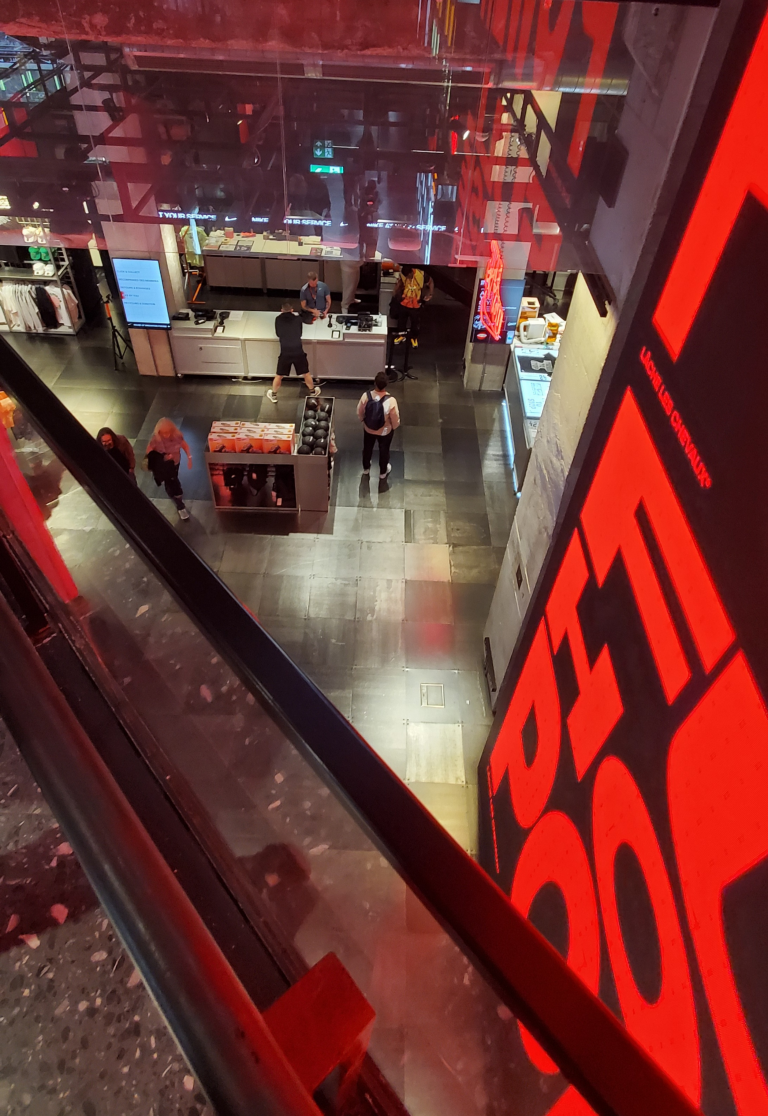
Nike leverages vertical space not just to display products but to create distinct experiential zones across four levels. Digital media, from a “Mission Control” wall at the entrance, connects visitors to the wider Nike community and member services, while immersive projection rooms and interactive laser-touch surfaces transform product showcases into participatory experiences rather than passive browsing.
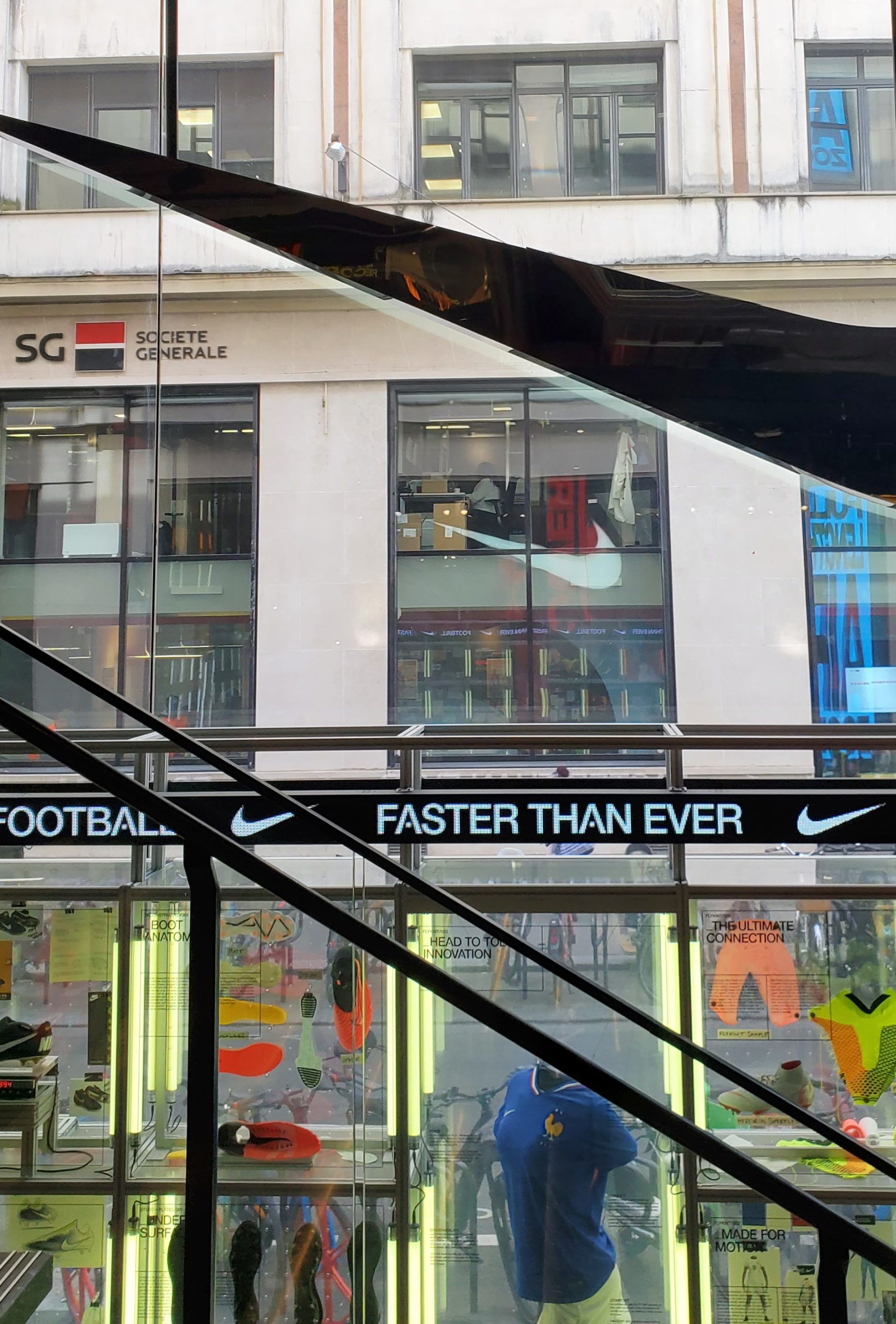
The customization offerings, particularly the Nike By You stations, turn shopping into co-creation. Customers don’t just select from inventory; they design footwear with control over color, material, patterns, and even personalized text, making each purchase feel like a collaboration with the brand.

Nike By You anchors the main level, inviting shoppers to personalize products and reinforcing customization as a core part of the brand experience.
While Nike fixtures aren’t marble and brass, the service is just as considered and personalized. Nike positions store employees as “athletes” who book appointments with Nike Plus members, offering personalized guidance that mirrors the bespoke attention found at Dior and LV, just with a different aesthetic language. The store proves that innovation and service design can carry as much weight as luxury fixtures, delivering what Nike calls “the most personal and responsive sport experience” through technology, customization, and thoughtful spatial planning rather than opulent materials.

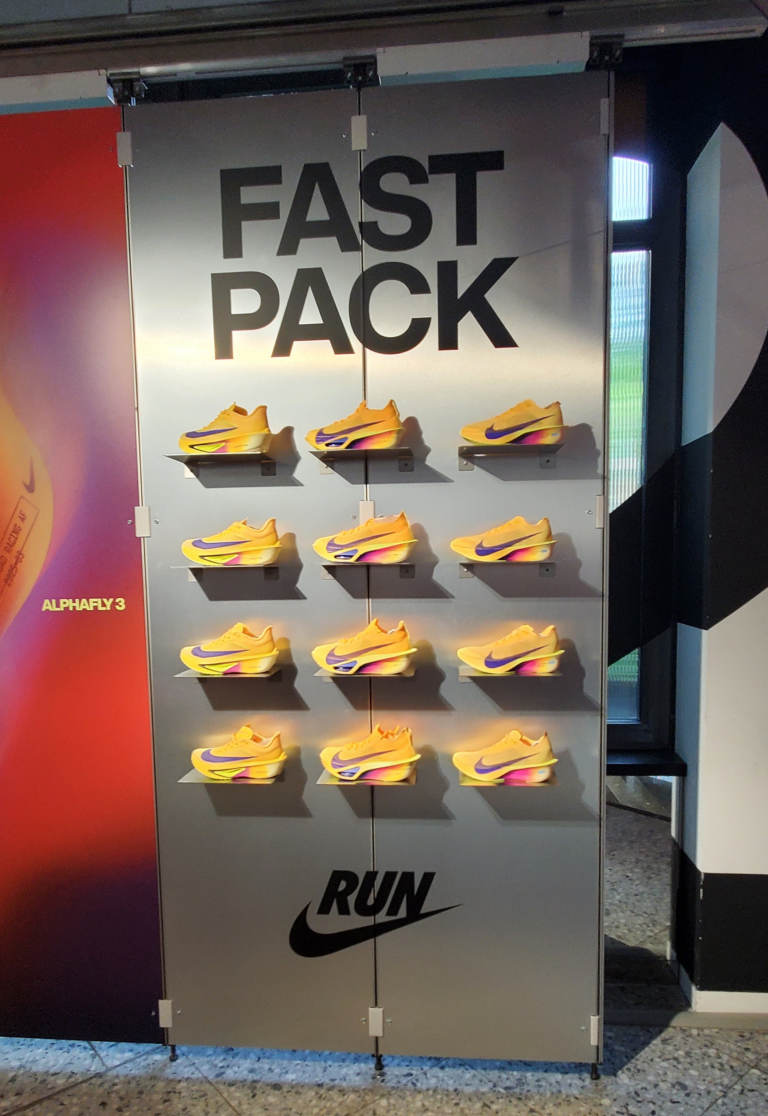
Ascending the store reveals zones dedicated to innovation storytelling.
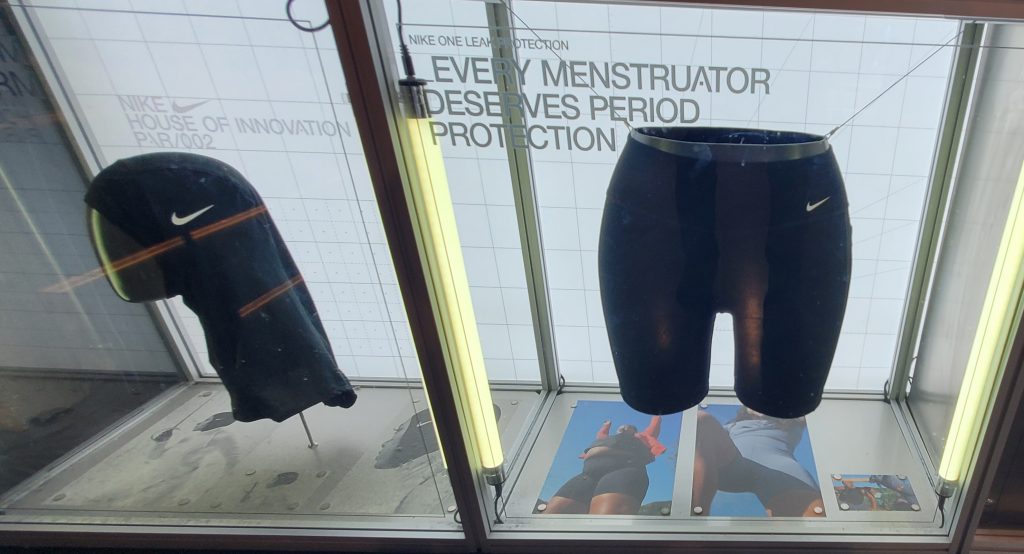
Nike has been making a concerted effort to reach more women and be more inclusive. Their displays included women’s-specific products like custom-fit sports bras and period shorts as well as the Nike Pro hijab.
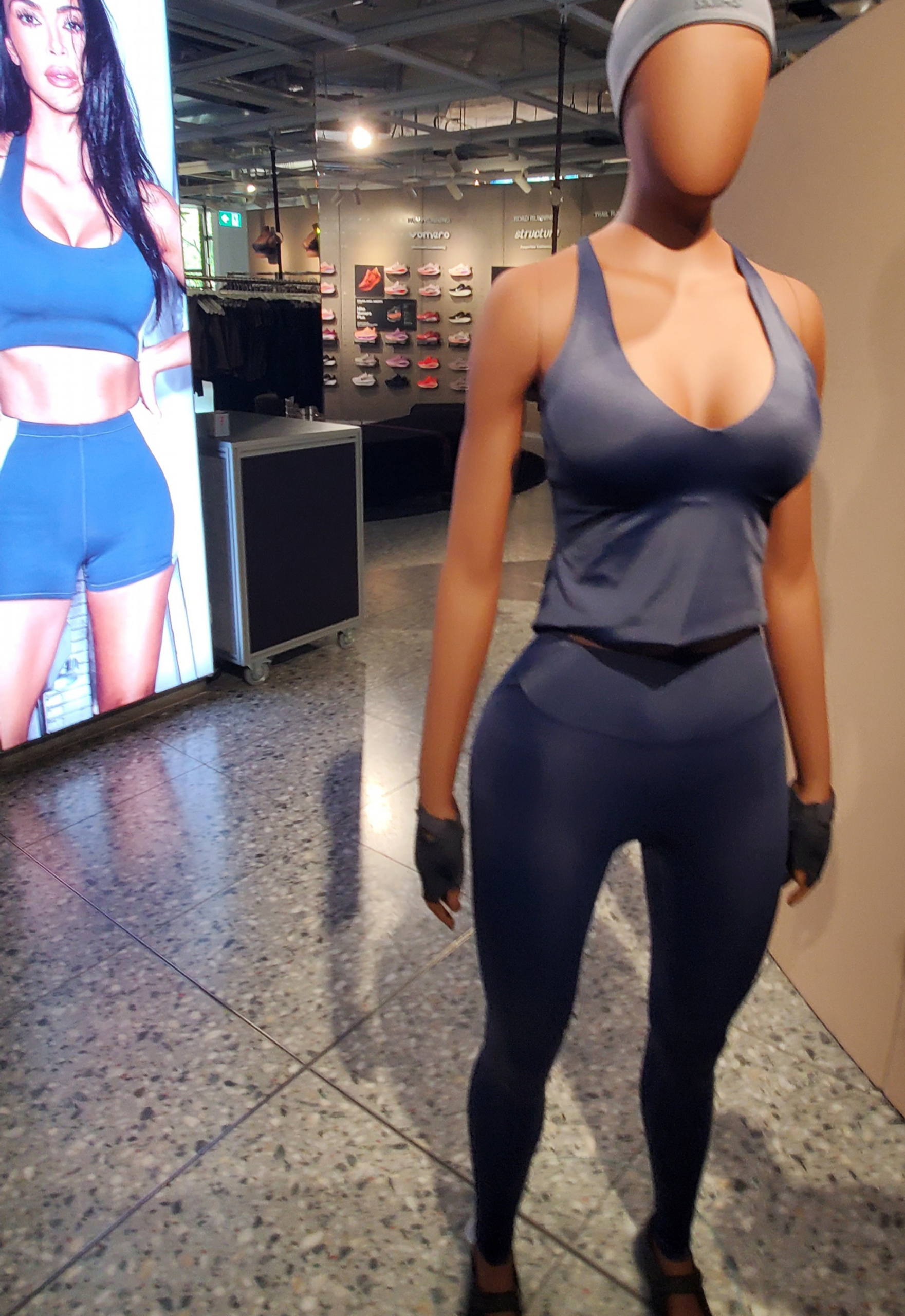
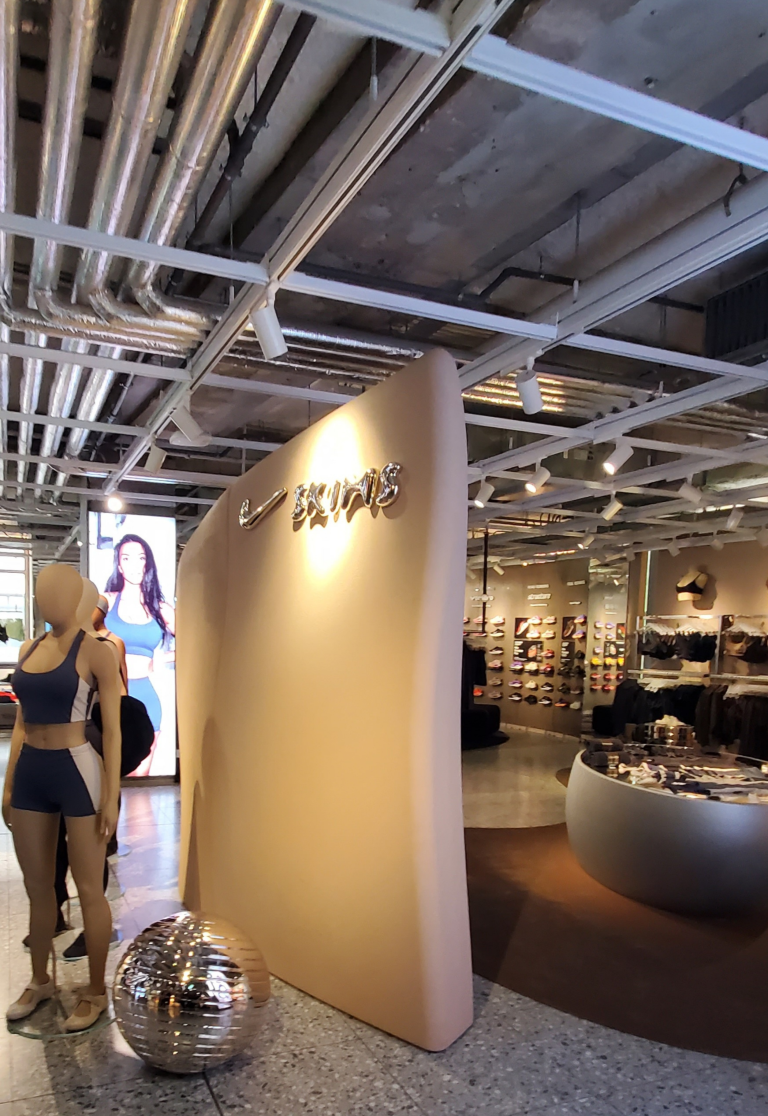
In an effort to further connect with women and compete with Lululemon, Nike has partnered with Skims and Kim Kardashian, creating a NikeSkims line featured in the store.
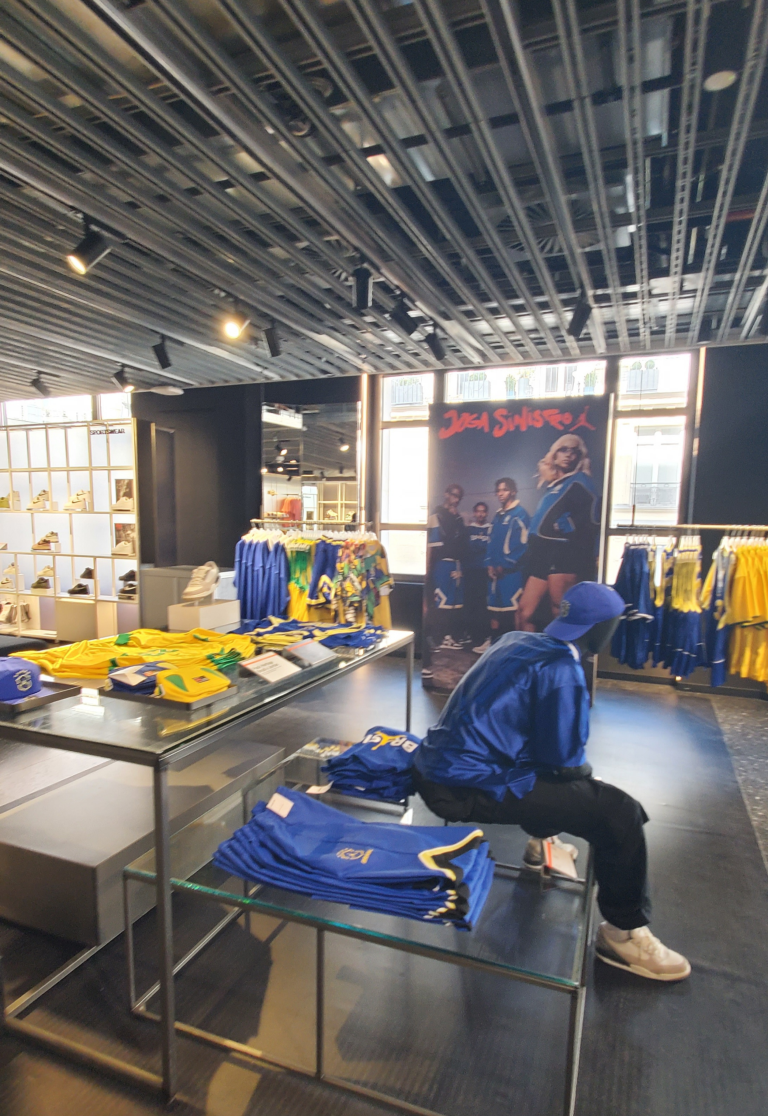
The Brazil-Nike partnership is also on full display as excitement about the FIFA cup grows.


Nike also demonstrates a notable shift toward environmental responsibility. According to Retail Design Blog, more than 187,393 pounds of sustainable material were used in both the store design and display fixtures. Additionally, through a partnership with Iberdrola, the world’s leading wind power company, the House of Innovation is fueled by clean energy from a wind complex in Spain.
Nike proves that on the Champs-Élysées, you don’t need quiet restraint or appointment-only access to command presence. You just need to understand that service, personalization, and experience matter as much in performance retail as they do in haute couture.
Shopping at Zara’s Champs-Élysées Flagship
Zara shows the Champs-Élysées as a place where digital retail and mass fashion have been given flagship treatment.

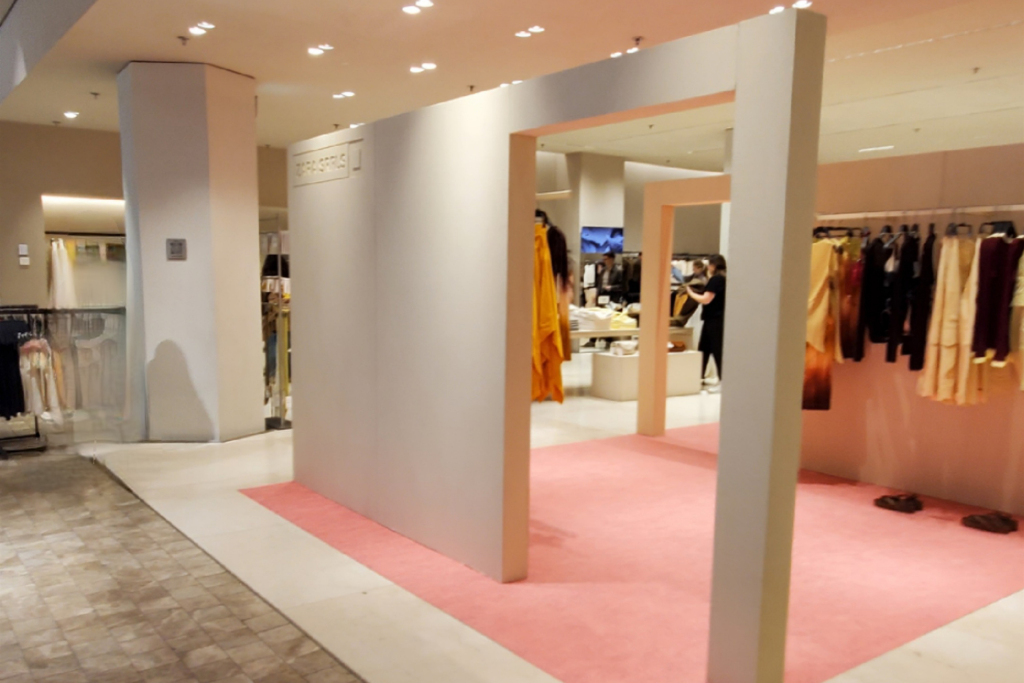
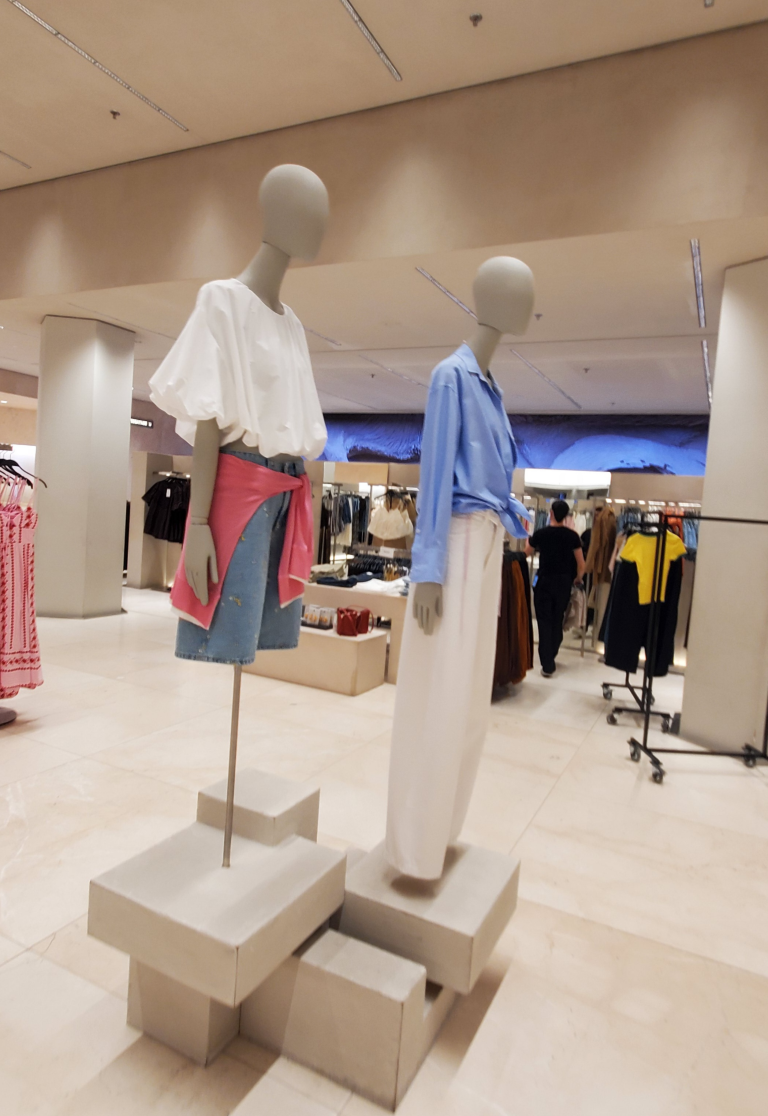
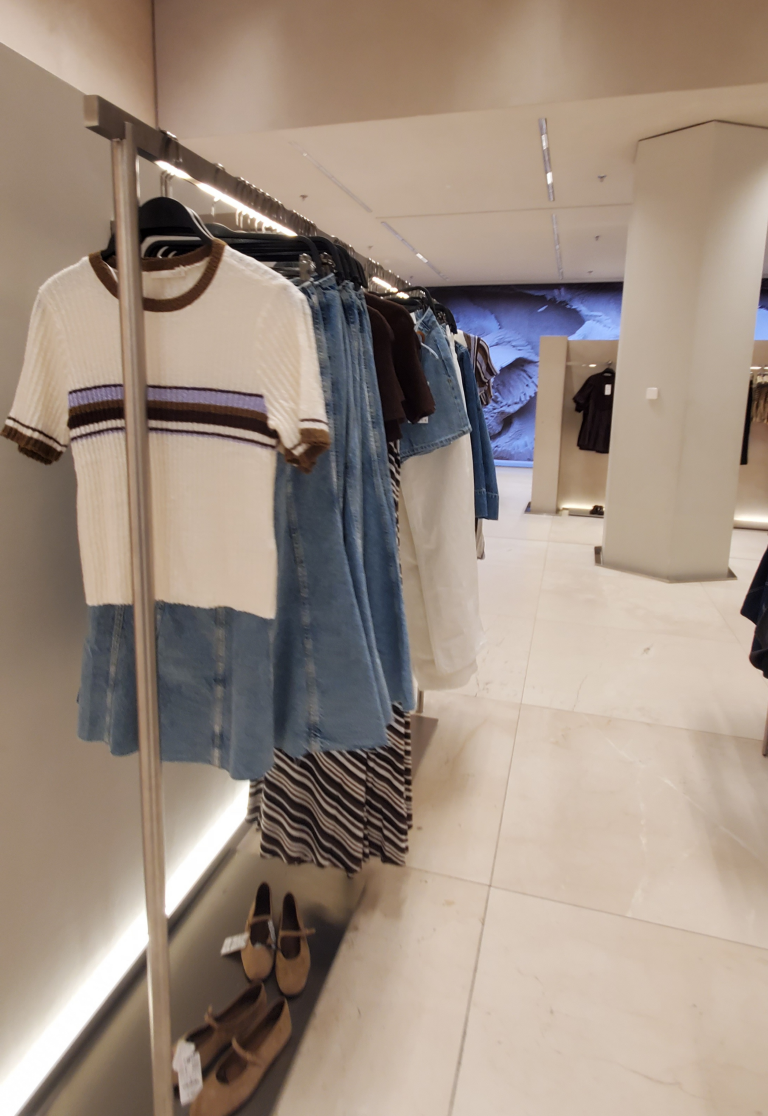
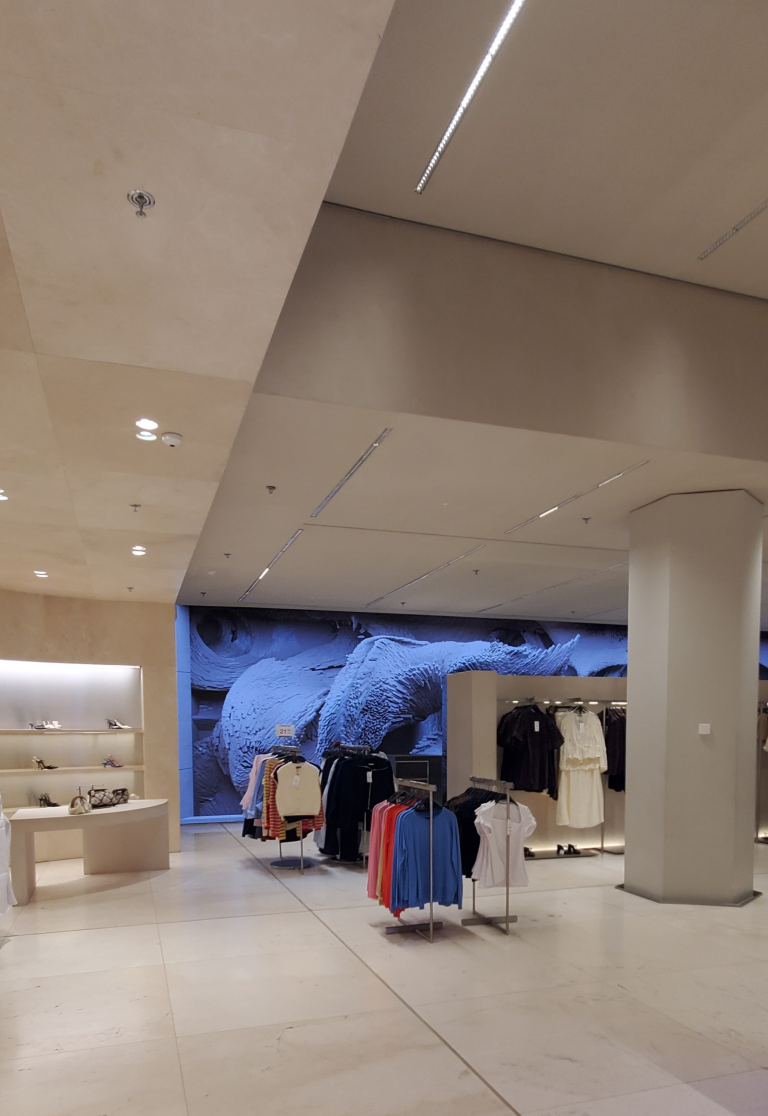
Zara represents a different retail proposition on the Champs-Élysées, proof that the avenue accommodates not just quiet luxury but also digitally-powered fast fashion given flagship treatment. Located at 74 Avenue des Champs-Élysées, the 2,700-square-meter store spreads across a single level designed as a promenade through distinct product zones.
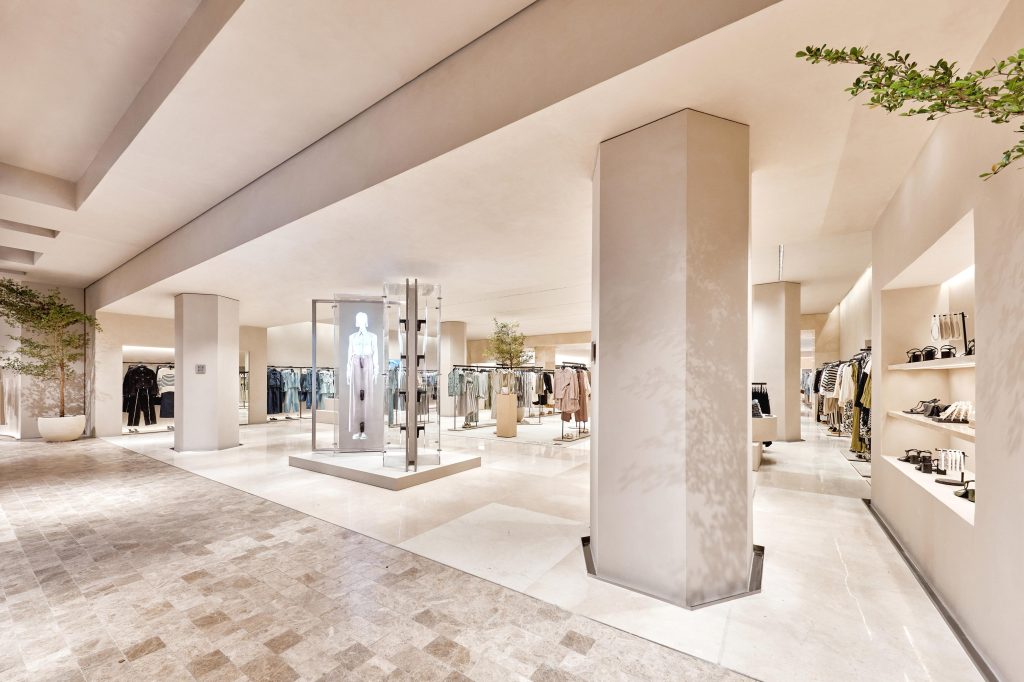
While the images shared from the store’s opening in 2023 showed real promise, time has shifted the store from flagship magnificence to distinctly pedestrian, slightly disorganized, and purposefully disengaged teams.
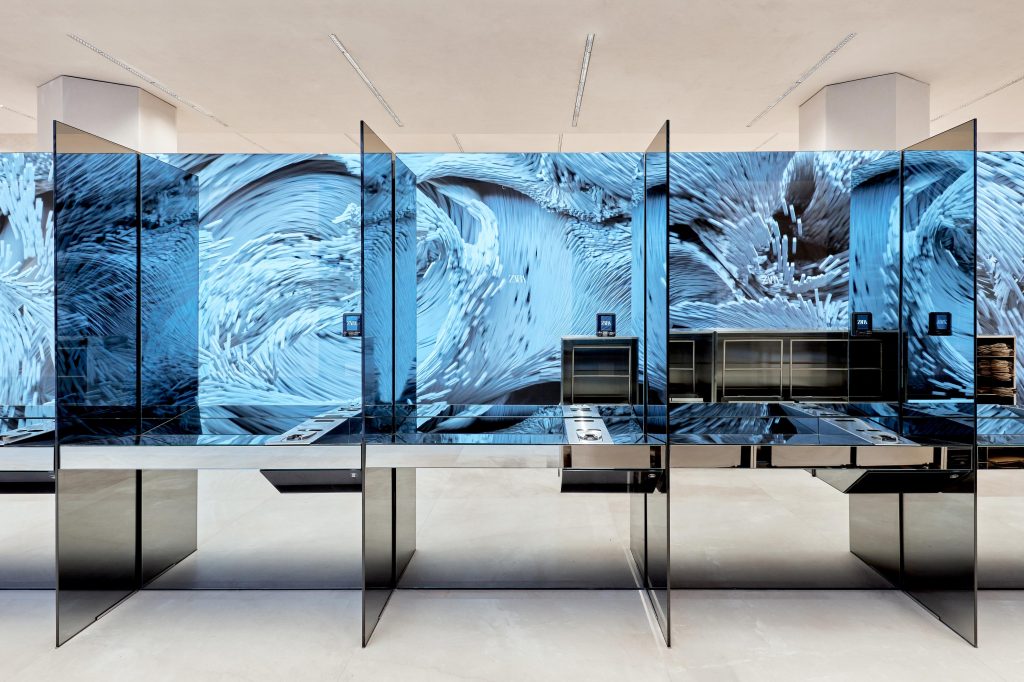
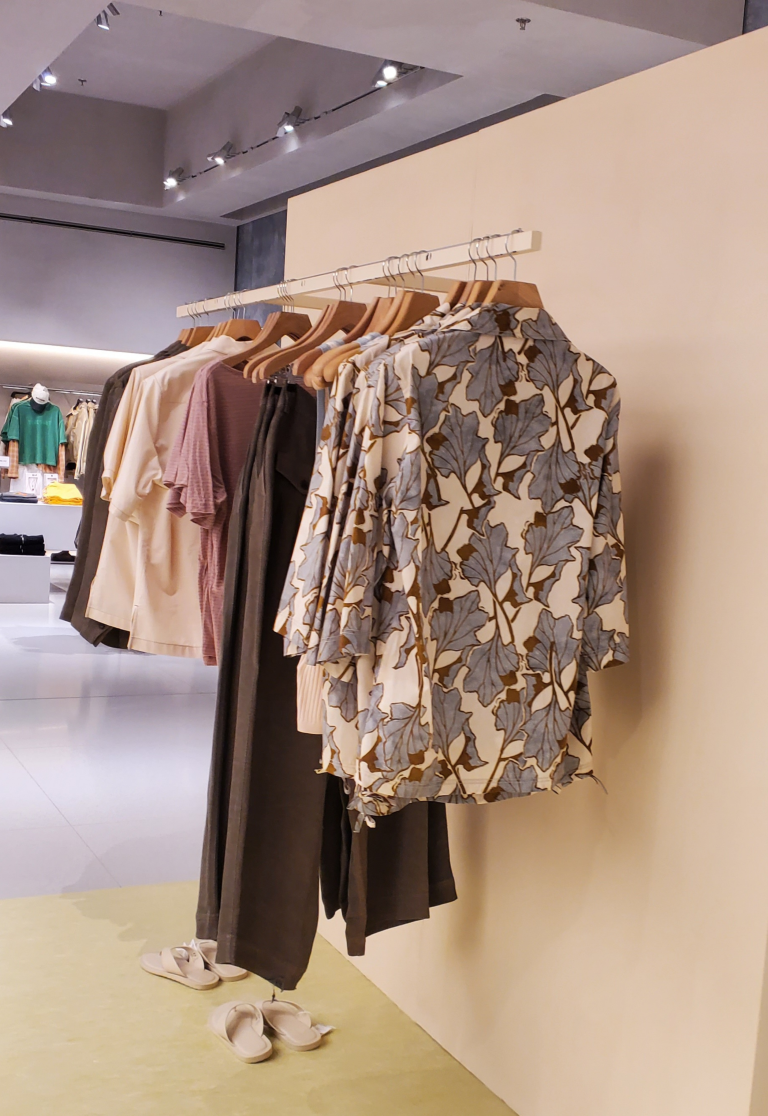
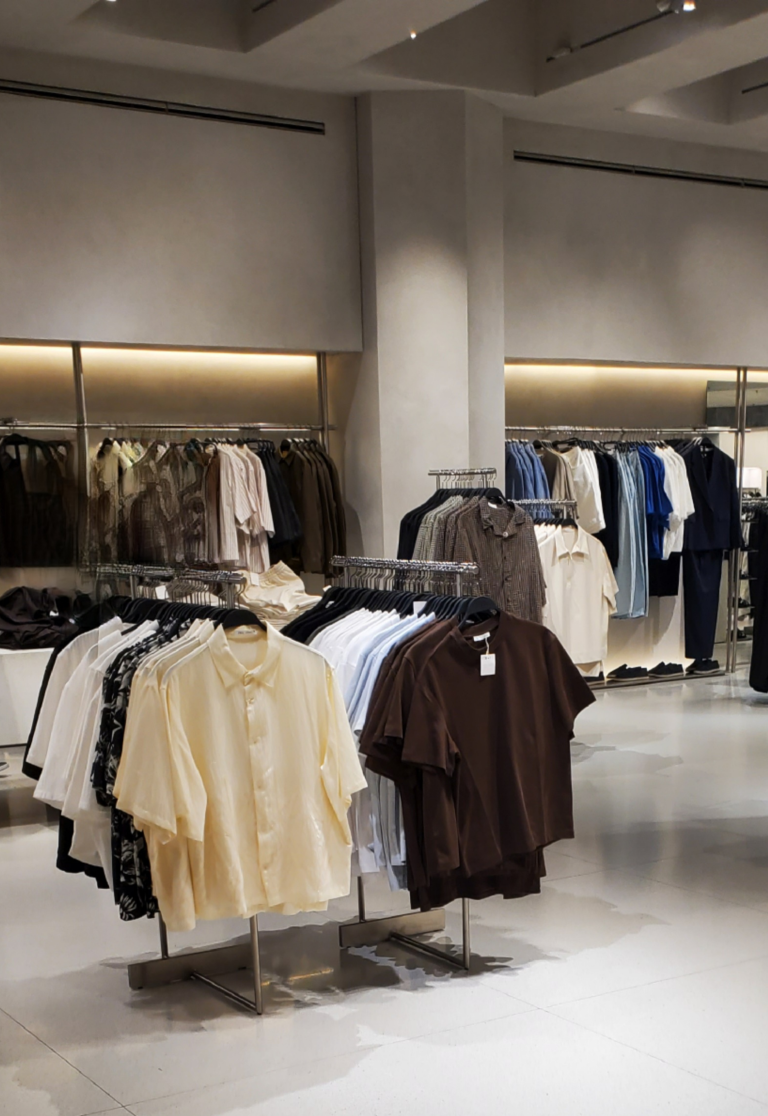
Compared to Dior’s curated restraint, Louis Vuitton’s theatrical journey, and Nike’s interactive zones, the on-the-ground experience in Zara felt notably different. Shoppers browsed racks filled with duplicate inventory, sale signage punctuated the space, and the video wall, potentially the store’s most striking feature, remained partially obscured behind busy operational areas. The layout prioritized operational efficiency and merchandise density over the kind of emotional choreography that defines the luxury flagships just down the avenue.
Zara calls their Champs-Elysees location their “most innovative store in France,” and one would think that the technological infrastructure promised at their launch would support that claim. QR codes to help navigate the store were not apparent during our visit. The promise of a luxury experience at a main street price was not to be had. We at least expected the design to match the website or launch photos, but there was really nothing to reflect that launch promise.


The fascinating paradox is that Zara’s most disruptive innovations are happening outside their physical retail footprint. The brand pioneered AI-generated fashion imagery, paying models their full fees while using artificial intelligence to place them in new outfits and settings, dramatically reducing production costs and travel. Zara was also the only Champs-Élysées retailer we encountered clearly offering in-store repair and recycling services, a sustainability initiative that signals fast fashion’s evolving relationship with circularity and product longevity.
Zara’s presence on the Champs-Élysées illustrates an important retail truth: the term “flagship” no longer signals a uniform experience. Where Dior stages intimacy, Louis Vuitton orchestrates journeys, and Nike facilitates co-creation, Zara delivers accessibility and volume supported almost entirely by digital technology. The store successfully integrates physical and digital channels, Inditex’s stated core strength, but the in-store atmosphere remains closer to efficient fast-fashion retailing than to destination retail theater.
But this isn’t necessarily a failure of execution; it’s a reflection of their business model. Zara’s competitive advantage lies in speed, trend responsiveness, and democratized access to fashion, not in creating the kind of scarcity and curation that luxury brands deploy. The Champs-Élysées location affirms that the avenue can accommodate diverse retail propositions, from appointment-led couture to high-traffic fast fashion, each serving different consumer expectations and brand positioning strategies.
Zara proves that technology alone doesn’t create a transformative flagship experience. Without equally intentional experiential design, even sophisticated digital infrastructure can feel like operational enhancement rather than emotional engagement. The brand’s real innovation story is being written in AI studios, fulfillment centers, and sustainability labs, not necessarily on the sales floor at 74 Avenue des Champs-Élysées.
Sephora: The Beauty Promenade on the Champs
Sephora shows how Champs-Élysées retail is not limited to high luxury; it also includes high-design beauty spaces that are built to attract attention and invite exploration.
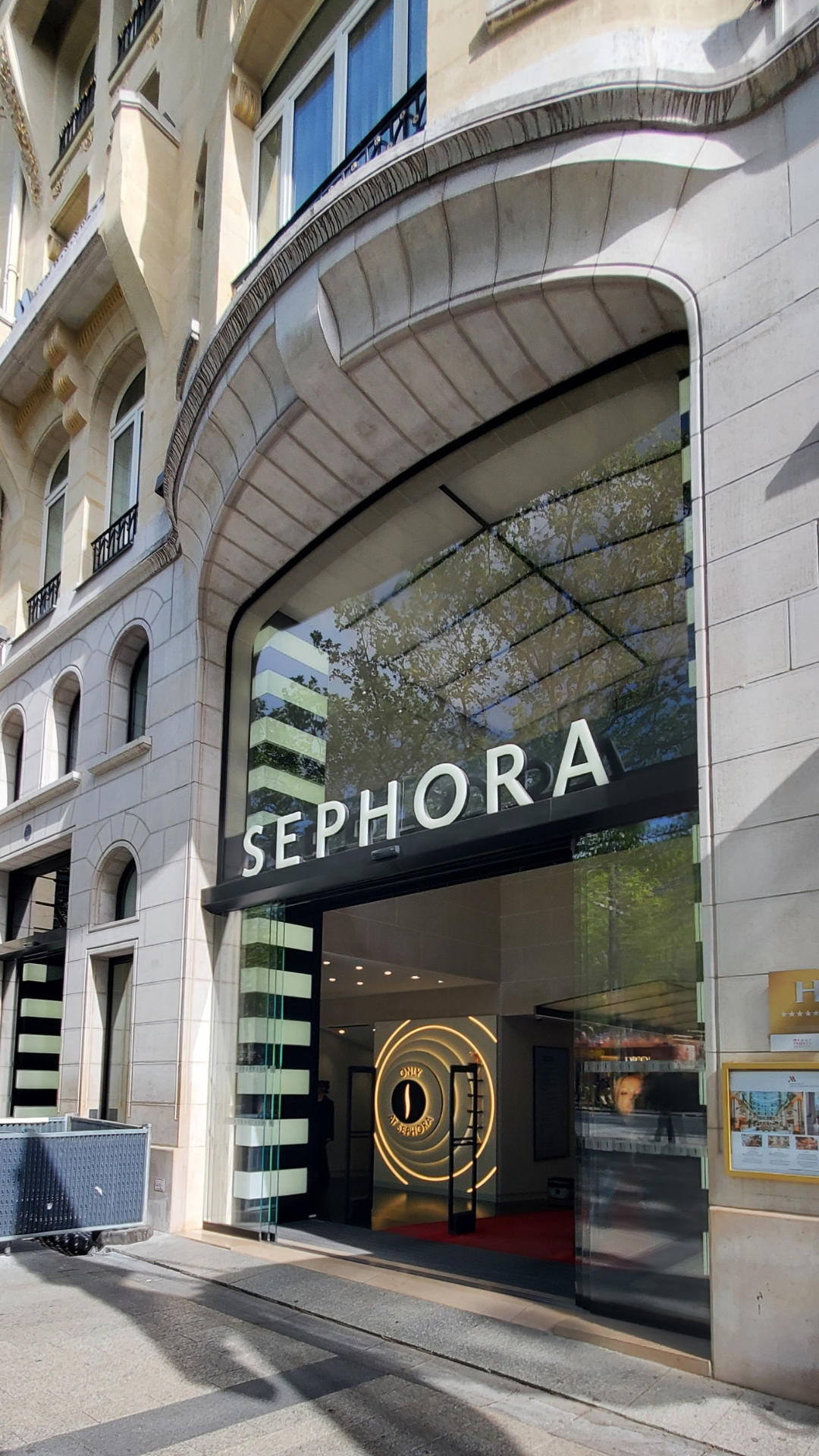
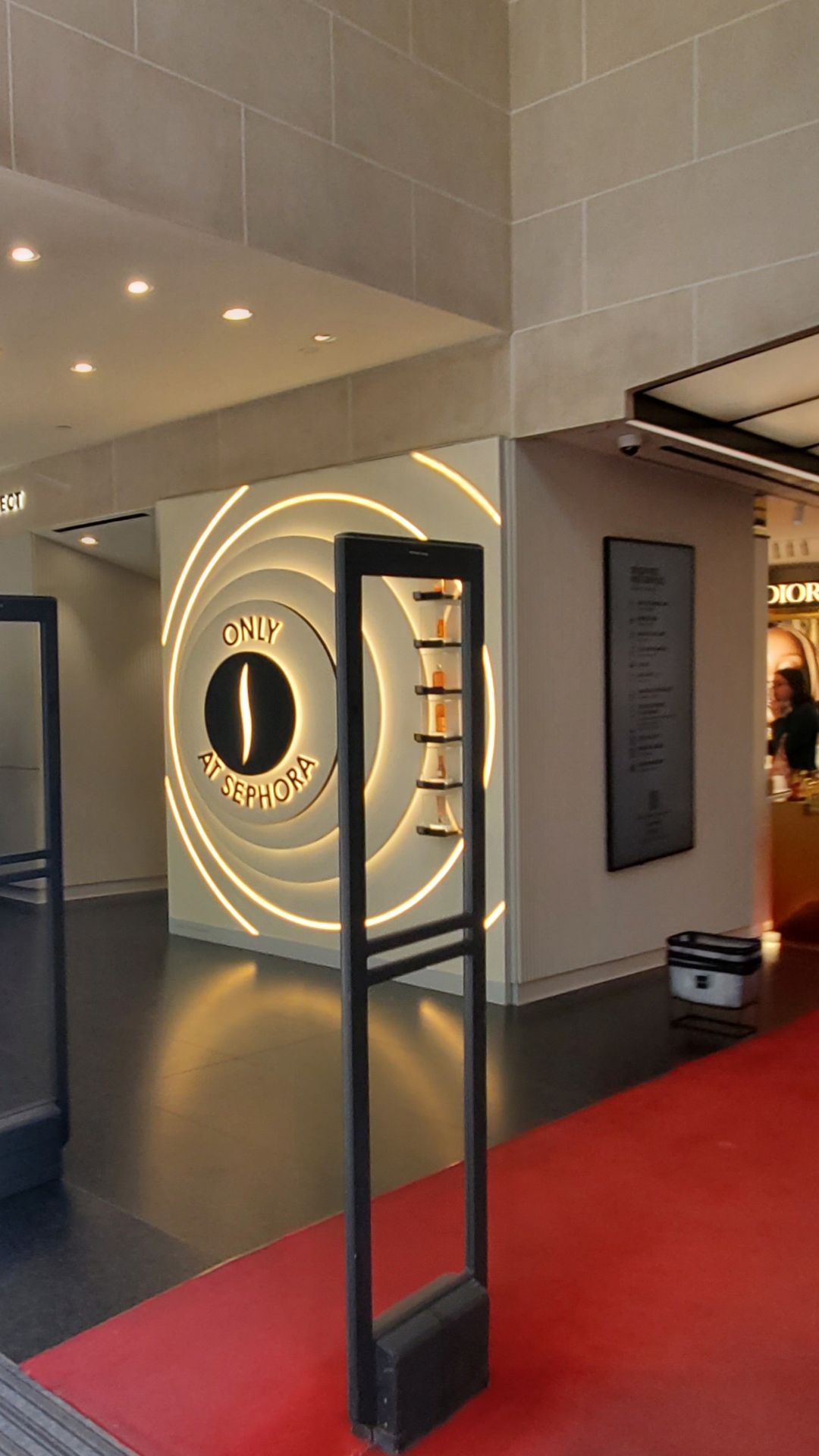
Located at 70-72 Avenue des Champs-Élysées, the 1,200-square-meter flagship underwent its first complete renovation since opening in 1996, reopening in October 2023 after six and a half months of transformation.
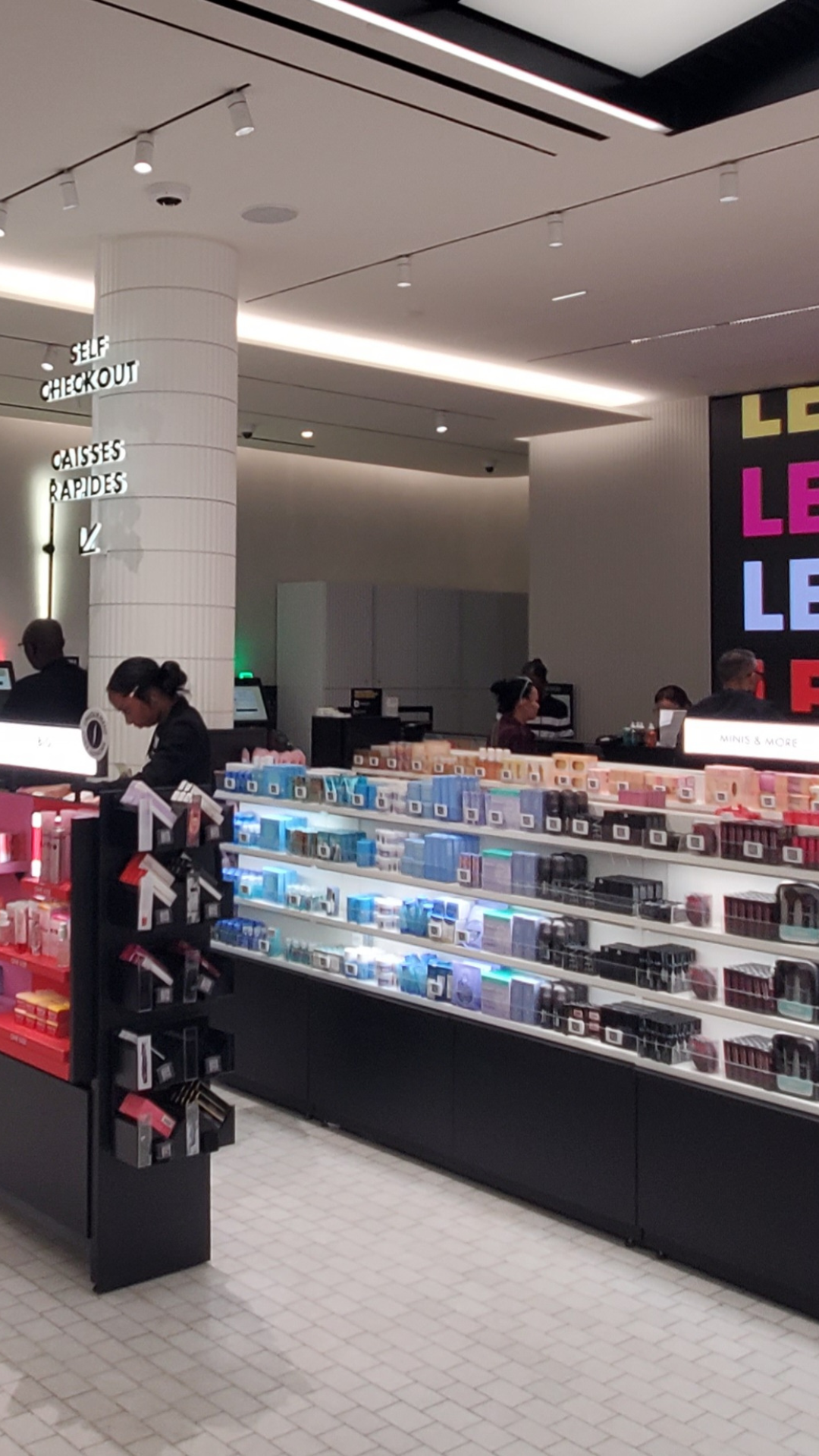
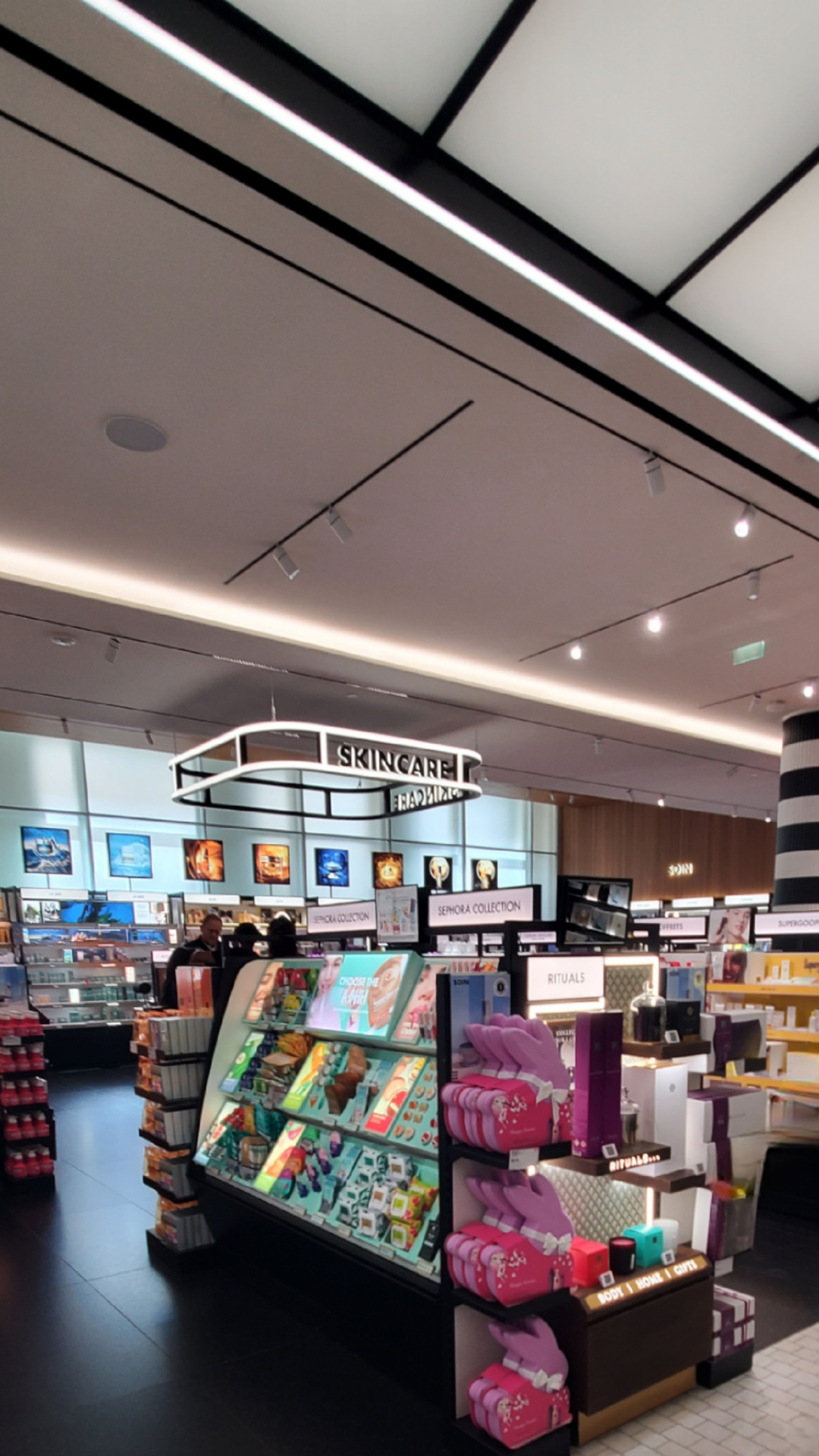
The experience of walking into the renovated Sephora Champs-Élysées flagship is like entering a beauty theme park with deliberate architectural drama. LVMH describes Paris-inspired design details throughout: a 90-meter central glass ceiling that floods the space with light, hand-set white marble paving that snakes through the store, and 19th-century inspired metal elements that echo classic Parisian passageways. The design team created what they call a “veritable Arc de Triomphe of beauty”—a 2.6-meter-wide central aisle with a monumental beauty hub at its center, deliberately referencing the iconic monument that anchors the avenue.
The store balances Sephora’s signature brand design with elevated materials that signal this isn’t just any beauty retailer. The iconic black-and-white striped motif appears throughout, alongside the emblematic brand flame and the famous rainbow gradient captured in an infinity mirror installation. These recognizable elements ground the space in Sephora’s identity even as materials like stone, glass, noble metals elevate the environment beyond typical beauty retail.
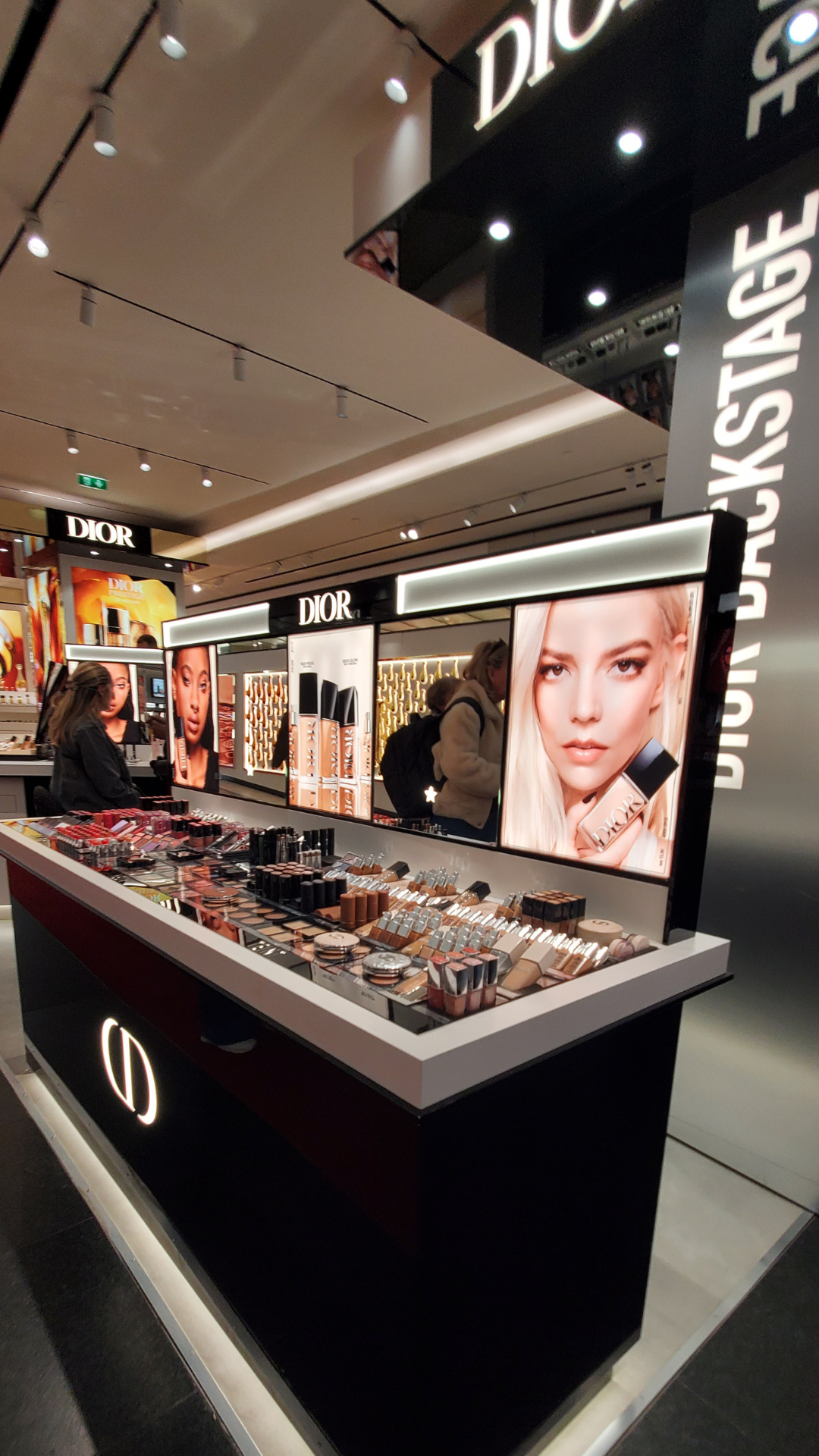
A main promenade cuts through the center of the store with curated collections of makeup, fragrance, and hair care along both sides, creating distinct thematic zones that showcase everything from timeless luxury brands to trendy new labels. Staff members offer perfume samples and makeover consultations, sometimes with over-eager enthusiasm that adds to the store’s energetic atmosphere. The result is intensely sensory—sound, scent, color, and constant personal outreach create an environment fundamentally different from Dior’s hushed restraint or Louis Vuitton’s orchestrated journey.
This was the busiest environment of the five flagships, with shoppers sampling, swatching, and spraying while being steadily nudged forward by the flow of traffic. Sephora has designed what the brand calls an “immersive shopping experience” where discovery, fun, and fearless experimentation drive the layout. Every product has testers available, creating what feels less like shopping and more like a beauty playground where tactile exploration is not just permitted but encouraged.


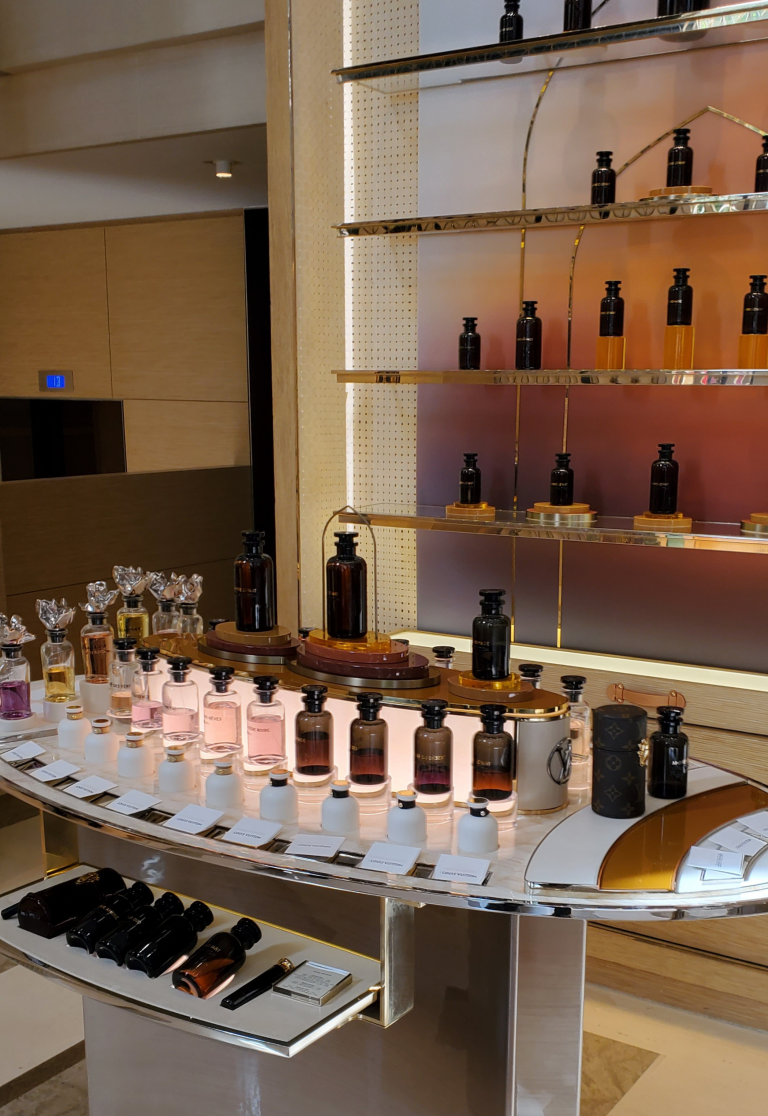
In addition to self-service browsing, Sephora beauty advisors offer 15-minute skincare consultations and 60-minute makeup services, providing personalized recommendations that transform casual browsers into engaged customers. Express makeup bars, interactive digital menus, and expert-led tutorials address customer desires for both personalization and education. The Champs-Élysées location also features exclusive brand partnerships, including Maison Francis Kurkdjian, available only at this flagship—that create destination appeal beyond the core Sephora offering.
The store incorporates technology strategically but not overwhelmingly with digital mirrors, augmented reality try-ons for certain products, and skincare diagnostics powered by RFID sensors that provide ingredient information and access to customer reviews. Mobile checkouts allow customers to pay with beauty advisors anywhere in the store, eliminating queue friction during peak traffic.
Sephora’s flagship on the Champs is a case study in how to embrace density without completely losing control. Sampling and service are built into the floorplan, but so is throughput—the promenade design pushes visitors forward through the space, ensuring continuous discovery and continuous turnover. Unlike Dior’s negative space or Nike’s breathing room, Sephora leans into abundance: abundant product, abundant staff interaction, abundant sensory stimulation. The strategy works because the brand has established such strong visual codes—the stripes, the flame, the rainbow—that even in a crowded, high-energy environment, you never lose your sense of place.
Sephora closed for a little over six months for renovation. The renovation, completed in October 2023, incorporated sustainability measures that reduce energy consumption by 50% through latest-generation LED technology, screen reduction, and a large transparent sliding door at the entrance that minimizes heat loss.
Sephora shows how high-volume, high-margin categories like beauty can embrace chaos and contain it through design, recognizable brand codes, and repeatable experience moments.
Sephora offers abundance and permission: permission to try everything, to ask questions, to experiment without judgment. The store proves that “flagship” doesn’t require hushed tones or appointment-only access; it requires intentional design that aligns the physical environment with brand values and customer expectations.
The Champs-Élysées location functions as what Sephora calls an “experience hub” rather than a transactional retail box. Shopping becomes participation, browsing becomes education, and the sheer density of options, paired with expert guidance, creates a form of retail theater distinct from but equally intentional as the luxury flagships that define the avenue’s upper tier.
What Our Experience Shopping the Champs Means for Retail Design and Strategy
The Champs‑Élysées offers a compact view of where retail is heading:
Access is now a design element. Queues, security, and appointment systems are increasingly part of the brand language, especially in luxury.
Experience has become a spectrum, not a label. Dior and LV choreograph quiet vs. theatrical luxury; Nike reframes innovation as its own version of “premium;” Sephora leans into managed overload; Zara shows that operational innovation alone doesn’t guarantee experiential lift.
Customization is the new common denominator. From Dior’s one‑to‑one appointments to Nike By You to Zara’s AI-enabled imagery, brands are building tools to make shoppers feel individually seen, even in flagship‑scale environments.
The street still matters. The shared backdrop of the Champs with its sightlines, crowds, and symbolism, adds value to every store, proving that context is still a critical part of retail design and site strategy.
For brands, the opportunity on streets like the Champs‑Élysées is to decide which part of this spectrum they want to own and then design every element of space, service, and story to deliver that promise consistently. For design and strategy partners, it’s a reminder that even in a world of e‑commerce and AI, the most interesting ideas still come alive when a shopper physically walks through the door.
What’s Next for the Avenue?
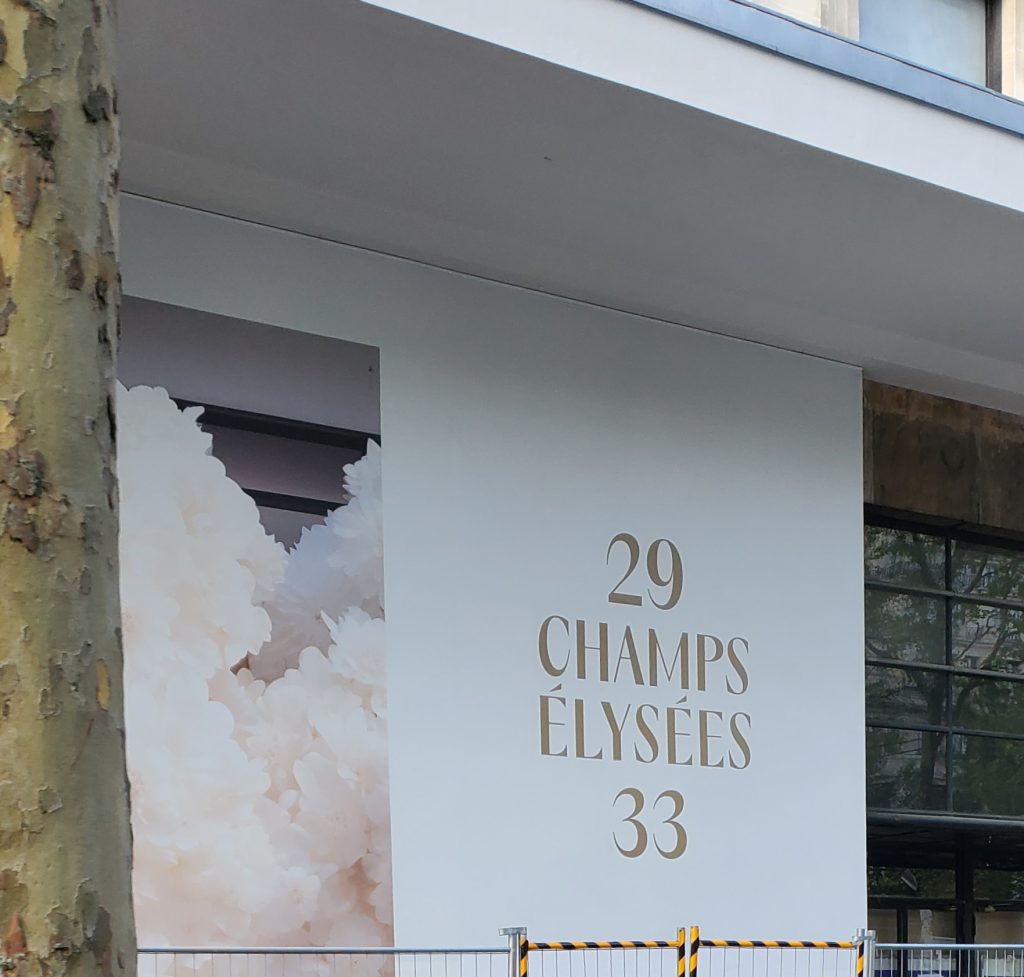
In January 2026, Bain Capital announced the acquisition of 29-33 Avenue des Champs‑Élysées, which they will develop in partnership with Revcap and Black Swan, into three flagship retail spaces as well as office space, targeting sustainability certifications and next-generation retail. This investment shows that the avenue is not resting on heritage, but actively reimagining what flagship retail can become, proving the avenue remains a magnet for global capital and reinvention.
The Champs-Élysées isn’t just maintaining its flagship stores; it’s reimagining the entire boulevard. A €250 million transformation project approved by Mayor Anne Hidalgo aims to turn the 1.9-kilometer avenue into what architects describe as an “extraordinary garden” by 2030. Designed by Philippe Chiambaretta’s firm PCA-Stream, the ambitious plan will reduce car lanes from six to four, halve vehicle traffic by redirecting it through underground tunnels, plant over 400 new trees, and dramatically expand pedestrian zones and sidewalks. The first phase was completed in time for the 2024 Olympics, but the full transformation will unfold over the coming years, fundamentally changing how visitors experience one of the world’s most famous streets.
The redesign addresses a current reality that feels at odds with the avenue’s glamorous reputation: today’s Champs-Élysées sees 3,000 vehicles per hour and registers more polluted than Paris’s périphérique ring road. The transformation will create tunnels of trees to improve air quality, redesign the Place de la Concorde with water mirrors and green spaces, and turn what has become a car-dominated commercial corridor into a pedestrian-friendly promenade. It’s a recognition that even the world’s most iconic retail boulevard must evolve, balancing commercial vitality with environmental responsibility, and proving that luxury retail’s future requires not just renovated flagships but reimagined public space.
5 Takeaways for Retail Design
- Design access as part of the brand.
Queues, reservations, door security, and greeter scripts are no longer just operations; they’re front-stage elements that signal status, control, and how “open” a brand wants to feel.
- Use contrast intentionally, not accidentally.
Dior vs. Louis Vuitton shows how light vs. dark, calm vs. energetic, and gallery vs. theater can differentiate neighbors on the same street when those contrasts are deliberately designed.
- Turn vertical space into narrative space.
Nike’s multi-story iconic space, staircase sightlines, and stacked experience zones show how height and layering can signal innovation and progression, not just square footage.
- Don’t let tech outrun the experience.
Zara’s AI and digital capabilities are advanced, but the in-store feel still skews “busy high street.” Tech only becomes meaningful when it’s visible, intuitive, and clearly connected to shopper value.
- Embrace managed chaos where it fits.
Sephora proves that density, noise, and sensory overload can work when there’s a strong organizing spine, recognizable brand codes, and continuous micro-moments of service and discovery.
We walked Paris’s Champs-Élysées to examine five flagship brands—Dior, Louis Vuitton, Nike, Zara, and Sephora. We looked at how they are redefining what a “store” can be on one of retail’s most visible stages. From quiet couture salons to high-energy beauty halls, the avenue reveals how access, contrast, customization, and context are being used as powerful design tools.
The Champs-Élysées is a useful lens precisely because the stakes are so visible. Every choice — about access, contrast, service, and space — is legible at scale. The question for any brand is which parts of that spectrum they want to own, and whether their physical environment is actually delivering it.
For more retail industry insights, subscribe to The Gist.