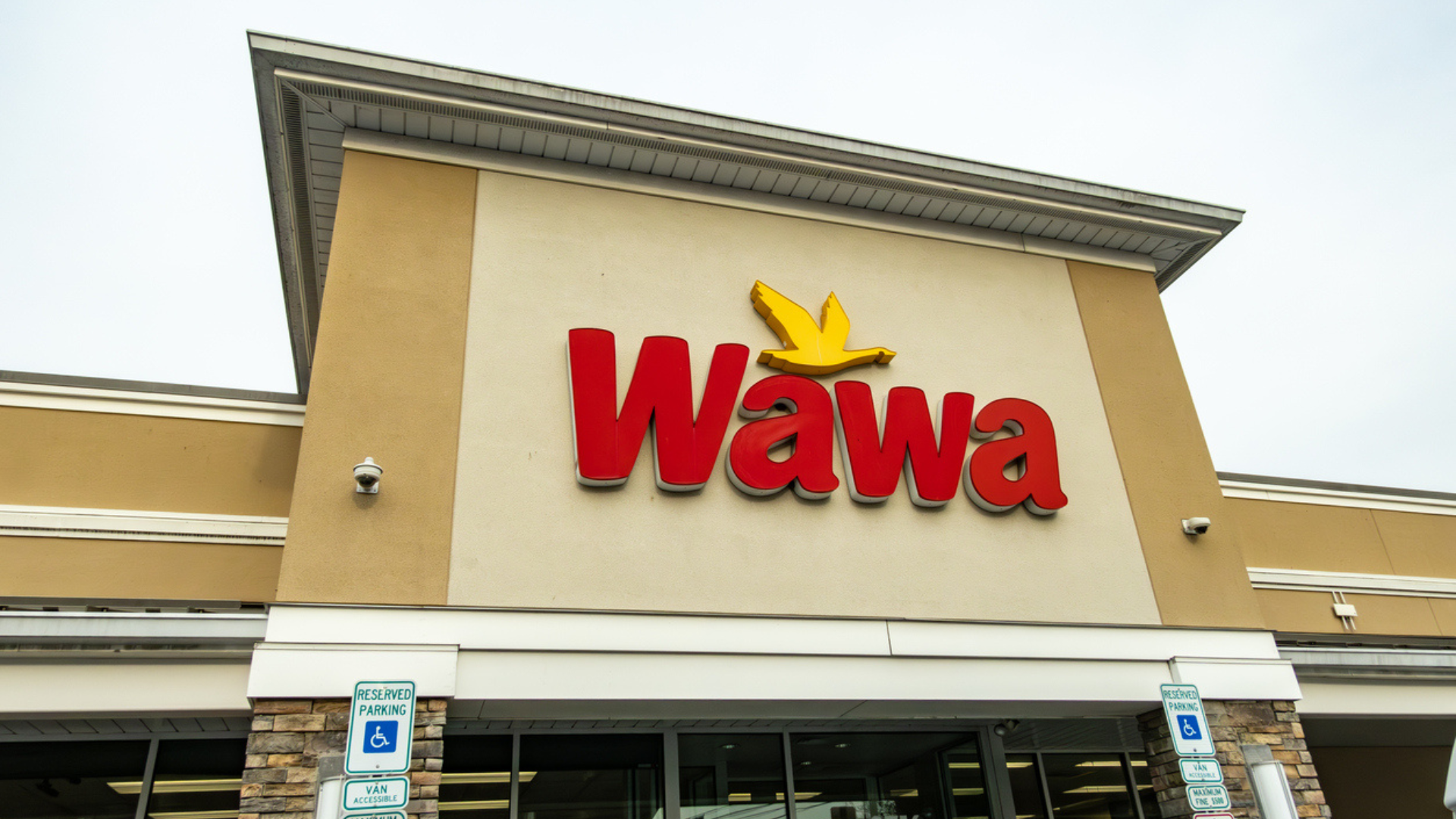

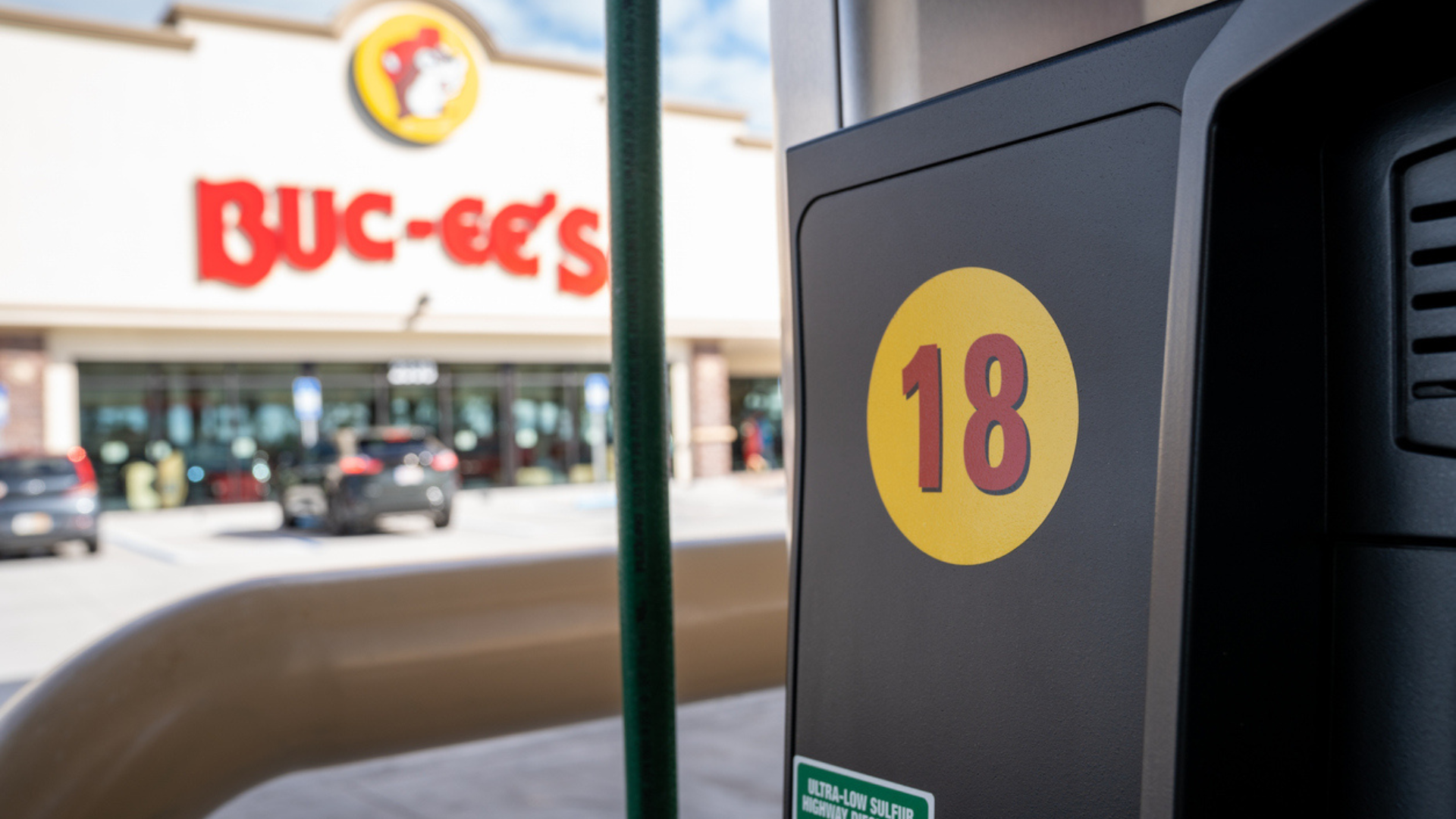
For most of the last century, a customer's loyalty at the pump belonged to the fuel company, and that relationship is now functionally gone. More than 80% of drivers who fill up four or more times a month visit multiple fuel brands in any given month. The operators gaining ground now, including Sheetz, Wawa, and Buc-ee's, built their loyalty around the store itself, through food, experience, and a brand identity strong enough to make the gas almost beside the point.
The Old Model Is Broken
Ask a 35-year-old which gas brand they prefer, and most will look at you like the question does not make sense. That reaction is not a generational quirk, and the data backs it up.
More than 80% of frequent fuel buyers fill up at multiple brands every month, and a separate study found that grocery and big-box retailers now hold 35% of the fuel market, a category that traditional gas-and-convenience brands used to own entirely. Over the same stretch, gas station loyalty declined 5 percentage points in three years.
Historically, the fill-up was the reason for the visit, and everything sold inside the store rode along with it. For decades, operators could rely on fuel to deliver the customer to the door, but with fuel revenues declining for the second consecutive year and EV adoption continuing to climb, that reliability is eroding. The 2025 NACS State of the Industry report shows total fuel revenues fell 5.7% in 2024, to $501.9 billion. C-stores still sell roughly 80% of the fuel purchased in the United States, but that volume no longer guarantees profitable traffic, because net margin per gallon sits at about one to two percent after card fees and operating costs.
Today the store itself is what fills the profit gap, and the margin data makes the size of that shift unambiguous.
Sheetz Saw It Coming in 1986
The loyalty flip did not happen overnight. Sheetz, a Pennsylvania-based chain with roots going back to 1952, began building the model that would help define the category. In 1986, the company introduced its Made-To-Order food concept, starting with customizable submarine sandwiches, and the response was immediate: pre-made sub sales of 96 units per week climbed to 350 per week within the first year after the switch to made-to-order. By 1990, MTO had rolled out across every Sheetz location.
The company continued to build on that foundation, and in 1996 Sheetz introduced touchscreen ordering, a move that improved accuracy and increased per-ticket spend. By 1999, the chain was selling 10,000 MTO units per day. As of early 2025, Sheetz operates 770 stores across seven states and is building a $169 million distribution and food manufacturing facility in Findlay, Ohio, to support its next phase of expansion.
Sheetz built more than a food program; it built a reason to choose one store over another that had nothing to do with fuel prices. Roughly 37% of U.S. shoppers cite loyalty programs as a reason for frequent C-store visits, and Sheetz’s My Sheetz Rewardz app adds a digital layer to that retention. The MTO program is, in many respects, the first modern example of loyalty moving from the pump to the store.
Wawa Built a Brand That Crosses Category Lines
Wawa’s trajectory follows a similar arc with a different product, and the cultural outcome went further than Sheetz’s.
The chain has sold made-to-order hoagies since 1972, and those sandwiches are now so embedded in the Mid-Atlantic identity that when Pope Francis visited Philadelphia, the mayor announced plans to serve him one. No marketing campaign produced that. It is what a brand looks like once it has become a community institution.
The numbers reflect it. The American Customer Satisfaction Index’s 2024 Convenience Store Study ranked Wawa first among all C-store chains, with a score of 82, ahead of every traditional fuel brand in the survey. Remarkably, Wawa’s loyalty held as prices climbed 21.7% between the second quarter of 2019 and the second quarter of 2025. According to data analytics firm Technomic, that rate is comparable to Starbucks and McDonald’s over the same period.
Think about it this way: Wawa’s performance is more comparable to a food brand than a convenience store, and that is precisely the point. When customers absorb price increases at a C-store the same way they absorb them at their favorite coffee chain, the loyalty has already moved from the pump to the store.
Why This Matters: The Profit Case for Operators
While this looks like a branding story, it is a business model story.
NACS data from 2024 tells the essential modern C-store truth: total fuel revenues fell 5.7% to $501.9 billion, while in-store sales hit a record $335.5 billion, the 22nd consecutive year of in-store growth. Foodservice led the way, reaching 27.7% of in-store sales and 38.6% of in-store gross margin dollars.
In 2004, foodservice represented just 11.9% of in-store sales at U.S. C-stores. According to NACS, by 2025 that figure had climbed to 28.5% of in-store sales and 38.9% of in-store gross profit dollars, and the curve continues to rise. That two-decade climb demonstrates a structural shift in where C-store profit is derived.
The operators who built food programs and store brands are capturing those margins, while the operators still oriented around the pump are watching their highest-volume category compress. Fuel revenues fell again in 2025, down another 5.4% to $476.3 billion, and in-store sales posted their 23rd consecutive year of record growth.
The math is clear enough: loyalty to the store produces profit, while loyalty to the pump, assuming it exists at all, mostly produces margin exposure.
Buc-ee’s Removed the Ambiguity Entirely
If Sheetz and Wawa demonstrated that food could anchor C-store loyalty, Buc-ee’s demonstrates what happens when an operator stops thinking about the fuel stop as the frame for the business entirely.
Founded in 1982 in Lake Jackson, Texas, Buc-ee’s spent decades building toward a format that inverts the traditional model. Its stores average 50,000-plus square feet, feature 100 or more fueling positions, and generate an estimated $50 to $100 million per location annually, roughly 10 to 20 times the industry average.
Buc-ee’s currently operates 55 locations, with expansion into seven new states planned for 2026 and 2027, and a brand that is nationally known with fewer than 60 stores is a different kind of asset. The average C-store visit lasts 3 minutes and 33 seconds, while Jeff Lenard of NACS has noted that he has never heard of anyone spending less than 10 minutes at a Buc-ee’s. Anecdotal reports put average dwell times at 30 minutes or more.
That dwell time converts: Buc-ee’s generates an estimated 40% of its revenue from in-store purchases, where margins are substantially higher than at the pump. The Johnstown, Colorado, location sees roughly 8,000 cars per day, and the store is what brings them in.
Buc-ee’s is the extreme end of the loyalty flip. It also paints a picture of where the category is heading.
What Regional Operators Can Actually Do
Regional operators are not going to out-Buc-ee’s Buc-ee’s, and they do not need to. The underlying shift, loyalty moving from the pump to the store, does not require 60,000 square feet to capture. It requires one ownable thing.
Private label store brand sales grew 23.6% from 2021 to 2024 across the convenience and grocery sectors, and in 2023, 7-Eleven announced plans to add 150 new products to its existing catalog of 1,300 private-label items. The shift toward store-branded food and beverage is accelerating because it does two things at once: it improves margins and it builds an identity that a competitor cannot easily copy.
Familiarity, more than price, is the dominant loyalty driver for frequent C-store visitors. A national survey of more than 600 U.S. drivers found that 24% of them, the super users who shop C-stores multiple times per week, return for reasons that have little or nothing to do with discounts. What brings them back is knowing what they are going to get and trusting that they will get it.
That ownable thing might be a store brand, a signature food item, a specific coffee program, or a local ingredient sourced from a regional supplier. It does not need to be a beaver mascot or a sandwich that gets referenced in a papal visit. It needs to belong to the store and be unavailable across the street.
The 2024 ACSI Convenience Store Study found that loyalty program members gave their C-store a satisfaction score of 79, compared to 74 for non-members, and that members visited more frequently, perceived higher value, and were more likely to recommend the store to others. Wawa, QuikTrip, Buc-ee’s, and Murphy USA led the study, each scoring 80 or above. None of those brands compete on fuel price. They compete on what happens inside the store.
The Window Is Real, and It Is Not Permanent
According to NACS, the convenience store market counted 151,975 stores as of year-end 2025, a number that declined for the second consecutive year. Operators exiting the market are largely undifferentiated fuel-plus-snacks formats with no store identity and no food program to speak of. Their customers do not leave the category; they consolidate around the operators who gave them a reason to stay.
That consolidation is already visible in the data. The average consumer now visits 3.2 different C-stores per month, up 17% year over year, according to Upside’s 2025 Consumer Spend Report, which analyzed more than 10 billion transactions. Shoppers are spreading spend across more locations, which means the operators earning consistent return visits are earning them on the strength of the experience rather than proximity or habit.
Fuel brought the customer to the door for as long as people have been driving cars. That era is not over, but the margin is thin, the volume is under pressure, and the loyalty is thinner still. The brands that built experiences worth coming back for are finding out that the flip has already happened. The question for everyone else is how much longer to wait to make the same bet.