
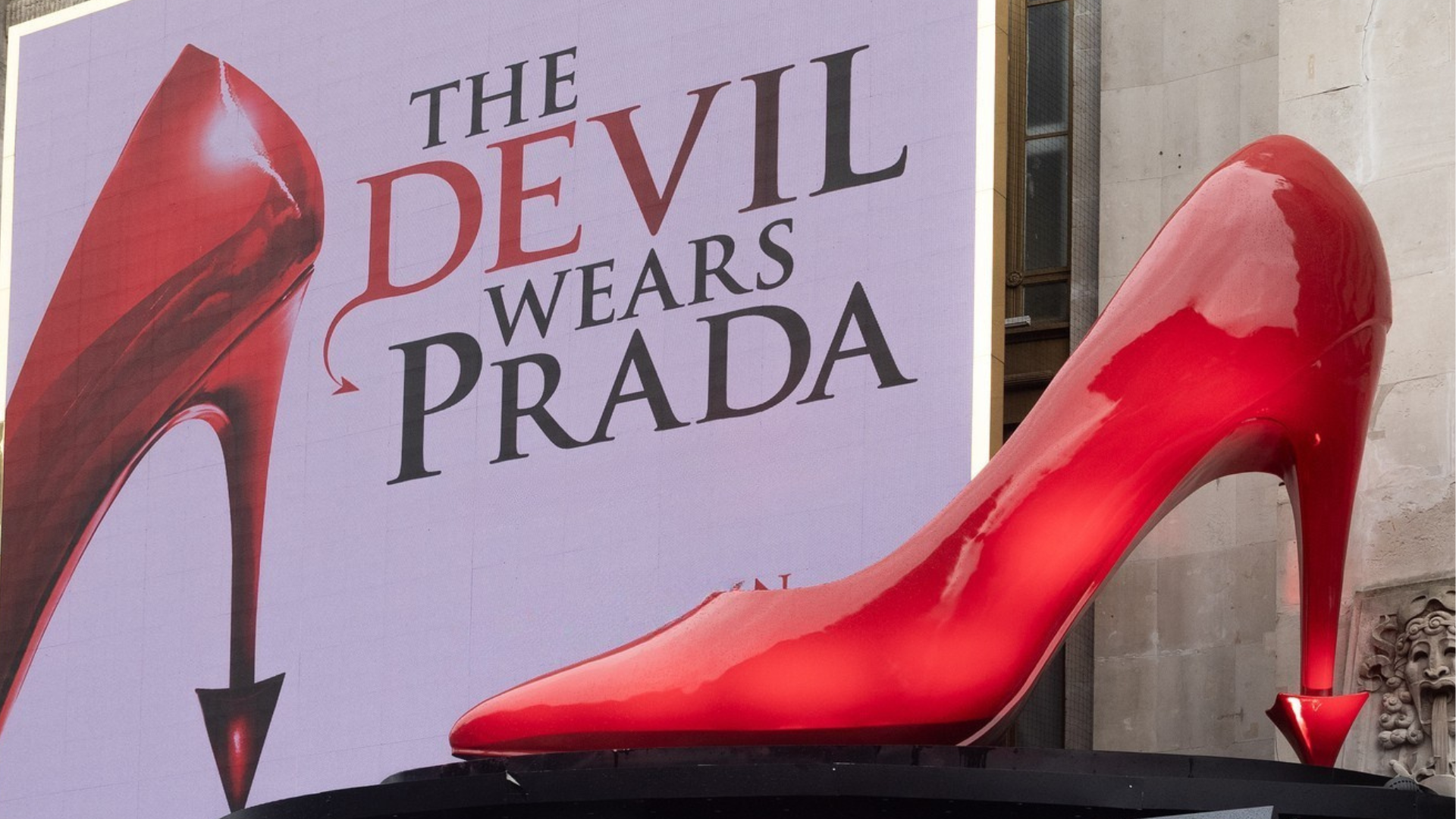
There’s a scene in the original Devil Wears Prada where Miranda Priestly explains, with complete contempt, how a designer’s cerulean sweater eventually trickles down to a bargain bin. She means it as a lesson in the invisibility of taste to those who haven’t earned it. But she’s accidentally describing the entire engine of fashion — the way aspiration moves outward, democratizing itself whether the industry intends it to or not.
Twenty years later, two of the biggest mass retailers in the country built collections around the film’s sequel. And the gap between what they made reveals something worth paying attention to: not just how fashion travels, but what retailers actually believe about the people shopping their floors.
Target’s play is clear and executed well: give fans wearable access to the cultural moment, at price points that remove any barrier. The product names alone — “Not Just Blue,” “What Would Miranda Do,” “You Are Not Going to Paris” — are a love letter to people who have seen the original film approximately seventeen times. It’s fan merch that knows its audience, priced to move, and timed perfectly.
But Walmart did something different. Walmart built a world.
"Walmart didn't ask: how do we sell DWP merchandise? They asked: what would a woman who loves this film actually want to own, wear, and keep?"
The Devil Wears Prada x Scoop collaboration is the clearest signal. Scoop is Walmart’s elevated in-house fashion label — not a licensed merch play, but a brand with a genuine editorial point of view. Pairing it with DWP to produce a lace-up cotton shirt and strappy stiletto heels isn’t nostalgia marketing. It’s a statement about who Walmart’s fashion customer is and what she deserves. The heels at $50 aren’t priced as an afterthought. They’re priced as an attainable version of something she’s been told isn’t for her.
Add in TRESemmé’s “A-List Collection” hairsprays co-branded with the sequel, Tweezerman tweezers packaged in the film’s visual language, and fashion dolls modeled after both Andy and Miranda — and what you have is a retailer treating this IP as a lens, not a logo. Every category asks the same question: how does this film’s world translate into something she can actually bring home?
What this tells us about the customer
For decades, mass retail operated on a polite fiction: that its customers are practical, price-motivated, and aesthetically indifferent. That the woman pushing a cart through Walmart on a Tuesday is thinking about laundry detergent and dinner, not about whether her accessories have a point of view.
That was never true. It was a convenient assumption that let retailers off the hook for the work of actually seeing her.
The woman who shops at Walmart follows trends. She has strong opinions about silhouette and color. She watched the same clips from the sequel on TikTok as everyone else, and she felt the same pull toward the world the film depicts — the fantasy of being dressed well, of moving through rooms where people notice. She just hasn’t always been spoken to.
Both retailers understood the cultural moment. But Walmart's activation asks a harder and more interesting question: not just "what does she want to buy?" but "who does she want to be?" That's the shift from merchandise to meaning — and it's where the most durable retail experiences get built.
Target’s collection will sell well, because nostalgia and accessibility is a reliable formula when the IP is this beloved. But Walmart’s collection will be talked about. A woman who finds a $24 lace-up shirt she loves — one that feels editorial, that she discovered at Walmart — is going to tell someone. She’s going to post it. She’s going to feel something about where she found it.
That feeling is the gap most retailers still haven’t figured out how to create. The brands and stores that do — the ones that make people feel genuinely seen rather than merely served — are the ones that earn loyalty that outlasts any single cultural moment.
Miranda Priestly would never shop at Walmart. But she’d understand exactly what Walmart did here. You take the cultural shorthand of aspiration, strip away the velvet rope, and hand it to the people who wanted it all along. The cerulean sweater finds its way there eventually. The smart retailers just decide to speed up the timeline.