
There’s a moment that captures the kidult trend perfectly. You’re standing in line at a Jelly Cat pop-up — maybe the Patisserie in London, maybe the Diner in New York — and you look around and realize the crowd is mostly adults. No kids in tow. Just grown people, waiting patiently to have a plush croissant ceremonially “served” to them by a staffed barista in a fake café. It’s objectively absurd. It’s also sold out.
This is where the toy industry is headed, and brands that haven’t figured that out yet are leaving serious money on the table.
It Isn’t a Fad, The Market Has Already Flipped
We used to talk about kidulting as fringe. A curiosity. A quirky corner of the toy buying landscape. Not anymore. It’s the primary growth engine for the entire category.
Consider what’s actually happened to the toy store in the last two decades. The once-playful, imaginative specialty shop got consumed by big box sameness, and then Toys R Us vacated the market to Walmart, Target, and Amazon. In that atmosphere, something unexpected happened: a generation that watched it all disappear started longing for it. What emerged from that longing is a $43.4 billion market growing at roughly 12% annually, on track to reach $67.9 billion by 2030.
The numbers tell the rest of the story: adults are now the toy industry’s single largest consumer group, driving 28% of global toy sales. In the U.S. alone, adults spent $1.5 billion on toys for themselves in a single quarter, outspending every other age demographic. And 60% of toy industry growth in the years leading into this moment came from adult buyers.
Kidulting isn’t a niche anymore. It’s where the industry is growing.
Why It’s Durable
The easy take on kidulting is that it’s nostalgia, a temporary wave of adults buying the things they loved as kids. The data tells a more complicated and more interesting story.
59% of Gen Z and Millennials self-identify as kidults. 35% of U.S. adults bought toys or collectibles for themselves in the past year. 49% cite reliving fond childhood memories as a motivator, up from 28% in 2022. But the underlying drivers go deeper than that: nostalgia, escapism, mental wellness, identity expression, and social currency. In other words, these are not impulse buys. They are rooted in personal behaviors, so they stay consistent outside of economic cycles.
The kidult consumer also has something the traditional toy buyer doesn’t: their own money. Adult toy buyers have significantly higher disposable income than parents shopping for children. They self-fund, make independent purchase decisions, and skew toward premium, limited-edition, and collectible items. Limited-edition drops and scarcity mechanics drive outsized engagement with this group — which is exactly why Jelly Cat, Labubu, and Pokémon cards command the cultural energy they do.
The Brands Getting It Right
Lego is the clearest case study. When the brand was struggling in the early 2000s, it didn’t double down on kids, it broadened its aperture. Botanical sets, architecture collections, and the Ideas platform (where fans vote on what sets get made) gave adult fans a legitimate reason to stay.
Lego’s adult line isn’t a side project — it’s a core part of why the brand is winning.
The Lego Botanicals line became a 2024 global top seller; adult-coded, designed to be built at kitchen tables and in group settings, not displayed alone behind glass. That detail matters. It points to something the best toy brands understand intuitively: the product isn’t just for the person who buys it. It’s for the experience of making it, with other people.
Jelly Cat took a different path but arrived at the same place. By creating scarcity, building around experience retail, and making each plush feel like a find rather than a purchase, they turned a stuffed animal brand into a cultural object.
The Physical Store Has an Irreplaceable Role
The adult toy buyer isn’t motivated by efficiency, they’re moved by experience, the thrill of discovery and feeling an emotional connection.
That creates a design challenge that most retailers are getting wrong. The adult toy market isn’t contained to a glass display case in a finished basement. Collectors are only part of the picture. Social groups gather to build and display adult kits together. Communities form around shared IP. These consumers are clamoring for spaces that reflect who they are and retail has a real opportunity to be that space.
The brands already proving it out: Jelly Cat’s NYC Diner, Camp’s play/retail hybrid model, Build-A-Bear’s “Bear Cave” age-gated product. In each case, the space isn’t where you buy the thing, it’s the thing.
The Store as a Fourth Space ™
There’s a concept worth introducing here: the Fourth Space. Trademarked by Eventbrite, it refers to communities of young adults gathering around shared online interests IRL, and the data behind it is striking. 73% of 18-to-35-year-olds want to explore their online interests through real-life events. Not occasionally. As a primary form of social connection.
79% of Gen Z and Millennials are drawn to events that mix multiple interests into unique social experiences. Cosplay events are up 50%. Anime events up 20%. Board game events have grown 8x, directly relevant to the tabletop and party game categories that are deeply popular among kidults. And 45% of people surveyed cite belonging and identity as key motivators for joining communities.
This reframes the entire idea of a “branded play environment.” It isn’t an outlet for selling merchandise to customers, but a venue where fans gather to celebrate who they already are. Designing for a single activity or IP misses how these consumers self-identify. They want their intersecting passions acknowledged in a single space, and that includes retail spaces.
The brands that understand this won’t just sell more toys. They’ll build communities that self-perpetuate. The brands that don’t will keep wondering why their store traffic looks fine on paper but the energy feels flat.
The Brands Missing It
The trap most brands fall into is treating the adult buyer as a secondary audience and someone to market to around the holidays when they’re buying for kids. That misses the point entirely. The kidult consumer isn’t shopping for someone else. They’re shopping for themselves.
Big box retail is particularly guilty here. When toys flatten into a commodity, same shelf, same lighting, same nothing, they strip out the very thing that makes an adult want to buy one in the first place: the feeling. You don’t impulse-buy a $60 Lego botanical set under fluorescent lights next to paper towels. You buy it in a space that makes you remember why you loved this stuff.
What to Watch
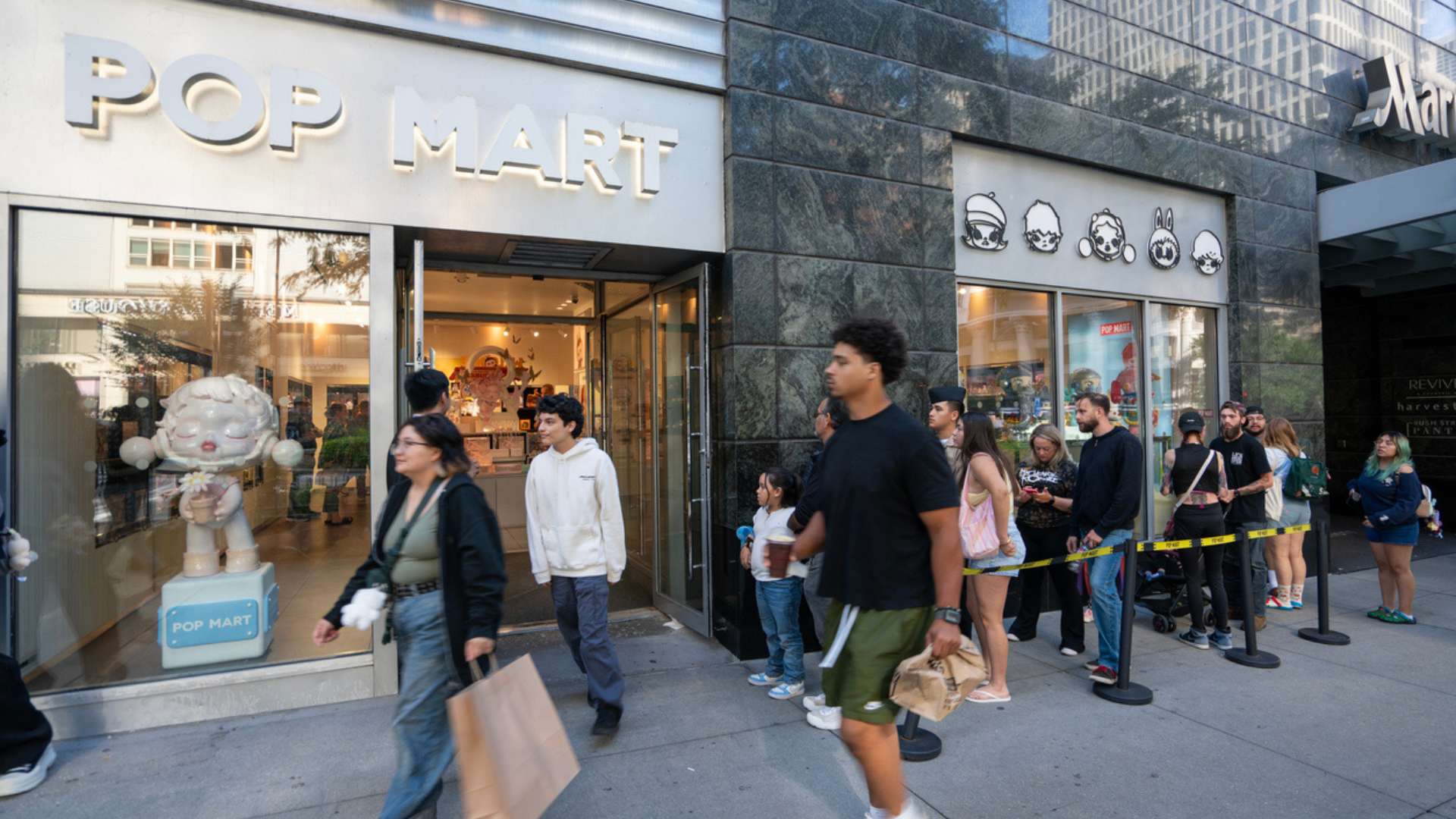
Pop Mart / Labubu If Jelly Cat is the blueprint, Labubu is proof the model can scale globally at warp speed. Pop Mart’s Labubu topped 100 million units sold in 2025, with Americas revenue growing over 900% year-on-year in Q1 alone. The brand runs on scarcity, blind-box drops, and an almost fanatical community, Labubu even floated in the Macy’s Thanksgiving Day Parade, introducing the character to 50 million U.S. viewers in a single morning. The key question now is whether the hype is durable. Pop Mart is already moving toward immersive retail and theme park experiences to find out.
Squishmallows Less buzz than Labubu, more staying power. Squishmallows figured out something important early: make the product endlessly extensible (thousands of characters), keep prices accessible, and let the community do the marketing. Plush toy sales reached nearly $5.6 billion in 2025, with Squishmallows a major driver. Proof that you don’t need $200 price points or long lines to win the kidult consumer, you just need the right emotional hook.
Pokémon Don’t sleep on the card. Trading card collecting has quietly become one of the most adult-dominated corners of the toy market, part nostalgia, part investment, part community ritual. The Pokémon Company has done an exceptional job keeping the IP alive across generations without diluting what made it special.
Lego In February 2026, Lego completed its acquisition of LEGOLAND Discovery Centres, adding 29 locations across nine countries with around five million annual visitors. This isn’t a toy company dabbling in retail — it’s a brand building an entire ecosystem around the adult fan. Watch for how Lego uses these spaces to deepen the connection between physical products, online community, and in-person experience.